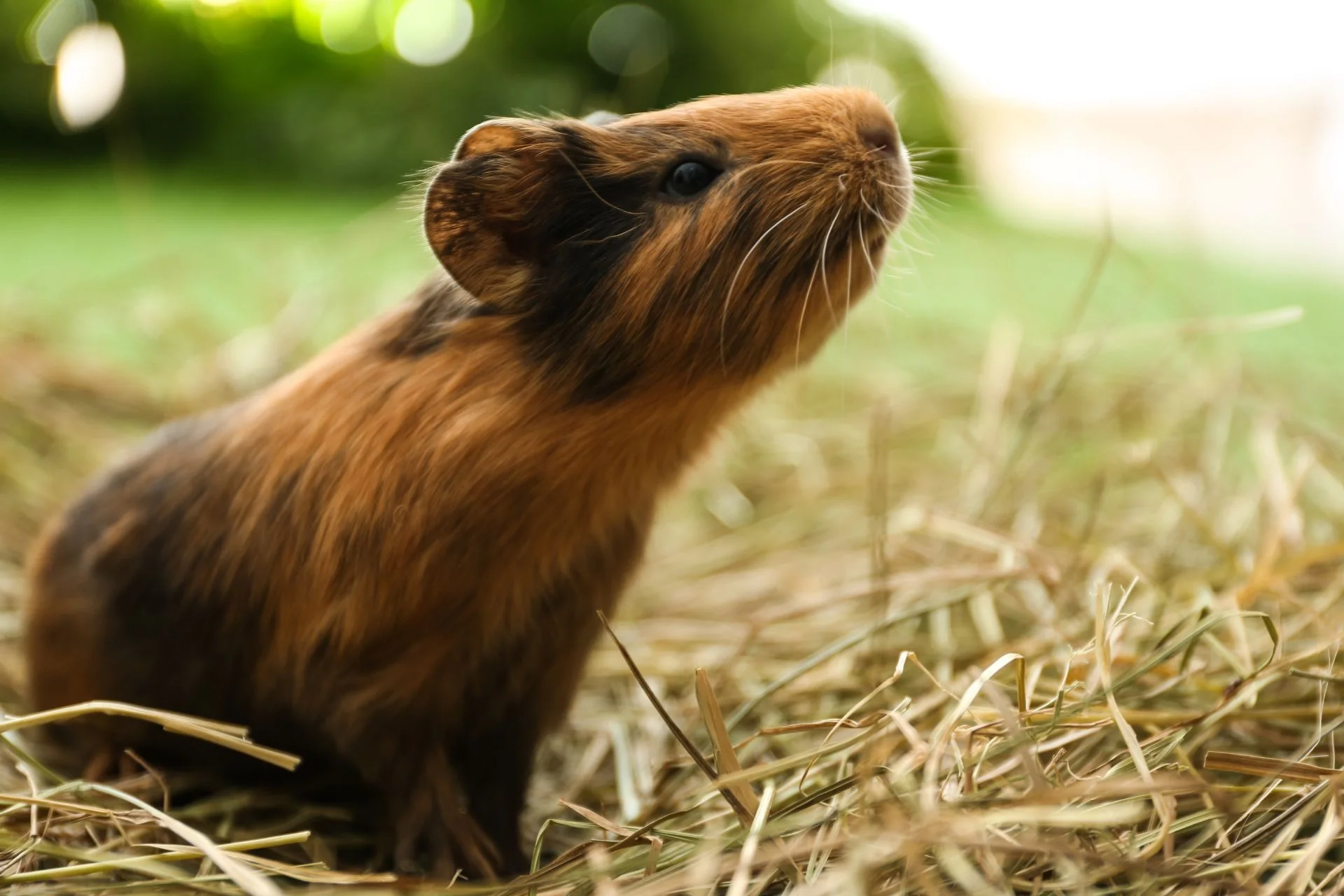
Hay is not a supplement to a guinea pig's diet. It is the diet. Every other component - pellets, vegetables, fruit - builds around a constant, unlimited supply of hay. Get the hay right and most of the rest falls into place.
Why hay is so important for guinea pigs
Guinea pigs are strict herbivores with a digestive system built around continuous fiber intake. In the wild, they graze for most of the day. Their teeth grow continuously throughout their lives, and the act of chewing long-strand hay is what keeps those teeth at a safe length. Without enough hay, teeth can overgrow and cause pain or difficulty eating, one of the most common and preventable health problems in guinea pigs kept as pets. Beyond dental health, hay provides the fiber that keeps the gastrointestinal tract moving. A guinea pig without consistent hay access is at risk of GI stasis, a condition where gut movement slows or stops. It can become serious quickly.The main types of hay for guinea pigs
Timothy hay
Timothy hay is the standard recommendation for adult guinea pigs. It has the right balance of fiber content (around 32% crude fiber), low calcium, and low protein, which is exactly what an adult guinea pig's system needs. The high fiber content keeps digestion running smoothly, and the coarse texture wears teeth down effectively. Most pet supply stores stock Timothy hay in several cuts. First-cut Timothy is coarser with more stems; second-cut is softer and leafier; third-cut is the softest. Second-cut is the most popular for guinea pigs and accepted well by most animals.Orchard grass hay
Orchard grass is a good alternative or complement to Timothy. It is slightly softer and has a different smell and taste, which can be appealing to guinea pigs that are fussy about their hay. The fiber content is comparable to Timothy, and nutritionally the two are similar. Mixing orchard grass into a Timothy-based diet adds variety without introducing any risk.Meadow hay
Meadow hay is a blend of several grass varieties, typically Timothy, orchard grass, and other meadow grasses. The mix of textures and scents can encourage guinea pigs to eat more hay, which is useful for animals going through a fussy phase. It is not as consistent in nutritional profile as single-grass hay, but for most healthy adult guinea pigs it is a perfectly fine option.Alfalfa hay
Alfalfa is nutritionally different from grass hays. It is high in calcium and protein, which makes it appropriate for young guinea pigs (under six months), pregnant females, and nursing mothers. For healthy adult guinea pigs, the high calcium content is a problem - it can contribute to bladder stones and urinary tract issues over time. Alfalfa is sometimes mixed into pellets formulated for adults, so it is worth checking ingredient lists when buying.How to choose good quality hay
Quality varies considerably between brands and batches. Fresh hay should be green or greenish rather than pale yellow or brown. It should smell clean and grassy, not musty or sour. Avoid hay that is visibly dusty, as dust can irritate a guinea pig's respiratory tract. Check the packaging date where available. Hay that has been sitting in a warehouse for months can lose its appeal to picky eaters and may have lower nutritional quality. Buying from a specialist small animal supplier tends to produce better results than generic bulk bags from discount shelves.How to store hay properly
Hay absorbs moisture easily, which leads to mold. Store it in a cool, dry place away from direct sunlight. A breathable container such as a paper sack, cloth bag, or mesh bin is better than a sealed plastic tub, which can trap humidity. Check hay before putting it in the enclosure. Any that looks discolored or smells off should be discarded. Mold is toxic to guinea pigs.What to tell a pet sitter about hay
When you book a pet sitter or arrange house sitting for a trip, hay is the single most important care instruction to cover. A pet sitter unfamiliar with guinea pigs might ration the hay, not realizing it should be available at all times. They also need to know which type you use, where it is stored, and how to identify hay that needs replacing. Leave a written note that covers:- Where the hay is stored and how to access it
- Which type you use (Timothy, orchard grass, meadow, or a mix)
- That hay should always be available - it is not rationed like pellets
- How to identify hay that needs replacing (brown, musty, dusty)
- How often to add fresh hay to the enclosure
Frequently asked questions
1. How much hay should I give my guinea pig?
Unlimited. Guinea pigs should have access to fresh hay at all times and will regulate their own intake. A useful rule of thumb is that the hay pile should be roughly the size of your guinea pig's body. Daily removal of old hay and adding a fresh supply keeps it appealing and hygienic.
2. Can I mix different types of hay?
Yes, and for many guinea pigs it is beneficial. Mixing Timothy with orchard grass or meadow hay adds variety in texture and taste, which can encourage more hay consumption. The main rule is to avoid giving alfalfa to healthy adult guinea pigs - it is too high in calcium and protein for their daily needs and can contribute to bladder problems over time.
3. Can guinea pigs eat straw instead of hay?
No. Straw is the dry stem of grain plants and has minimal nutritional value. It cannot replace hay and does not provide the fiber guinea pigs need. It is sometimes used as bedding material, but it should not be offered as food. Always use proper grass hay for feeding.
4. How do I get a guinea pig to eat more hay?
Try offering hay from a rack positioned at a comfortable height so the guinea pig has to pull it through the bars, which encourages natural foraging. Switching to a different cut of Timothy or adding orchard grass can spark renewed interest. Some guinea pigs respond well to very fresh hay - if yours has been ignoring their supply, try opening a new batch.
5. Can guinea pigs eat moldy hay?
No. Mold in hay can cause serious respiratory and digestive problems in guinea pigs. Discard any hay that shows visible mold, has an unusual color, or smells musty or sour. This is especially important during humid months or if hay is stored in a damp location. Always inspect hay before adding it to the enclosure.
6. How should a pet sitter manage hay for a guinea pig they're looking after? 🐾
If you are a pet sitter or house sitter caring for someone's guinea pig, store the hay in the container the owner provides, keep it dry, and top up the enclosure at least once a day. Run your hand through the supply before adding fresh hay - if it smells clean and looks green or light tan, it is fine. If it smells musty or looks discolored, use the next cleanest batch and let the owner know. Hay should always be available to the guinea pig, not rationed or given at set mealtimes only.
For most guinea pigs, hay management is the foundational habit that everything else builds on. Get the type right, keep it fresh, and provide it without restriction.