Fitness-focused people are often away from home during peak hours: early mornings at the gym, lunchtime runs, weekend training or races. They also tend to travel for events and competitions. A pet that demands constant daily attention does not fit that life.
Turtles are one of the few pets where your activity level is genuinely irrelevant to their wellbeing. They do not need walks, they do not need you home by a specific time, and they do not have separation anxiety. What they need is a properly set-up environment and consistent care, not constant presence.
What fitness enthusiasts need in a turtle
- Low daily time requirement. Care that fits into the gaps between training sessions, not something that competes with them.
- Tolerates an owner who is out for long stretches. A turtle that gets stressed if you are gone from 6am to 8pm is not practical.
- Manageable during race seasons or competition blocks. You want to be able to maintain care quality when your focus is on training and recovery.
Best turtle species for fitness enthusiasts
Russian Tortoise
Russian Tortoises are from arid Central Asian regions where food is scarce and temperatures swing widely. They are adapted to infrequent feeding and do not need daily fresh food if hay is available. This makes them ideal for someone who has early mornings and late returns. They are also small and live in a compact enclosure that does not dominate your living space. A 10-minute morning check and a 5-minute evening top-up is all that is needed on training days.
Musk Turtle
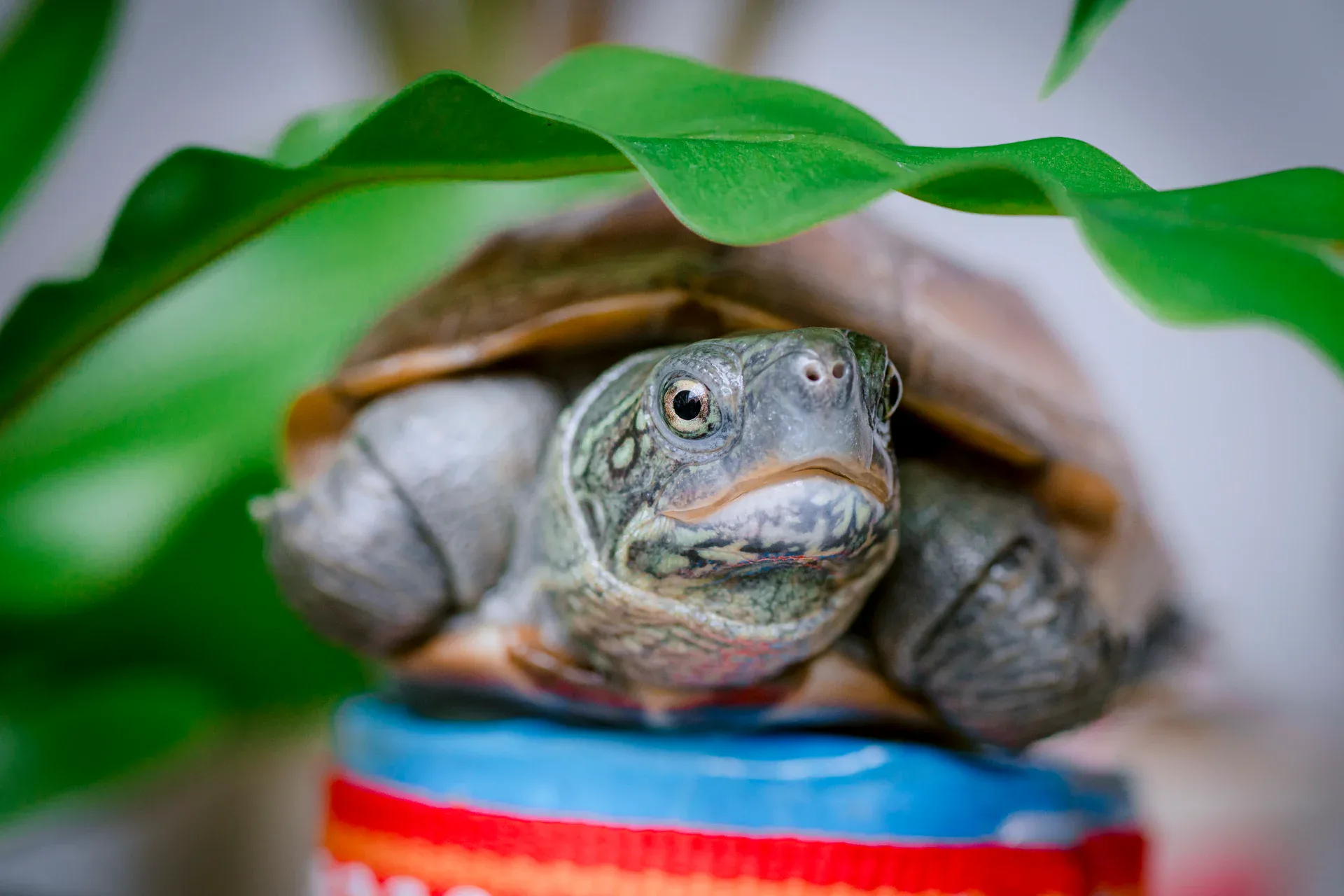
Common Musk Turtles are tiny aquatic turtles that manage well in a small filtered tank. They eat every two to three days, which means you can set up automated feeding on heavy training weeks. A good filter keeps the water quality stable between weekly changes. The entire weekly care routine takes about 30 minutes, which is less than most fitness routines.
Box Turtle
Eastern Box Turtles eat three to four times per week as adults, not daily. On training days, this is a meaningful benefit. They eat a varied diet of worms, berries, and greens that you can prep in batches. Their semi-terrestrial enclosure does not need a running filter, which reduces daily maintenance. They are hardy enough to handle a gym bag left at the door, a quick feeding, and not much else on a busy weekday.
Hermann's Tortoise
Hermann's Tortoises bask, graze, and sleep on their own schedule, entirely independent of yours. They do not notice or care if you were gone all day. They eat leafy greens and weeds that you can prep weekly and refrigerate. Their basking light runs on a timer. For a fitness enthusiast who trains six days a week, a Hermann's Tortoise is about as low-friction as a pet gets.
Building a low-maintenance setup
Investing time in the setup upfront is what makes turtle ownership sustainable for a busy training schedule:
- Timer for lighting. $10 to $20 investment. Never manually switch lights again.
- Quality filter (aquatic species). A well-sized canister filter means weekly water changes, not daily.
- Weekly batch food prep. For tortoises, wash and chop a week of greens on Sunday. Takes 15 minutes.
- Automatic feeder (optional). Useful for travel or competition weeks. Works with pellet-based diets.
Handling race weekends and competitions
Competition weekends and training trips happen. For a two to three day absence, most tortoise and box turtle setups can be left with hay available and automated lighting. For aquatic species, a sitter who visits once per day handles feeding and a quick filter check.
Find a trusted sitter through Petme before your first event. Brief them on the setup, leave written instructions, and the rest takes care of itself. Most turtle sitters find the care routine is simpler than they expected.
The unexpected upside: turtles and recovery
Serious athletes know how important recovery is. Watching an aquatic turtle tank or sitting near a tortoise pen during rest periods has a measurable calming effect. It is not a replacement for sleep or nutrition, but a quiet, low-stimulus companion during recovery days is a legitimate tool for managing the mental side of training.