Freelancers have irregular schedules. Some weeks are slammed, others are slow. Income fluctuates. You might work from home every day for a month, then take a trip for a client project. Pets need to fit that reality.
Turtles suit freelancers well, with some caveats. The right species has low recurring costs, manageable care during busy weeks, and is easy to hand off to a sitter when you travel for work.
What freelancers need from a turtle
- Low and predictable running costs. Feed, electricity for basking and filtration, occasional vet visits for healthy species. No unexpected grooming bills or boarding costs.
- Flexibility around your schedule. You should not need to feed at the exact same hour every day to keep the animal healthy.
- Easy to explain to a sitter. Written care instructions that fit on one page.
Best turtle species for freelancers
Musk Turtle
The Common Musk Turtle is the most practical turtle for someone living in an apartment with a variable lifestyle. Adults stay 3 to 5 inches, live happily in a 20-gallon tank, and eat commercial pellets and the occasional earthworm. Running costs are low: a small filter, a UVB bulb replaced annually, and food that costs a few dollars per week. Care instructions for a sitter fit easily on an index card.
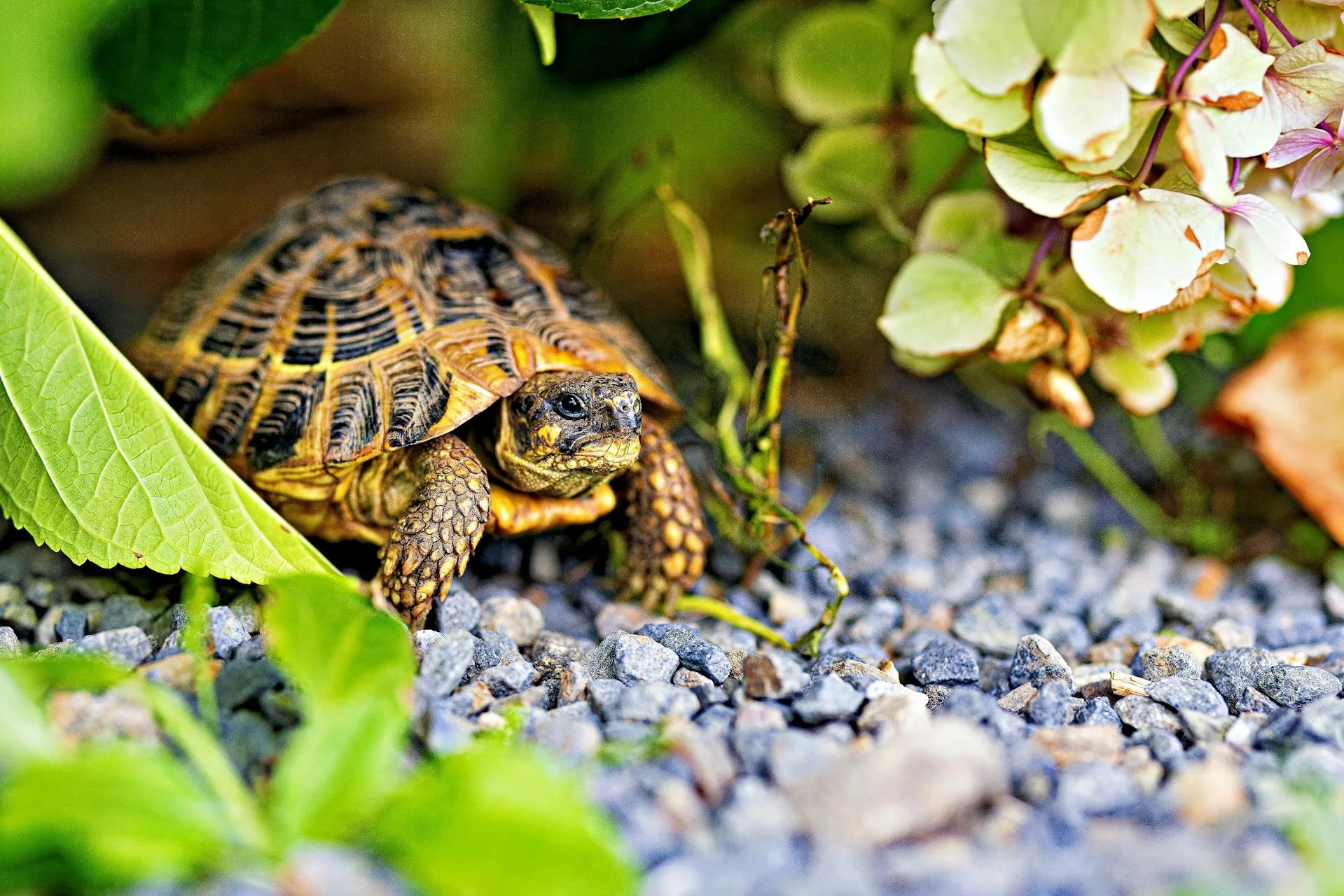
Russian Tortoise
Russian Tortoises are terrestrial, which means no water filtration. Their setup costs are modest: a 40-gallon enclosure (or a simple wooden tortoise table), a basking bulb, and a UVB light. Monthly food costs are low, as they eat weeds, hay, and leafy greens. They tolerate an owner who has a busy week and can only do a quick daily check. Vet costs are generally low for healthy Russian Tortoises kept at proper temperatures.
Eastern Box Turtle
Box Turtles live well in a large enclosure or outdoor setup and eat a varied omnivore diet: worms, berries, leafy greens, and the occasional mushroom. You can batch-prep food and refrigerate it for the week. They are hardy and forgiving if temperatures fluctuate slightly. A freelancer working on a client sprint who only has 10 minutes a day for the turtle will do fine.
Painted Turtle
Painted Turtles are a good aquatic option for freelancers. They are active, visually interesting, and eat commercial pellets that are easy to stock. A canister filter keeps water quality stable for a week between changes. Their care is automated as much as any animal can be: timed lights, filter running continuously, pellets topped up every few days.
Greek Tortoise
Similar to the Russian Tortoise in care and cost, the Greek Tortoise (Spur-Thighed Tortoise) is a small, herbivorous land tortoise. They eat dandelions, clover, and leafy greens, all of which are cheap or free to source. They are long-lived with proper care, which means the relationship is worth investing in. A freelancer who has had them for years knows exactly how they behave and what they need.
Realistic cost breakdown for turtle ownership
- Setup (one-time): Enclosure, lighting, filter or substrate, thermometer. $100 to $300 depending on species and whether you buy new or secondhand.
- Monthly running costs: Food ($5 to $20), electricity ($5 to $15), substrate or filter media if needed.
- Annual: UVB bulb replacement ($15 to $30), one wellness vet check if you choose to do it ($50 to $100).
Compare that to dogs or cats and the math is straightforward. Turtles are low-cost pets to run.
Freelance travel and turtle care
Client meetings, co-working retreats, and spontaneous travel are part of freelance life. For absences up to a week, a sitter who visits once a day is usually enough for terrestrial tortoises. Aquatic species need slightly more attention (checking filter, feeding), but most instructions take five minutes to carry out.
Using Petme to find a sitter who has experience with reptiles or small pets means you can travel without worrying. The initial meet-and-greet takes 30 minutes. After that, you have a reliable contact for every trip.
Species to avoid as a freelancer
- Large tortoises (Sulcata, Aldabra). High food costs, require significant outdoor space, and require specialized vet care.
- Any rare or specialty species. Higher purchase price, harder to find vets familiar with them, and more fragile care requirements. Not a good match for variable income.