Military life involves structured unpredictability: training exercises, deployments, base reassignments, and field weeks. Most pets cannot survive that schedule without reliable secondary care. Turtles, with the right planning, can.
The honest answer is that owning a turtle during active service works best if you have a stable home base and a dependable backup care network. The animal cannot move with you on deployment. What you need is a species that does well with consistent sitter care when you are unavailable.
What military pet ownership looks like
Most service members who own pets fall into one of these situations:
- Stationed at a base, occasional field exercises. You are home most weeks but gone for two to three week stretches a few times per year. A sitter covers these gaps.
- Deployment for three to twelve months. You need long-term care for the animal, either from a trusted person or a permanent arrangement.
- Frequent base transfers. Moving every two to three years. The animal needs to be portable or have a care network that can transfer with you.
Best turtle species for military personnel
Russian Tortoise
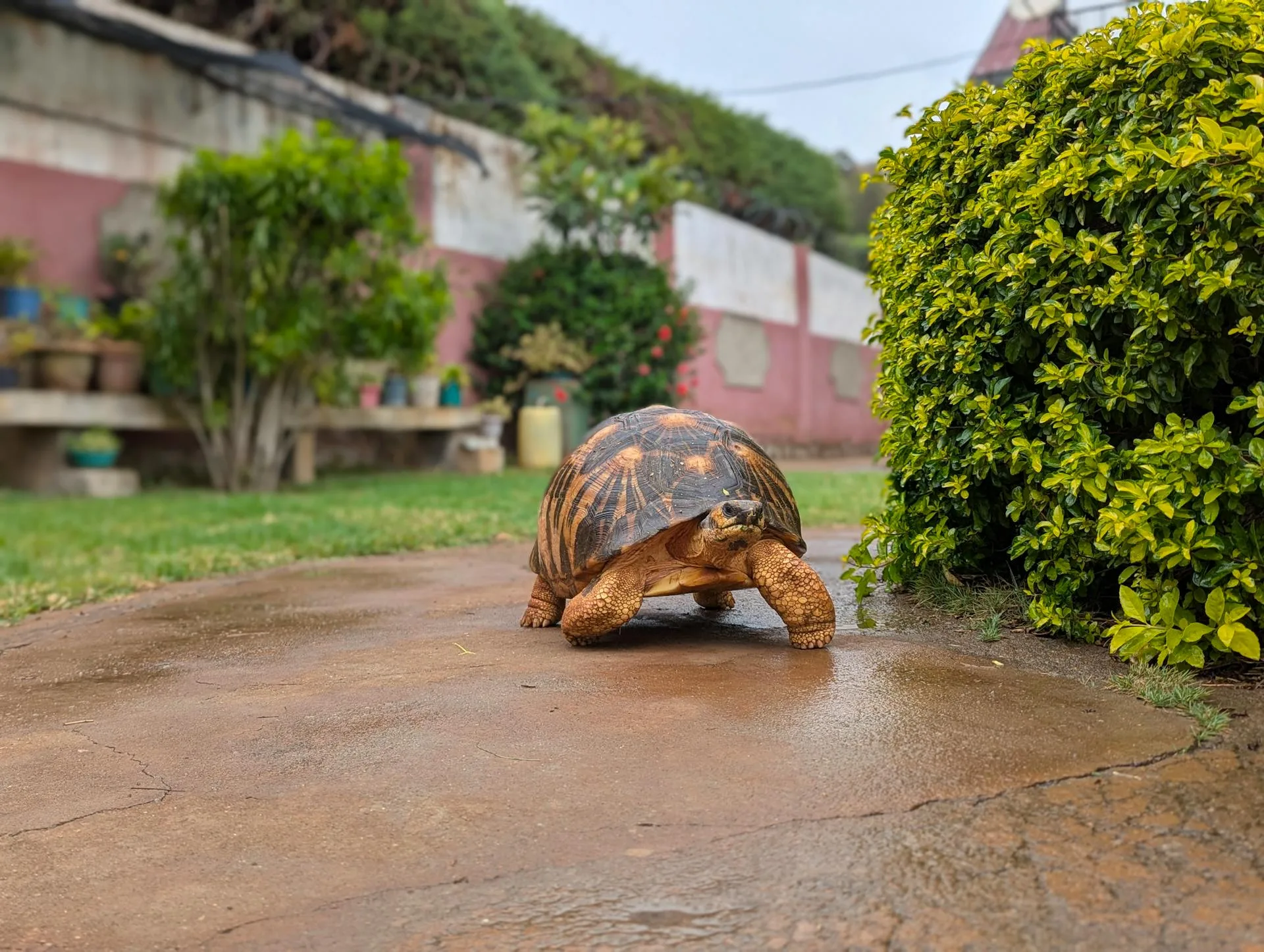
Russian Tortoises are the most deployment-compatible tortoise species. Their hardy constitution means they handle short periods of suboptimal care without health consequences. They eat a simple vegetable and hay diet that any sitter can manage. Their enclosure is compact and terrestrial, meaning a family member or friend can take them in for deployment periods without needing special equipment. Many service members leave their Russian Tortoise with family during long deployments and return to a healthy animal.
Box Turtle
North American Box Turtles are another solid option. They are adaptable, long-lived, and can cohabitate with a family member's household during absences. Their diet is simple and their enclosure can be moved. They do not have the high humidity or filtration requirements of aquatic species, which makes them easier to hand off during a PCS move or deployment.
Hermann's Tortoise
Hermann's Tortoises are reliable and predictable. Their care is simple enough to write on an index card. During field exercises or short deployments, a sitter who visits three times per week can maintain everything. They are small enough (6 to 8 inches) to be relocated in a portable enclosure if a PCS move requires it.
Greek Tortoise
Greek Tortoises are durable, adaptable, and comfortable with a rotating cast of caregivers as long as the husbandry is consistent. Their terrestrial setup and herbivorous diet make them one of the easiest species to leave with a friend, family member, or sitter during an extended absence. They are commonly found in Europe, which makes them a practical choice for service members stationed overseas.
Planning for deployment
The most important thing for military turtle owners is the care plan, not just the species:
- Establish a care network before you need it. Do not wait until two weeks before deployment. The person caring for your turtle needs to have interacted with the animal before you leave.
- Keep the setup simple. Complex setups fail when the person maintaining them is unfamiliar with reptile care. Simpler is more reliable during long absences.
- Have a vet contact lined up. Your caregiver needs to know who to call. Ideally the vet has seen your turtle at least once before deployment.
- Consider a long-term boarding option. Some reptile specialty vets offer boarding. For very long deployments, this is worth researching.
Handling field exercises with a sitter
For two to three week field exercises, a pet sitter who visits twice weekly is usually enough for tortoises. Aquatic species need more frequent visits (every two to three days at minimum), which is why terrestrial tortoises are more practical for service members with exercise schedules.
Find a reliable sitter through Petme, have them meet the turtle before your first exercise, and build the relationship before you need it. Small-pet and reptile sitters on the platform can handle the care with minimal supervision once they know the routine.