Athletes deal with irregular schedules: early morning training, afternoon sessions, weekend competitions, and occasional travel. That kind of schedule is hard for high-maintenance pets but works fine with the right turtle.
Turtles are not a zero-care pet, but they have lower daily interaction requirements than dogs or cats. The right species fits a training-heavy lifestyle better than most animals.
What athletes need from a turtle
- Low daily time commitment. You should be able to maintain the tank during a short window each day, not over an hour.
- Tolerance for schedule variation. A turtle that needs feeding at the exact same time every day is not realistic for someone whose schedule shifts weekly.
- Resilience. Hardy species that handle temperature fluctuations and minor care inconsistencies without health problems.
Best turtle species for athletes
Russian Tortoise
Russian Tortoises are among the most independent tortoises you can own. Adults can go two or three days without fresh greens if you are at a competition, as long as hay or dried grass is available. They live on land, so there is no tank water filtration to manage. Their enclosure needs a basking spot (95°F) and a cooler end (65 to 70°F), which is easy to automate with timers. They are also small (6 to 8 inches), which means the setup is compact.
Box Turtle
North American Box Turtles are a solid choice for someone who is often outside. They are semi-terrestrial, tolerant of varied feeding schedules, and hardy enough to handle real-world care conditions. Their diet (worms, berries, leafy greens) is easy to prep in batches and refrigerate. With proper humidity and temperature, they are low-demand on a day-to-day basis.
Painted Turtle
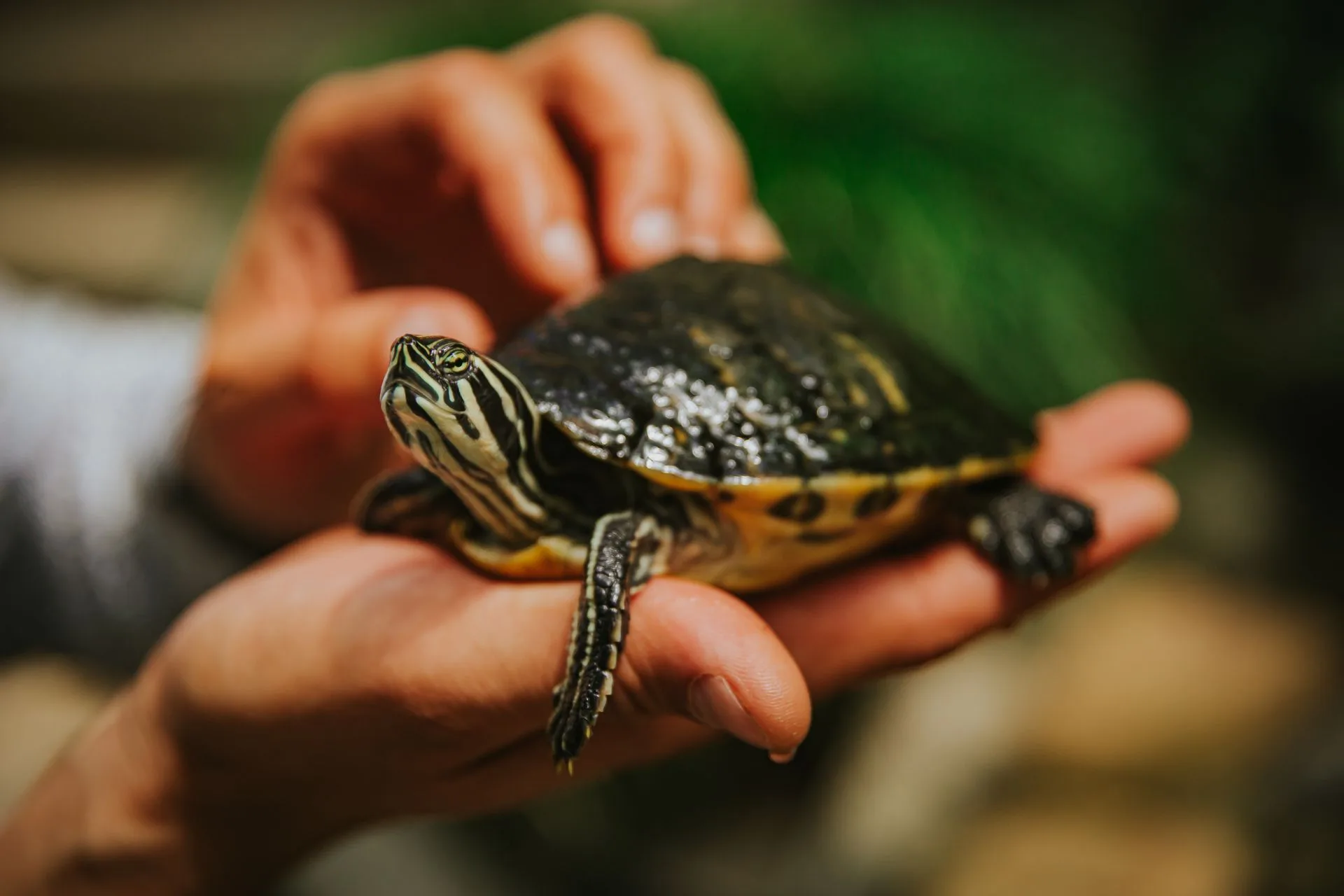
Painted Turtles are aquatic, so they require a filtered tank, but they are among the most forgiving aquatic turtle species. They eat commercial turtle pellets, which means no special food prep. A good canister filter on the tank means water changes happen weekly rather than daily. Their basking needs are simple (a dock and UVB light). Athletes who travel but have someone to do a weekly water change and feeding will do well with Painted Turtles.
Musk Turtle
Common Musk Turtles are one of the smallest aquatic species (3 to 5 inches) with one of the smallest tank requirements (a 20-gallon setup is enough for an adult). They eat well, are active during their normal hours, and tolerate an owner who is out for long stretches as long as the filter is running and food is topped up. A timed feeding device can automate daily feeding if you are away for training camps.
Hermann's Tortoise
Hermann's Tortoises are slow-paced and self-sufficient. They graze on hay and greens, bask when they want to, and hide in their shelter the rest of the time. They do not need daily handling to stay healthy. If you set up an outdoor enclosure in the warmer months, they graze naturally and need even less management. A good match for athletes who have outdoor space.
Automating turtle care during training blocks
Serious athletes spend blocks of time in training camps or traveling to competitions. Some automation removes stress:
- Automatic timer for lighting. UVB and basking lights on a 10 to 12 hour timer. No manual switching.
- Canister filter for aquatic species. Rated for 2 to 3 times the tank volume. Keeps water quality stable for a week without intervention.
- Automatic feeder. Works for pellet-based diets. Set and check weekly.
- Temperature monitoring. A basic thermometer or smart sensor tells you (and a sitter) if anything is out of range.
Using a sitter for competitions and training trips
For multi-day absences, a pet sitter familiar with reptiles is the practical solution. Turtle care instructions are short (check basking light, drop food, confirm water level), which makes this easy to hand off. Find a sitter on Petme, introduce them to your setup before your first trip, and leave a one-page care sheet.
Species to avoid if you train heavily
- Red-Eared Slider. Grows large (up to 12 inches), produces a lot of waste, and needs frequent water changes. More maintenance than a busy athlete typically has time for.
- African Sulcata Tortoise. Grows to 100+ pounds. Needs a large outdoor enclosure and substantial daily food. Not practical for most apartments or training schedules.
- Spotted Turtle. Beautiful but needs specific water quality conditions that are difficult to maintain with variable care.