TL;DR: To leave detailed instructions for a pet sitter, list feeding times, walk schedules, medications, and quirks, for example "Fluffy's kibble at 7, no vacuum near the cat." Be clear and specific, and include emergency details. Cat sitters need litter and hiding-spot details. Grab our template below for a smooth handoff.
Why detailed instructions matter
Leaving your pet with a sitter is a bit like leaving a child with a babysitter, except your pet can't tell the sitter what it needs. A quick note saying "feed the dog" isn't enough. Detailed instructions are the difference between a sitter following your pet's routine and you coming home to a stressed cat or a dog who has made a mess of the house. They are the foundation of a smooth trip and a settled pet.
Saving your sitter (and your pet) from chaos
Imagine your sitter guessing whether "morning walk" means 6 a.m. or 10 a.m., or whether your cat is hiding because she is upset or simply settling in. Without clear directions, the sitter is left guessing, and your pet is the one affected. Good instructions turn a potential problem into a smooth routine and keep everyone on track.
The peace of mind payoff
It is hard to relax on a trip if you are wondering whether your dog is getting his allergy medication or whether the sitter has found the cat's toys. A solid guide that covers feeding times, vet numbers, and notes like "don't let Rover on the couch" lets you relax, knowing your pet is in good hands. That peace of mind is worth the effort.
Crafting instructions that work
Writing instructions for a pet sitter isn't about writing pages of notes; it's about clarity and specifics. Start with the essentials: what, when, and how. If your dog is fussy about food, spell it out: "half a cup at 7 a.m., no human food." The goal is to keep their routine running exactly as it does when you are home.
How to write instructions for a pet sitter
Keep it simple but thorough, and use bullet points. Start with daily basics: "Feed Bella wet food at 6 p.m., one can, mix in her pills." Add routines: "Walk Max 20 minutes after breakfast, he pulls, so use the harness." Note quirks: "Luna hides under the bed, lure her out with treats." Include emergency details such as vet info and your number, and flag anything unusual, like "Buster barks at the mailman, it's normal." Done well, it reads as a clear set of directions.
What instructions do you leave a cat sitter?
Cats are particular, so be specific. "Litter box scooped daily, she'll avoid it otherwise" is essential. Add feeding: "Half a cup dry at 8 a.m., wet at 6 p.m., fresh water always." Note hiding spots: "Check the closet if she disappears." If she's on medication or likes a nightly brush, say so, because cats notice when their routine slips.
Beyond the basics: what sitters need to know
A bare-bones "feed and walk" list keeps your pet going, but sitters do a better job with more detail. Notes like "the dog loves his squeaky ball, put it away at night or he'll want to play" can save a sitter from a 3 a.m. wake-up. Think of it as the full picture: routines, preferences, and the small things that make your pet who they are. It's not only about getting through the stay; it's about keeping your pet happy.
Covering all the bases
Beyond food and walks, add the extras: where the leash is kept, which treats are allowed, and where your cat likes to nap. Include house details such as trash day and the Wi-Fi code so the sitter isn't searching for them.
Emergencies matter most: vet contact, a backup person, and a note to call you if anything goes wrong. The more the sitter knows, the less they have to guess.
What are the disadvantages of being a pet sitter? (And how instructions help)
Sitters deal with a lot: unpredictable pets, odd hours, and the occasional moment of not knowing where the food is kept. Vague instructions make it worse; the sitter is left guessing whether "twice a day" means morning and night or noon and midnight. A detailed guide cuts the stress. A note like "Max's pills at 8 a.m., half a tablet in cheese" means the sitter isn't left working it out alone. It turns a hard job into a manageable one.
Your pet sitter instruction template
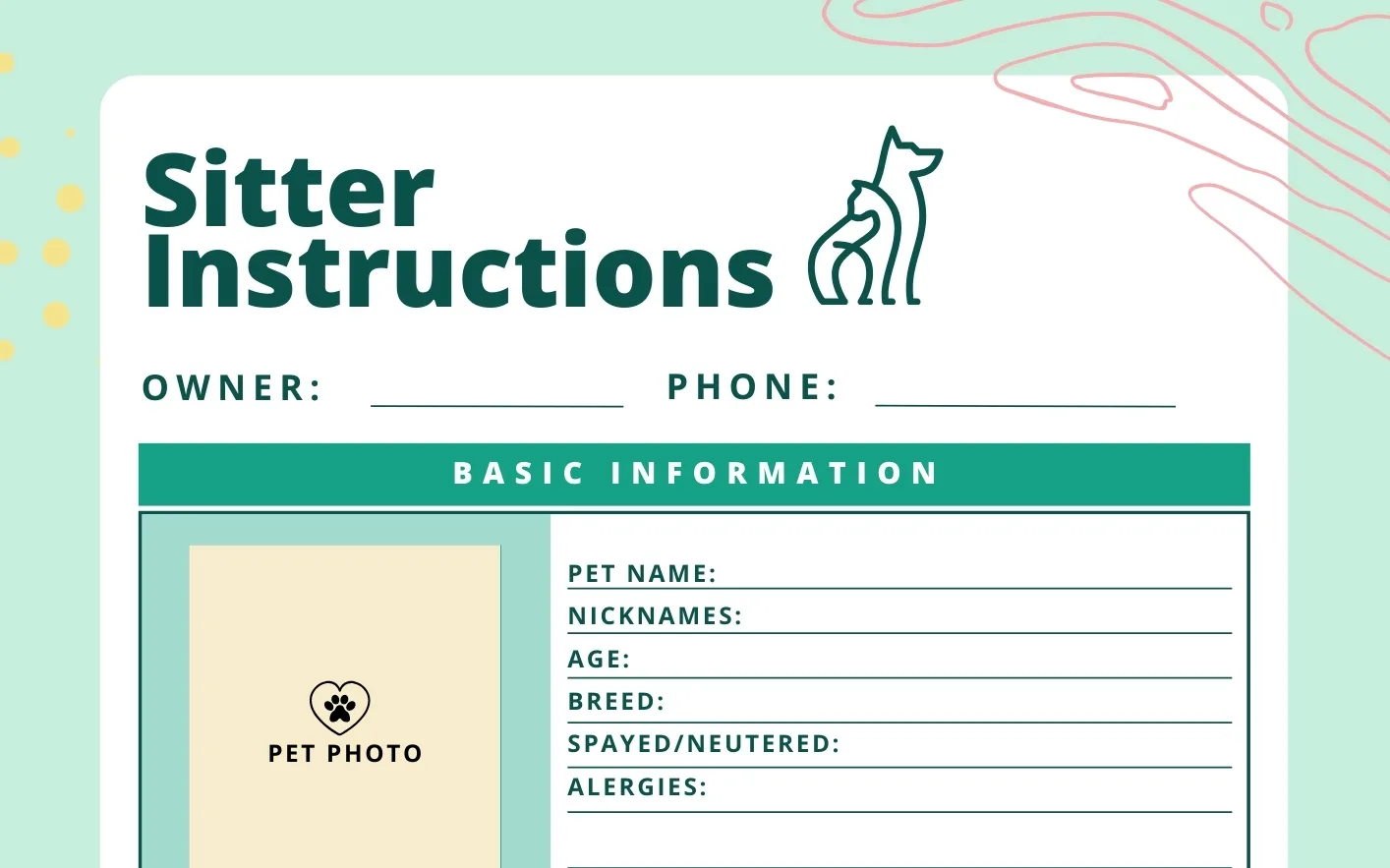
We've put together a template to make this easy: fill it out and hand it over. It has space for feeding, exercise, medications, quirks, and contacts, so you don't miss anything. Adjust it for your dog's walk schedule or your cat's litter box needs. Everything it covers is laid out below, so you can copy it straight into a note and hand it over.
It's simple but covers everything: add "Socks hates thunder, hide in the closet" or "Rex needs his ball tossed 10 times." It captures your pet's daily life, ready for the sitter to
Tips for a smooth handoff
Once your instructions are set, make them easy to follow. Print a copy for the fridge; digital is fine, but paper is harder to miss. Walk the sitter through it and point out the food, the leash, and where the cat likes to hide. Leave extra supplies, and don't skimp on treats if your dog expects them. For a full prep rundown,
this guide is a good resource. Finding a pet sitter on
Petme can pair you with someone who will follow your instructions closely.
Making it foolproof
Test it out. A short overnight lets you adjust before a longer trip. Label things clearly, such as "Max's food" and "Luna's meds," so there's no mix-up. Add a just-in-case note: "If the power's out, the flashlight's in the drawer." It can feel like a lot of detail until you need it, and your sitter will appreciate having it.
Conclusion: Instructions that set everyone up for success
Leaving detailed instructions for a pet sitter is the key to a relaxed trip. Cover the essentials, note the quirks, and hand over a template that is ready to use. It's about keeping your pet fed and keeping their routine intact, whether that's a dog's walk or a cat's nap spot. To find a sitter who will follow your notes, find a pet sitter on
Petme. Your pet stays settled, your sitter is well briefed, and you can travel with peace of mind.
FAQs: Pet sitter instruction insights
How long should my instructions be?
Aim for about a page: short enough to skim, detailed enough to cover feeding, walks, and any specific rules. Two pages at most if you have several pets. Keeping it concise makes it easier for the sitter to use.
Should I include house rules too?
Yes, such as "no shoes on the couch" or "trash out Tuesday." Keep it simple but clear so the sitter isn't guessing where the bins are. Cover the pet details first, then the house details.
What if my pet's routine changes?
Leave a note such as "Max skipped his pill yesterday, double up today," or send a text. A good sitter can adapt as long as you keep them informed. Keeping them updated avoids any surprises.
How do I make instructions cat-specific?
Focus on the litter box ("scoop daily or she'll avoid it") and hiding spots ("check under the bed"). Add food details ("wet at 6 p.m., dry at 8 a.m.") and note if she dislikes being handled. Cats are particular, so spell it out.
Can I just tell the sitter everything in person?
You can, but write it down too. Memories fade, and "I said 7 a.m." is easy to forget once the routine kicks in. A written guide is your backup, and the sitter will appreciate having the details on hand.