Ancient Egypt was defined by its relationship with cats: they were worshipped, protected by law, and mummified alongside pharaohs. The god Bastet was depicted as a cat. Killing one was punishable by death. The breeds with genuine Egyptian lineage or strong historical association are distinct animals with temperaments and care requirements quite different from typical domestic cats, which matters not just for day-to-day ownership but for any time someone else is looking after them.
The Egyptian Mau
The Egyptian Mau is the only naturally spotted domestic cat breed. The spots are not the result of selective breeding: they appear spontaneously on both the coat and the skin underneath. The breed's name means "cat" in ancient Egyptian, and cats with the Mau's distinctive appearance are well documented in ancient Egyptian artwork. The characteristic 'M' marking on the forehead, sometimes called the mark of the scarab, is one of its most recognizable features, alongside bright green eyes and a build that prioritizes speed over bulk.
Modern Egyptian Maus descend from cats brought from Egypt to Europe and the United States in the 1950s. They are one of the fastest domestic breeds, capable of running at approximately 30 miles per hour.
Temperament: Loyal and affectionate with their immediate family; reserved and cautious with strangers. They bond closely with one or two people and are territorial. They are not typically lap cats, but they are demonstrably affectionate with people they trust, including through vocalizations: they chirp and trill rather than producing standard meows.
Cat sitter notes: An Egyptian Mau who doesn't know a sitter will take time to trust them. Don't expect immediate friendliness: forced interaction often backfires with this breed. A cat sitter should enter the space calmly, move slowly, offer high-value treats without pressure, and let the cat approach in its own time. Familiar toys and a consistent routine matter more for this breed than for more adaptable cats. House sitting is strongly preferable to catteries; a Mau in an unfamiliar environment with strangers is significantly more stressed than one in its own territory with a new but patient human present.
The Abyssinian
Despite the name implying Ethiopian origin, the Abyssinian's history is genuinely complicated. The breed as it exists today was developed in Britain in the 19th century, but DNA analysis suggests its closest ancestral population lives in South Asia and the coastal Indian Ocean region, with Egyptian trading routes as the probable dispersal path into Europe. Ancient Egyptian artwork regularly depicts cats with the Abyssinian's ticked coat and long-limbed, lean build.
Temperament: One of the most active domestic cat breeds. Curious, energetic, intelligent, and social. They are sometimes called the clowns of the cat world: they will fetch objects, invent their own games, and demand engagement from their environment. They do not enjoy being left alone for long periods and thrive in active, stimulating households.
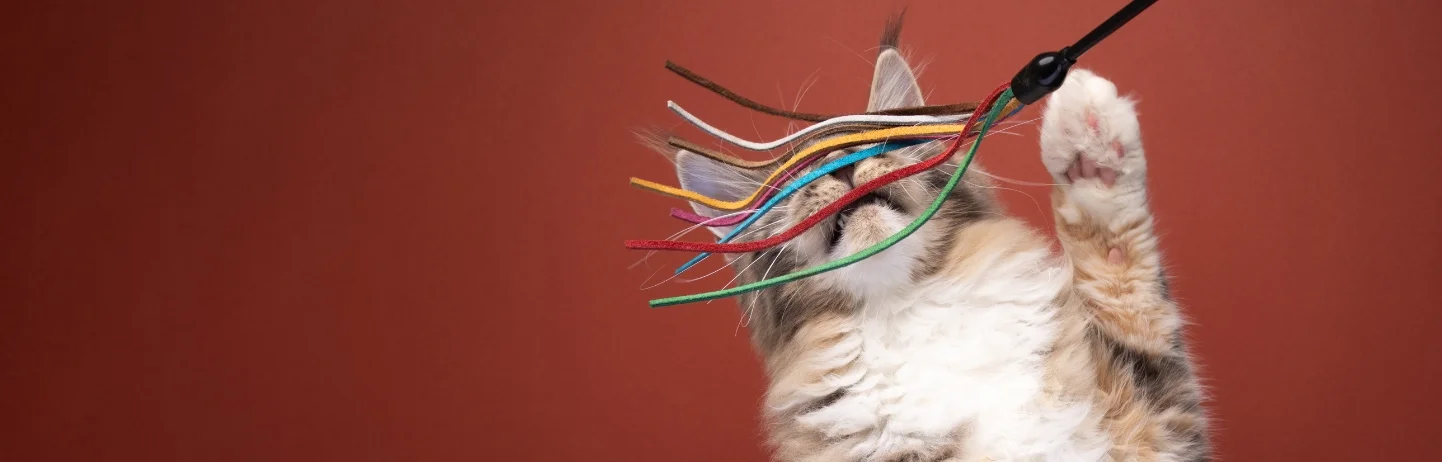
Cat sitter notes: Drop-in visits are not sufficient for an Abyssinian. This breed genuinely needs active play sessions (wand toys, puzzle feeders, interactive games), not just feeding and a clean litter box. A cat sitter covering an Abyssinian should plan for at least two substantial play sessions per day. If your work involves long hours away, arrange for the sitter to do house sitting rather than drop-ins, or have a second active cat for company. Make this explicit in your instructions; a well-meaning sitter who doesn't know the breed will default to basic care and the cat will be underserved.
The Chausie
The Chausie is a hybrid breed developed from crosses between domestic cats and the Jungle Cat (Felis chaus), a wild species native to the Nile Valley and South Asia. Jungle Cats were kept and depicted in ancient Egypt: their remains have been found in Egyptian tombs. The modern Chausie breed was developed in the 1990s to preserve the wild aesthetic in a domesticated form.
They are larger than typical domestic cats, with a long, lean athletic frame, ticked coats in brown, black, or silver, and notably large ears. They are excellent jumpers and many have an unusual affinity for water.
Temperament: Highly energetic, social, and intelligent. Their wild lineage produces a cat that is more active and more demanding than most domestic breeds. They form strong attachments to their owners and do not handle isolation well.
Cat sitter notes: Chausies need a cat sitter with actual experience of active or wild-lineage breeds. A sitter who is only used to domestic shorthairs may find the energy level and the need for sustained engagement surprising. This is not a breed that self-entertains adequately. Include specific play instructions (duration, toy types, what the cat responds to) in your sitter notes. House sitting is essential: a Chausie in a cattery or in an unfamiliar environment will be stressed and potentially disruptive. Confirm with your sitter that they are comfortable before leaving, not after.
The Abyssinian's close relative: the Somali
The Somali is a long-haired version of the Abyssinian, developed from recessive genes already present in the Abyssinian gene pool. It shares the Abyssinian's temperament almost exactly (active, curious, demanding of engagement) but requires significantly more coat maintenance. Everything in the Abyssinian cat sitter notes above applies equally here, with the addition that a sitter covering a Somali for more than a few days should be briefed on the coat care routine.
The Sphynx
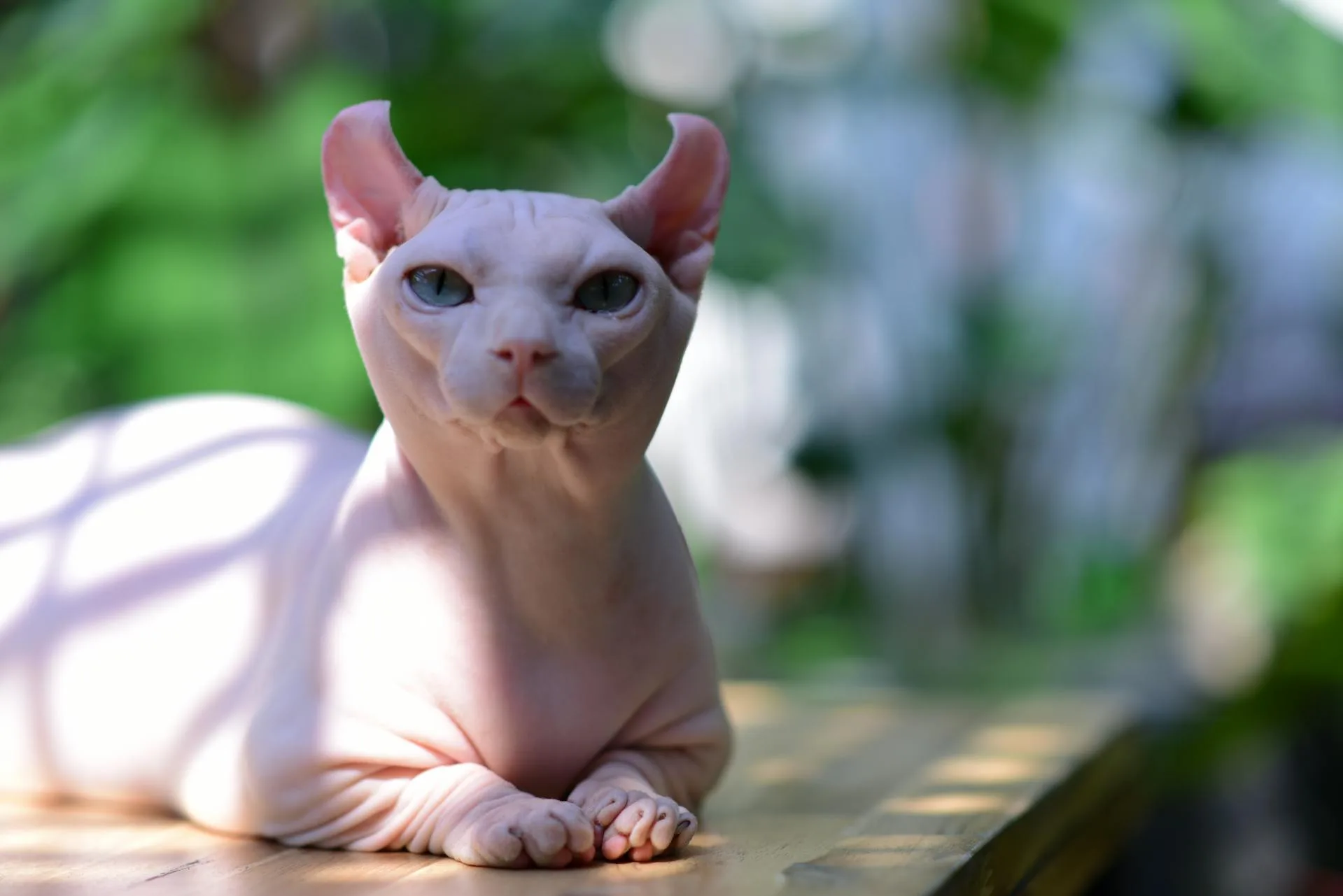
The Sphynx's Egyptian associations are primarily visual (its resemblance to the Great Sphinx of Giza is striking) but the modern breed originated in Toronto, Canada in 1966 from a spontaneous natural mutation. There is no direct lineage to ancient Egypt. That said, hairless cats appear in historical accounts from multiple ancient cultures, suggesting the genetic trait is very old even if the modern breed is recent.
Temperament: Unusually social and affectionate. Sphynxes seek warmth and human contact persistently and are sometimes described as dog-like in their attachment. They are among the most human-oriented of all cat breeds.
Cat sitter notes: Sphynxes are one of the more challenging breeds for a cat sitter precisely because of their attachment needs. They will follow their sitter constantly, seek physical contact, and become distressed if left alone for long periods. House sitting, where the sitter is present for extended portions of the day, is the right arrangement for this breed. Also brief your sitter on the weekly bathing requirement (skin oils accumulate without fur to absorb them) and the need to keep the cat warm; Sphynxes cannot regulate body temperature through fur and get cold quickly. These are not optional extras: they are welfare requirements.
The Nile Valley Egyptian Cat
The Nile Valley Egyptian Cat is an experimental breed recognized by TICA, representing the native, naturally occurring cats of Egypt: the feral and semi-feral street cats that are the living descendants of the cats ancient Egyptians lived alongside. They are not selectively bred for specific traits; they represent a natural population and come in virtually any color pattern, long or short haired.
Temperament: Variable, as would be expected from a natural rather than selectively bred population. Generally described as hardy, alert, and adaptable, the traits that allowed them to survive and thrive in a complex urban environment over thousands of years.
Cat sitter notes: The adaptability of Nile Valley Egyptian Cats makes them among the more practical breeds for cat sitting arrangements. They tend to accept new people more readily than highly pedigreed breeds and handle environmental changes without the intense stress responses seen in Maus or Abyssinians. That said, individual personality varies significantly within this population: some are confident and social, others are cautious. Brief your sitter on your specific cat's personality rather than relying on breed generalizations.
The Shirazi
The Shirazi is common on modern Egyptian streets, typically the result of historical crosses between local Egyptian cats and Persian longhairs. They are not a formal pedigree breed in most registries but are widely recognized in Egypt as a distinct type.
Temperament: Friendly, affectionate, and easygoing. They adapt quickly to family life and are generally good with other animals and children: the temperament you'd expect from a cat that has coexisted with dense human populations for generations.
Cat sitter notes: Shirazi-type cats are typically straightforward to look after. Their sociable, adaptable nature means they accept new carers more readily than more reserved or highly strung breeds. The main specific requirement is coat maintenance: their longer fur needs regular brushing to prevent matting, which a sitter covering more than a few days should include in the care routine.
The Savannah cat
The African Serval is native to sub-Saharan Africa including areas adjacent to ancient Egypt; servals were kept as pets and hunting companions by Egyptian nobility. The modern Savannah cat is a hybrid of domestic cats and servals, developed in the 1980s. Early generation Savannahs (F1 and F2) retain strong serval characteristics: tall, long-legged, spotted, and extremely active.
Important regulatory note: Savannah cats, particularly early generations, are restricted or prohibited in several countries and US states. Check local regulations thoroughly before acquiring one.
Cat sitter notes: Early-generation Savannahs are not suitable for a standard domestic cat sitter without specific experience of this type of animal. Their activity level, the space they need, and their behavioral unpredictability with strangers make them genuinely specialist care animals. Finding a pet sitter with direct Savannah or large domestic-wild hybrid experience is worth prioritizing above all other factors. On Petme, sitter profiles show their actual experience with animals in their daily care: for a Savannah owner, browsing for sitters who specifically mention hybrid or high-energy exotic breed experience is a practical starting point.
What made cats sacred in ancient Egypt
Egyptian reverence for cats was practical as well as spiritual. Cats protected grain stores from rodents, a serious threat to the food supply in an agricultural civilization, and killed snakes. They were also valued as companions and were depicted in art consistently as part of the household. The cats most frequently depicted in ancient Egyptian art have lean, muscular builds with large ears and ticked or spotted coats, closely resembling the Abyssinian and Egyptian Mau types that are their modern descendants or analogues.
Frequently asked questions
1. What cat breed did Egyptians keep?
The cats most closely associated with ancient Egypt are the Egyptian Mau (the only naturally spotted domestic breed, with documented ancestors in ancient Egyptian artwork) and cats resembling the Abyssinian type, which appear frequently in Egyptian art with their characteristic ticked coat and lean build. The Jungle Cat (Felis chaus), ancestor of the modern Chausie, was also kept by Egyptian nobility. Servals were kept as exotic pets and hunting companions. The African Wildcat, the ancestor of all domestic cats, was the likely origin species for the Egyptian domestication of cats.
2. What do Egyptian cats look like?
The cats depicted in ancient Egyptian art are typically lean and muscular with long limbs, large upright ears, and either a ticked coat (bands of color on each hair, as in the Abyssinian) or a spotted coat (as in the Egyptian Mau). The Egyptian Mau's bright green eyes, 'M' forehead marking, and natural spots are the traits most specifically associated with the ancient Egyptian cat archetype. Modern street cats in Egypt, Nile Valley Egyptian Cats and Shirazis, represent the continuation of this natural population.
3. What kind of cat looks like an Egyptian cat?
The Egyptian Mau is the closest modern equivalent to the cats depicted in ancient Egyptian art. The Abyssinian's ticked coat and body type also closely match ancient depictions. For someone drawn to the aesthetic of Egyptian cats, the Mau is the most direct choice: it is the only breed with both verified Egyptian ancestry and the naturally occurring spotted coat that appears in ancient artwork.
4. What is the rarest cat in Egypt?
The Sand Cat (Felis margarita) is the rarest wild feline native to Egypt's desert regions and is not a domestic breed. Among domestic-adjacent populations, the Nile Valley Egyptian Cat as a recognized breed type is rare internationally, even though the cats themselves are common in Egypt. The Chausie, which descends from the Jungle Cat native to the Nile Valley, is rare globally as a recognized hybrid breed.
5. Can Egyptian cat breeds live with other cats?
It depends on the individual breed. Abyssinians and Chausies often benefit from a second active companion because their energy level and social needs exceed what a single owner can provide during work hours. Egyptian Maus are territorial and the introduction of a new cat needs careful management: they can coexist with other cats they have grown up with but may not accept a new introduction easily as adults. Sphynxes, being highly social and people-oriented, typically accept other cats well. Savannahs vary significantly by generation; early-generation animals may have a strong prey drive toward smaller cats.
6. What should a cat sitter know about Egyptian cat breeds?
The main principle across all active Egyptian breeds is that standard drop-in cat sitting (feeding, litter, brief check) is not sufficient. Abyssinians, Chausies, and Maus all need active play and engagement during each visit, not just maintenance care. Sphynxes need extended human presence and warmth management. Savannahs need specialist experience. For every Egyptian breed, include specific play instructions, your cat's behavioral baseline, how they respond to strangers, and your vet's emergency contact in your sitter notes. Breeds with significant wild lineage (Chausie, Savannah) need a sitter who specifically has experience with that type of animal: this is worth confirming before confirming the booking. 🐈⬛
Egyptian cat breeds reward the owners who understand what they are, active, intelligent, often bonded animals that need more than average daily engagement. That engagement requirement doesn't pause when the owner travels. Getting the right cat sitter, with the right briefing, is as much a part of responsible ownership of these breeds as providing the right enrichment at home.