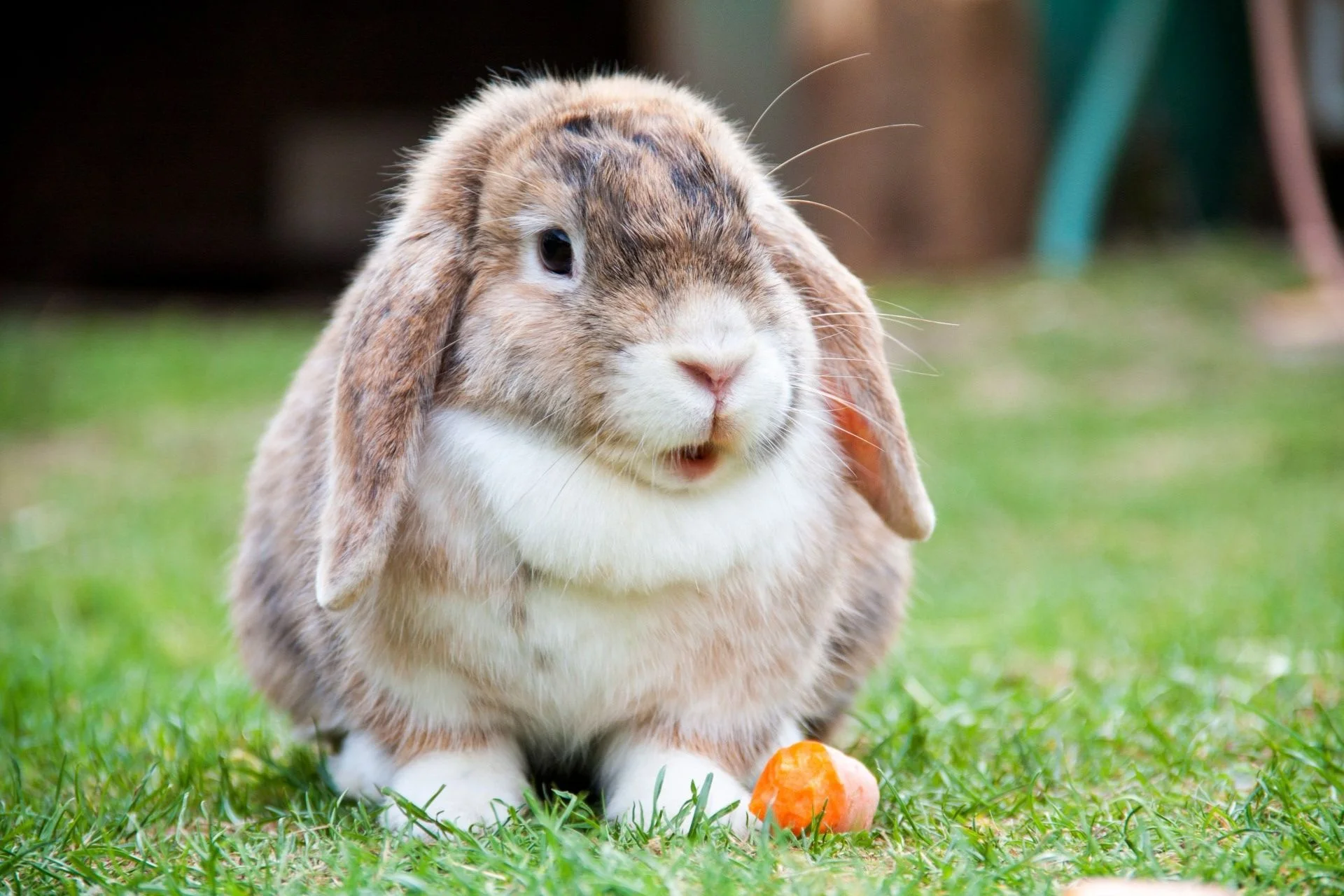
Rabbits are naturally curious and spend much of their waking time engaged in low-level activity - nibbling, investigating, foraging. Without adequate stimulation they get bored quickly, and boredom in rabbits leads to destructive chewing, reduced activity, and in some cases stress-related health problems. The right toys give these instincts a healthy outlet.
Why toys matter for rabbits
Toys address specific behavioral needs. Chewing keeps continuously growing teeth worn down naturally, tunnels and hideouts support the prey-animal instinct to seek shelter, and foraging toys engage the drive to search for food. A rabbit without enrichment will find its own version of it - usually furniture, baseboards, or cables. The dental case is the concrete one. Rabbit teeth grow at roughly 1 cm per month, and where the incisors do not meet properly they can grow as much as 1 mm per day, according to VCA Animal Hospitals. Hay does most of that grinding work, but chew toys carry the load hay alone does not, and a rabbit with nothing safe to gnaw will find something unsafe. Regular play also keeps rabbits physically active and helps maintain a healthy weight, which matters particularly for breeds prone to obesity.Chew toys
Chewing is the most important behavior to support. Choose toys made from rabbit-safe materials: untreated wood, woven grass, compressed hay, or natural willow. Apple sticks and willow rings are widely used because most rabbits take to them readily and they hold up reasonably well. Avoid anything painted, varnished, or made from soft rubber that can be chewed apart and swallowed. If you are uncertain whether a material is safe, do not give it.| Material | Safe to chew? | Why |
|---|---|---|
| Untreated apple, willow, hazel wood | Yes | Hard enough to grind teeth, no toxic sap or resin |
| Woven grass, seagrass, compressed hay | Yes | Digestible if swallowed, doubles as forage |
| Plain cardboard, no ink or tape | Yes | Passes through safely in small amounts |
| Painted, varnished or stained wood | No | Coatings are ingested along with the wood |
| Soft rubber and plastic | No | Breaks into pieces that can cause a gut blockage |
| Cedar and fresh pine | No | Aromatic oils are associated with liver irritation |
Tunnel and hideout toys
Rabbits feel more secure when they can retreat into a covered space. Tunnels made from natural seagrass or fabric give them an outlet for their instinct to burrow and hide. Simple cardboard boxes with cut-out entry holes serve the same purpose at no cost. Most rabbits will spend significant time moving through tunnels and tend to claim them as personal territory.Foraging and puzzle toys
Treat-dispensing toys and puzzle feeders make rabbits work for food rather than consuming it all at once. This engages their problem-solving instinct and extends the time they spend actively occupied. Purpose-made puzzle feeders work well, but a cardboard tube stuffed with hay and a few pellets hidden inside is equally effective. Keep puzzles achievable. If a rabbit cannot make progress within a few minutes, the difficulty is too high and they will lose interest.DIY toys
Homemade toys can be as effective as bought ones:- Cardboard tubes stuffed with hay and folded shut at both ends
- Paper bags filled with hay and dried herbs for foraging
- A small cardboard box filled with crumpled paper with a few treats hidden inside
- A toilet roll threaded with a willow stick to create a rolling chew toy
Rotating toys to maintain interest
A rabbit with continuous access to the same toys will eventually stop interacting with them. Rotating toys every one to two weeks maintains novelty without the cost of constantly buying new ones. Store half the collection out of sight and swap periodically. When a familiar toy reappears after a few weeks, most rabbits respond to it with renewed curiosity.What to tell a pet sitter about your rabbit's toys
Rabbits thrive on routine, and that includes their enrichment schedule. If you are leaving your rabbit with a pet sitter or house sitter, they need to know which toys are available and how your rabbit typically uses them. Leave written instructions covering:- Which toys your rabbit currently has access to and which are stored in rotation
- Any toys that require setup, such as a foraging box that needs refilling with hay and treats
- How often your rabbit gets free-roaming time outside the enclosure
- Which household items your rabbit tends to chew and should be kept out of reach during free-roaming
- Any toys your rabbit consistently ignores, so the sitter does not waste time on them
Frequently asked questions
1. What are the best types of toys for rabbits?
The most effective toys combine chewing, exploration, and foraging. Willow rings, apple wood sticks, cardboard tunnels, and treat-dispensing puzzles are widely used and accepted by most rabbits. The key is variety - no single toy type covers all of a rabbit's enrichment needs, so a mix of options produces better results than relying on one category.
2. Can rabbits play with cat or dog toys?
Not generally. Cat and dog toys are designed for different species and often contain materials, coatings, or small parts that are unsafe for rabbits. Soft rubber toys that cats enjoy can be chewed apart by a rabbit and cause internal blockages. Stick to toys made specifically for rabbits, or simple DIY options using untreated cardboard and natural materials.
3. How often should I rotate my rabbit's toys?
Every one to two weeks is a practical schedule. Rabbits habituate to familiar objects quickly and stop engaging with toys that are continuously available. Storing half the collection out of sight and swapping periodically maintains interest. When a toy reappears after a few weeks, most rabbits respond to it with renewed curiosity.
4. Are there any toys I should avoid giving my rabbit?
Avoid toys with small parts that could be swallowed, anything painted or varnished with unknown substances, soft rubber that can be chewed into pieces and ingested, and toys with metal fastenings or sharp edges. Also avoid anything scented with artificial fragrance, as rabbits have sensitive respiratory systems that react poorly to strong scents.
5. My rabbit seems uninterested in toys. What should I do?
Try introducing the toy near a food source, or rub it with a small amount of fresh herbs to make it more appealing. Some rabbits respond better to foraging-based toys than to physical play objects. If a rabbit consistently ignores a specific toy, remove it and try a different type. Preferences vary significantly between individual rabbits, and finding what engages a particular animal often takes some trial and error.
6. How do I make sure a pet sitter keeps my rabbit enriched? 🐾
Write a brief enrichment guide alongside the feeding and cleaning instructions. Note which toys your rabbit engages with most, when they tend to be most active, and what settled, content rabbit behavior looks like so the sitter knows things are going well. Include a note on any items in the home that need to be kept out of reach during free-roaming time. A sitter with specific guidance is far more likely to provide meaningful enrichment than one left to guess at what the rabbit enjoys.