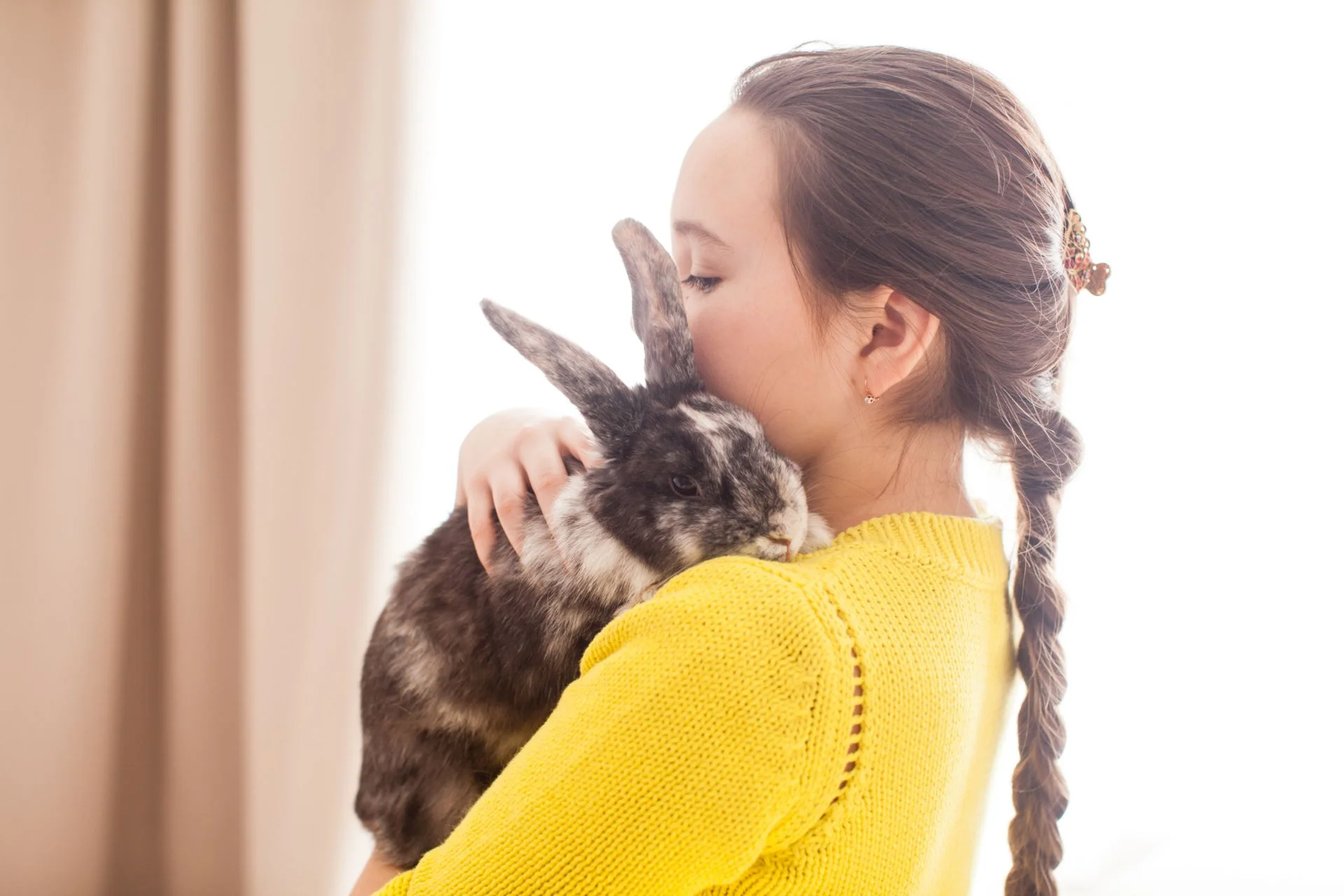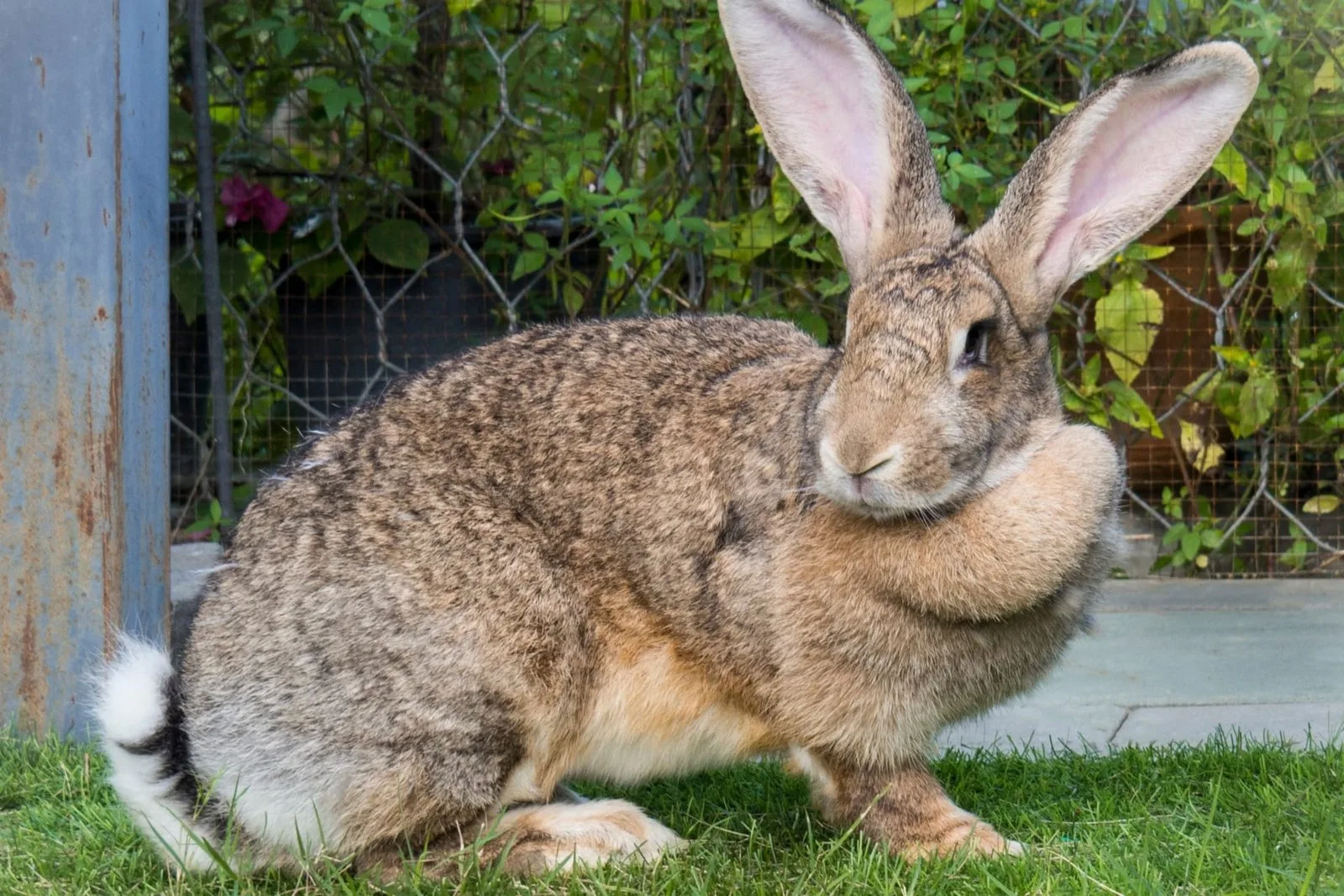
Big rabbit breeds have a presence that smaller rabbits do not. A Flemish Giant or Continental Giant brings a different kind of companionship - calmer, more physically substantial, and often more tolerant of handling than their compact counterparts. The trade-off is direct: they eat more, need more space, and require a vet familiar with large rabbit physiology.
The Flemish Giant
The Flemish Giant is the largest rabbit breed. Originally bred in Belgium as a farm animal, it became a popular pet because of its unusually calm and affectionate temperament. Weight ranges from 14 to 20 pounds, with some individuals exceeding 22 pounds. Body length can reach up to 30 inches. With attentive care, Flemish Giants typically live 5 to 8 years. Their care requirements follow logically from their size. Diet should consist of unlimited fresh hay, a daily portion of leafy greens, and a measured quantity of pellets formulated for large breeds. Treat-heavy feeding causes obesity quickly in rabbits this size. Enclosures need to be significantly larger than the standard rabbit setup - a minimum of 12 square feet of floor space, with additional free-roaming time daily. Weekly brushing keeps their short to medium coat in good condition and reduces shedding. Flemish Giants are genuinely gentle animals. They are calm, patient with handling, and generally good with children. They tend to be less reactive to sudden movement or noise than smaller breeds.Continental Giant
The Continental Giant originated in Europe and rivals the Flemish Giant in size, with some individuals reaching 25 pounds. It is friendly and curious, and adapts well to household life provided it has sufficient space to move freely. Like the Flemish, it does not do well in small enclosures and needs daily exercise outside of its pen.French Lop
The French Lop is one of the largest lop-eared breeds, typically weighing 10 to 15 pounds. Its most recognizable feature is its long, drooping ears and broad, rounded body. French Lops are among the most relaxed rabbit breeds - they are content to sit beside their owners and rarely show the skittishness common in smaller breeds. Ear health requires regular monitoring, as the folds can accumulate debris if not checked.Checkered Giant
The Checkered Giant is recognizable by its bold black-and-white markings and lean, athletic build, typically weighing 11 to 12 pounds. Unlike most large breeds, the Checkered Giant is energetic and playful, and needs more active stimulation than the calmer giants. This makes it a better fit for owners who want a large rabbit with a more interactive personality.Giant Chinchilla
The Giant Chinchilla weighs approximately 12 pounds and has a notably soft, dense coat. It has a calm, even temperament and is generally manageable for first-time large rabbit owners. Its coat requires more brushing than short-haired breeds, particularly during shedding season, but is far less demanding than long-haired breeds.Big rabbits vs. small rabbits: key differences
The practical differences between large and small rabbit breeds affect daily care in several ways. Space is the most significant factor. Large breeds cannot thrive in enclosures designed for smaller rabbits. They need room to fully stretch out, stand on their hind legs, and make a few full hops in any direction without reaching a wall. Food costs are proportionally higher. A Flemish Giant eating hay throughout the day consumes considerably more than a small breed, and this accumulates across months and years. Temperament tends to differ in a predictable direction: large breeds are generally calmer and more tolerant of handling, while smaller breeds are often more energetic and reactive. If you want a rabbit that will sit quietly beside you, a large breed is typically a better fit. For a broader overview of care requirements, see our guide on rabbit care tips.Health considerations for large breeds
Large rabbits face a few health risks that owners should monitor actively:- Sore hocks: pressure sores on the underside of the feet, caused by too much time on hard or wire surfaces. Soft flooring and regular foot checks prevent this.
- Obesity: large rabbits gain weight quickly on pellet-heavy diets. Hay should form the majority of the diet, not pellets.
- Gastrointestinal stasis: a potentially fatal slowing of gut movement. Signs include reduced appetite, fewer droppings, and a hunched posture. This is a veterinary emergency.
- Dental problems: hay wear keeps rabbit teeth healthy. Rabbits eating too few fibrous materials develop overgrown teeth that require veterinary correction.
Leaving a big rabbit with a pet sitter
Large rabbit breeds present specific challenges for pet sitters, and this is worth considering before you travel. Many sitters are comfortable with small rabbits but have limited experience handling an animal weighing 15 or 20 pounds. Before leaving your big rabbit with a sitter, cover these points:- Demonstrate proper handling technique: large rabbits must be supported under both the chest and hindquarters, and their back legs should never be left free to kick, as they can fracture their own spine doing so
- Show the sitter exactly how much food to provide - oversized portions cause weight gain quickly in large breeds
- Explain the signs of gastrointestinal stasis and confirm the sitter has the emergency vet contact
- Walk them through the enclosure setup and the daily free-roaming routine
- Confirm the sitter is physically comfortable managing a rabbit of this size before finalizing the booking
Frequently asked questions
1. How long do Flemish Giant rabbits live?
Flemish Giants typically live 5 to 8 years with proper care. This is somewhat shorter than the lifespan of smaller rabbit breeds, which often reach 10 to 12 years. An appropriate diet, sufficient exercise, and regular veterinary checkups give a Flemish Giant the best chance of reaching the upper end of that range.
2. Do big rabbit breeds make good pets?
Yes, for the right household. Large breeds like the Flemish Giant and French Lop are calm, tolerant of handling, and generally good with children. They require more space and more food than smaller breeds, and their size means handling errors can cause more serious injury. For owners who can meet their physical requirements, they are rewarding and affectionate companions.
3. How much space does a giant rabbit need?
At minimum, a Flemish Giant needs an enclosure with at least 12 square feet of floor space, with no wire flooring that could cause pressure sores. Beyond the enclosure, they need several hours of supervised free-roaming time daily in a rabbit-proofed area. Apartments with limited floor space are rarely suitable without very disciplined management of exercise time.
4. What do big rabbit breeds eat?
The diet should be built on unlimited fresh hay, which forms the majority of food intake. Daily portions of leafy greens provide additional nutrients, and a measured serving of pellets formulated for large breeds completes the diet. Fresh water must always be available. Treats should be minimal - large rabbits are prone to obesity and gain weight quickly on pellet-heavy or treat-heavy feeding.
5. Are big rabbit breeds hard to care for?
They are not difficult to care for, but they require more of most things: more space, more food, a larger litter box, and a caregiver confident in handling a large animal. Their generally calm temperament makes daily interaction straightforward. The main challenge is not behavior but logistics, particularly in smaller living spaces.
6. Can a pet sitter care for a large rabbit breed? 🐾
An experienced rabbit sitter can manage large breeds well, but not all sitters have the confidence or rabbit-handling knowledge required. Large rabbits can injure themselves seriously if they kick out while being picked up incorrectly. Before confirming a booking, meet the sitter in person, demonstrate proper handling, and confirm they are comfortable with a rabbit of that size. Written care instructions covering diet, enclosure routine, emergency signs, and vet contact details give any sitter the best possible foundation for the sit.