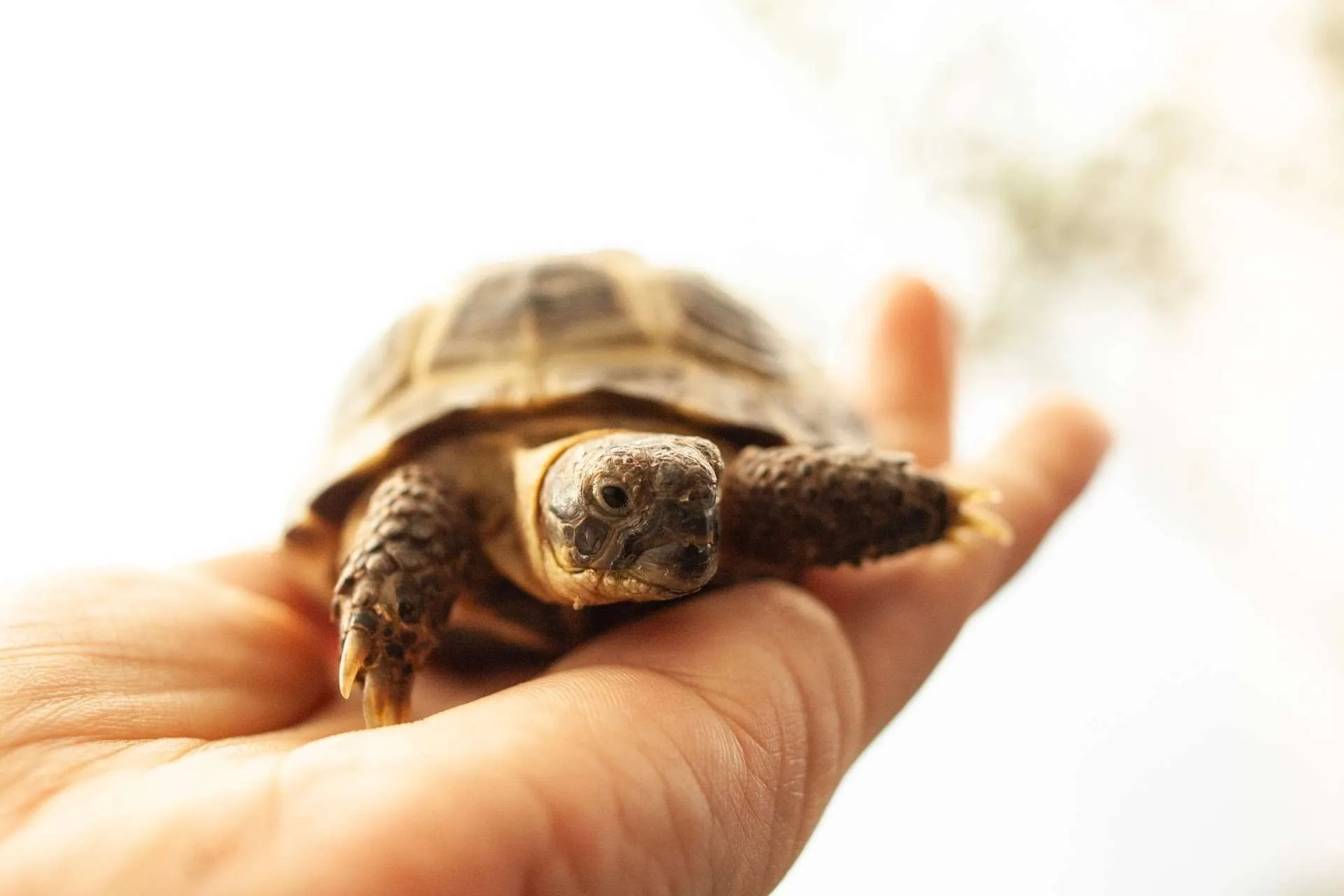
Tortoises are not passive animals. In the wild, they spend most of their active hours foraging across varied terrain, digging, investigating, and problem-solving for food. A bare enclosure with a food dish and a basking spot keeps a tortoise alive; it doesn't keep them healthy. Consistent enrichment (giving a tortoise things to push, dig through, explore, and work for) supports both physical health and behavioral wellbeing.
Most enrichment for tortoises requires no specialist equipment. The ideas below use common household materials and can be set up in minutes. They also hold up for a pet sitter or exotic animal carer covering your tortoise while you travel, which matters more than most tortoise owners initially consider. For store-bought options that complement the DIY ideas here, the best toys for tortoises guide covers what's worth buying and what isn't.
Why enrichment matters for tortoises
A tortoise that is under-stimulated develops recognizable behavioral signs: repetitive wall-pacing (also called "glass surfing"), lethargy outside of typical rest periods, loss of appetite, and increased time spent in the same spot without exploring. These are not personality traits: they are signs that the animal's behavioral needs aren't being met.
Enrichment works because it gives natural instincts somewhere to go. Tortoises dig to cool down, to escape heat, to hide, and sometimes simply because digging is what they do. They forage for food over varied terrain and use their sense of smell extensively. Any setup that satisfies these instincts, even imperfectly, produces a noticeably more active and engaged animal than a clean, empty enclosure does.
Safety rules before you build anything
All materials that go into a tortoise enclosure need to be non-toxic, and the items themselves need to be sized and structured so they can't cause harm. The specific rules:
Use only untreated, natural wood. Treated or painted wood can leach chemicals. Cardboard is fine, untreated, non-glossy. Natural substrates like organic topsoil, coconut coir, and sphagnum moss are appropriate for digging and burrowing setups. Smooth river stones and flat rocks are safe for climbing and weight-bearing platforms.
Avoid thin, brittle plastics that can crack into sharp shards. Never use painted items: some paints and dyes are toxic if ingested, and tortoises do mouth and ingest things. Any toy or object used with food should be food-safe.
Size matters. Any object small enough to be swallowed should not be in the enclosure. Check that inclines and climbing features are not steep enough to allow your tortoise to flip onto their back: a tortoise that cannot right itself will die if not found in time.
Supervise when introducing any new item, particularly moving objects like puzzle balls. Watch for signs of distress or getting stuck before leaving your tortoise unattended with something new.
DIY tortoise enrichment ideas
Burrow box
Fill a shallow plastic storage bin, no lid, four to six inches deep with organic topsoil, coconut coir, or sphagnum moss. Moisten the substrate slightly so it holds its shape when disturbed. Place it in or adjacent to the enclosure so your tortoise has a dedicated space to dig. This is the single most effective enrichment item for most tortoise species and costs almost nothing to make. A burrow box also gives your tortoise a cooler microclimate within the enclosure, which has a functional benefit beyond enrichment.
Cardboard foraging tube
Take a clean cardboard tube from a paper towel or toilet paper roll. Stuff the inside with hay, edible weeds, or your tortoise's preferred leafy greens. Place it in the enclosure and watch the tortoise push, roll, and work to get the food out. This mimics the effort involved in foraging in the wild and turns feeding time into a physical activity rather than a passive one. Make a fresh one each time: the cardboard is compostable and shouldn't be reused once it's been in contact with food and substrate for a day.
Forage mat
Loosely crumple a clean, dry towel or small rug. Tuck edible weeds, hay, and safe herbs (dandelion, plantain, or dried chamomile) between the folds. Place it in the enclosure. Tortoises use their sense of smell extensively while foraging, and a forage mat that requires them to nose around through folds to find food stimulates both smell and movement in a way a food dish doesn't. Wash the mat after each use before reusing it.
Obstacle course
Arrange smooth river stones, small untreated branches, and cardboard tunnels to create a varied path through the enclosure. The variation in terrain (different heights, surfaces, and openings) encourages exploration rather than the straight-line pacing that a bare enclosure produces. Keep individual climbs modest and ensure nothing is top-heavy enough to tip. A tortoise navigating varied terrain is getting exercise, sensory input, and behavioral satisfaction from a setup you can rearrange in five minutes.
Puzzle ball
A lightweight plastic ball with holes, sold as a cat toy, can be cleaned and stuffed with small pieces of carrot or sweet pepper. Your tortoise will nose and push the ball to work the food out through the holes. Make sure the ball is large enough not to be swallowed and light enough to move easily. Supervise the first few sessions to confirm the tortoise is interacting safely and not attempting to bite through it.
Snack hider
Place a treat under a flat piece of untreated wood or a flat rock. The tortoise has to push or lever the object out of the way to reach the food, which requires effort, problem-solving, and sustained attention. Start with a lightweight piece they can move without difficulty, then gradually increase the challenge as they get the idea. This is one of the simplest setups possible and produces visible engagement every time.
Digging box with hidden treats
In a shallow container filled with soil or coconut fiber, bury some of your tortoise's favorite food, small pieces of leafy greens, berries, or herbs. The buried food engages their sense of smell to locate it and gives them a reason to dig rather than simply a place to dig. Bury at different depths across different sessions to vary the challenge.
Basking platform from smooth stones
Collect smooth, flat stones and stack them into a stable elevated platform. This gives your tortoise a raised basking area rather than a flat surface, which is more varied and engaging than a platform level with the enclosure floor. Make sure the stack is stable and that your tortoise can access it without the risk of tipping. Untreated wood works equally well if flat stones aren't available.
Rotating enrichment to maintain interest
Tortoises respond to novelty. The same setup becomes familiar and stops driving the same level of exploratory behavior after a week or two. Rotating enrichment items every one to two weeks (swapping the obstacle course for the forage mat, introducing a new hidden treat location) resets the novelty and maintains engagement over the long term.
Rotation also gives you a natural inspection window. Each time you swap items out, check them for damage, contamination, or wear. Cardboard should be replaced frequently. Stone arrangements should be checked for stability. Anything that looks like it's been gnawed at more than the surface should be removed and examined.
What pet sitters and tortoise carers need to know
Tortoises are often described as low-maintenance pets. In terms of daily interaction, they are, but the environmental requirements that keep them healthy are specific and non-negotiable, and a sitter who isn't briefed on them can inadvertently cause real harm.
The most important thing a pet sitter needs to maintain is the thermal environment. Tortoises are ectotherms: they cannot regulate their own body temperature and depend entirely on their enclosure's heat gradient to function. A tortoise without access to a properly functioning heat lamp and a correct temperature range will stop eating, become lethargic, and can develop health problems within days. If a bulb fails while you're away, your sitter needs to know how to replace it and what temperatures to aim for.
Include in your sitter instructions: the required enclosure temperature ranges (basking spot vs. ambient cool end), what to do if a heat lamp fails, the feeding schedule and exactly what foods the tortoise eats, whether the enclosure substrate needs misting, and any specific enrichment items that should be in rotation during your absence. A tortoise with a well-set-up enriched enclosure requires less active input from a sitter (the environment provides the stimulation) but the environment itself needs to be maintained correctly.
Finding a pet sitter or exotic animal carer with specific reptile or tortoise experience is worth prioritizing. On Petme, you can browse sitter profiles and their social content before reaching out, which is more useful for an exotic pet owner than a star rating, because you can see whether a sitter's experience includes the kind of specialist care your tortoise needs.
Frequently asked questions
1. What toys do tortoises like to play with?
Tortoises engage most reliably with items that tap into natural behaviors: digging setups, foraging puzzles that require work to access food, obstacle courses that provide varied terrain to navigate, and objects they can push or nose around. They respond to novelty, so the same item will engage them less over time: rotating what's in the enclosure maintains interest better than providing a permanent set of toys.
2. What can I do to entertain my tortoise?
The most effective enrichment involves food: hide it, bury it, stuff it into foraging tubes, put it under objects they have to move. Tortoises are highly motivated by smell and by food acquisition, so enrichment tied to feeding produces more engagement than passive objects. Beyond food-based enrichment, varied terrain (different surfaces, elevations, and objects to navigate) keeps a tortoise exploring rather than pacing.
3. How do I make a tortoise toy from household items?
A cardboard foraging tube takes under a minute: stuff a clean paper towel roll with hay and some greens. A forage mat takes two minutes: scrunch a clean towel and tuck food between the folds. A snack hider takes 30 seconds: place a treat under a flat rock. A burrow box takes five minutes: fill a shallow bin with moist organic topsoil. All of these use items you likely have at home, and all of them produce visible engagement within the first session.
4. Will my tortoise be ok without a heat lamp for two days?
No, not without risk. Tortoises rely on external heat to regulate body temperature, digestion, and immune function. Without adequate warmth, digestion slows significantly, the tortoise becomes lethargic, and prolonged cold can suppress immune function and cause respiratory problems. Two days without a heat lamp in a cool environment is long enough to cause harm, particularly in younger or smaller tortoises. Any pet sitter covering your tortoise needs to know how to replace a failed bulb, what temperatures the enclosure should maintain, and who to call if the setup fails.
5. Are DIY tortoise toys safe for all tortoise species?
The basic safety principles (untreated natural materials, appropriate sizes, no painted or treated surfaces) apply across species. Size of the toys relative to the tortoise matters: what's appropriate for a large sulcata is a hazard for a small Hermann's. Substrate choices for burrow boxes vary by species; some species require drier substrate while others need more moisture. Research your specific species' requirements and check that any food used in enrichment is appropriate for their diet before using it in foraging setups.
6. How often should I replace or rotate DIY tortoise toys?
Cardboard-based items should be replaced after each use or every few days at most. Substrate in a burrow box should be checked and refreshed weekly, or sooner if it becomes soiled or dry when moisture is needed. Stone arrangements and wooden ramps can remain longer but should be inspected weekly for stability. The rotation schedule for novelty purposes, swapping what's in the enclosure, works well on a one-to-two-week cycle. More frequent rotation is better than less if your tortoise is showing repetitive pacing behavior. 🐢
A well-enriched tortoise enclosure does double duty: it keeps your animal healthy and behaviorally sound when you're home, and it makes the carer's job straightforward when you're not, because the environment itself is doing much of the work. The time it takes to build a rotation of DIY enrichment setups is small compared to what it produces for your tortoise's quality of life.