Unlike cats, most dogs genuinely enjoy camping. The new terrain, the smells, the unstructured time outdoors with their owner: it maps closely to what a high-activity dog wants from a good day. That said, "most dogs enjoy it" is not the same as "no preparation needed." A dog who is not vaccinated, not used to sleeping in a tent, or not reliable on recall can make a camping trip stressful rather than enjoyable. This guide covers everything worth doing before, during, and after a camping trip with your dog, including how to arrange dog boarding or a dog sitter for the trips where they stay home.
Before you go: health, training, and checking the rules
Start with your dog's health. Ensure vaccinations are current (rabies, distemper, and for wooded or tick-heavy areas, Lyme disease) and ask your vet about flea, tick, and heartworm prevention appropriate for the region you're visiting. Bring a copy of their vaccination records; some campgrounds and dog-friendly parks require them on entry. If your dog takes regular medication, pack extra doses.
Check the specific rules of every campground, trail, and park on your route before you leave. Many national parks and backcountry areas either prohibit dogs entirely or require them to be leashed at all times. Assuming a destination is dog-friendly without confirming it is a common and avoidable source of frustration. Rules vary not just by campground but by individual trail, so check at the trailhead level too.
If your dog hasn't camped before, a backyard trial run is worth doing. Set up the tent in your garden and let your dog sleep in it one or two nights before the trip. A dog who has never been inside a tent will find the sounds, smells, and enclosed space unfamiliar. A dog who has napped in one in the garden already treats it as known territory. The same logic applies to any new gear (harnesses, packs, sleeping pads), introduce them at home first.
For breed-specific guidance on which dogs are best suited to trail and camping life, the best dogs for hiking and camping guide covers the breeds that take to outdoor life most naturally.
Choosing a dog-friendly campsite
Look for campgrounds that explicitly welcome dogs rather than those that technically permit them: the difference matters in practice. Dog-friendly sites tend to have waste disposal stations, dog-walking areas or trails, and space between pitches that gives everyone room. Some offer dedicated off-leash areas; these can be excellent for letting a high-energy dog burn off steam in a controlled environment.
Consider your dog's size and activity level when choosing a site. A Labrador or Australian Shepherd needs space to move: a cramped campground with dense pitches and no walking access isn't the right call for them, even if dogs are technically allowed. Campgrounds near lakes, rivers, or trails give active dogs more to do and more ways to spend energy during the trip.
What to pack for your dog
The essentials are straightforward: collapsible food and water bowls, your dog's regular food (a new food at a stressful time causes digestive problems that are easily avoided), biodegradable waste bags, and a dedicated towel for muddy paws. These aren't optional on any camping trip.
Beyond the basics: a pet first aid kit with gauze, vet wrap, antiseptic, and tweezers for tick removal; your vet's emergency number and the nearest animal hospital to your campsite; any regular medications plus spares; and a raised sleeping pad or insulated mat to keep your dog off cold, damp ground overnight. An LED collar light or reflective vest is worth having for the evenings and early mornings when visibility is low, particularly useful if your dog tends to wander near the perimeter of the campsite.
A long line or campsite trolley line (a rope run between two trees at chest height, with your dog's leash attached via a running clip) gives your dog freedom to move around the campsite without wandering into neighboring pitches or towards wildlife. It's a practical middle ground between full leash restraint and off-leash access in areas where off-leash isn't appropriate.
Safety at the campsite
The most important rule: never leave your dog unattended in a tent or tied to a tree alone. Tents heat up rapidly in direct sun and can reach dangerous temperatures in minutes: a dog left inside on a warm day is at genuine risk of heatstroke. A dog tied to a tree and left alone can get tangled, panic, or attract predators depending on the area. If you need to leave the campsite without your dog, they go with you or they stay with someone you trust.
Heat management during the day is as important as hydration. When ambient temperature reaches roughly 24°C to 29°C (75°F to 85°F), shade becomes essential and strenuous hiking should be avoided during the hottest hours. A reliable field test: press the back of your hand to the ground for seven seconds. If it's uncomfortable for your hand, it's too hot for your dog's paws. Plan hikes for early morning or evening on warm days and build in regular rest stops regardless.
On water: carry fresh water for your dog and discourage them from drinking from stagnant puddles, ponds, or slow-moving streams. These can carry Giardia, Leptospira, and in some regions blue-green algae, all of which can cause serious illness. If your dog does drink from a natural water source, note it and watch for signs of illness in the days following the trip. Do a full tick check every evening at camp, covering ears, armpits, groin, and between toes. For everything trail-specific, the hiking with a dog guide goes into more detail on trail safety.
What to do with your dog at the campsite
The best camping days for a dog involve a mix of physical activity and downtime. Morning hikes while temperatures are cool, water activities if the site has appropriate access, and quiet time near the campsite in the afternoon give most dogs a satisfying structure. Bring interactive toys for the quieter periods: a dog who has hiked several miles in the morning will rest contentedly; one who hasn't had exercise yet will be more restless.
Your dog should sleep inside the tent with you at night, not in a separate outdoor enclosure. Apart from the safety reasons, a dog who is with their owner in an unfamiliar environment settles faster than one who is isolated. A familiar bed or sleeping pad from home helps with this: the known smell is calming in a new space.
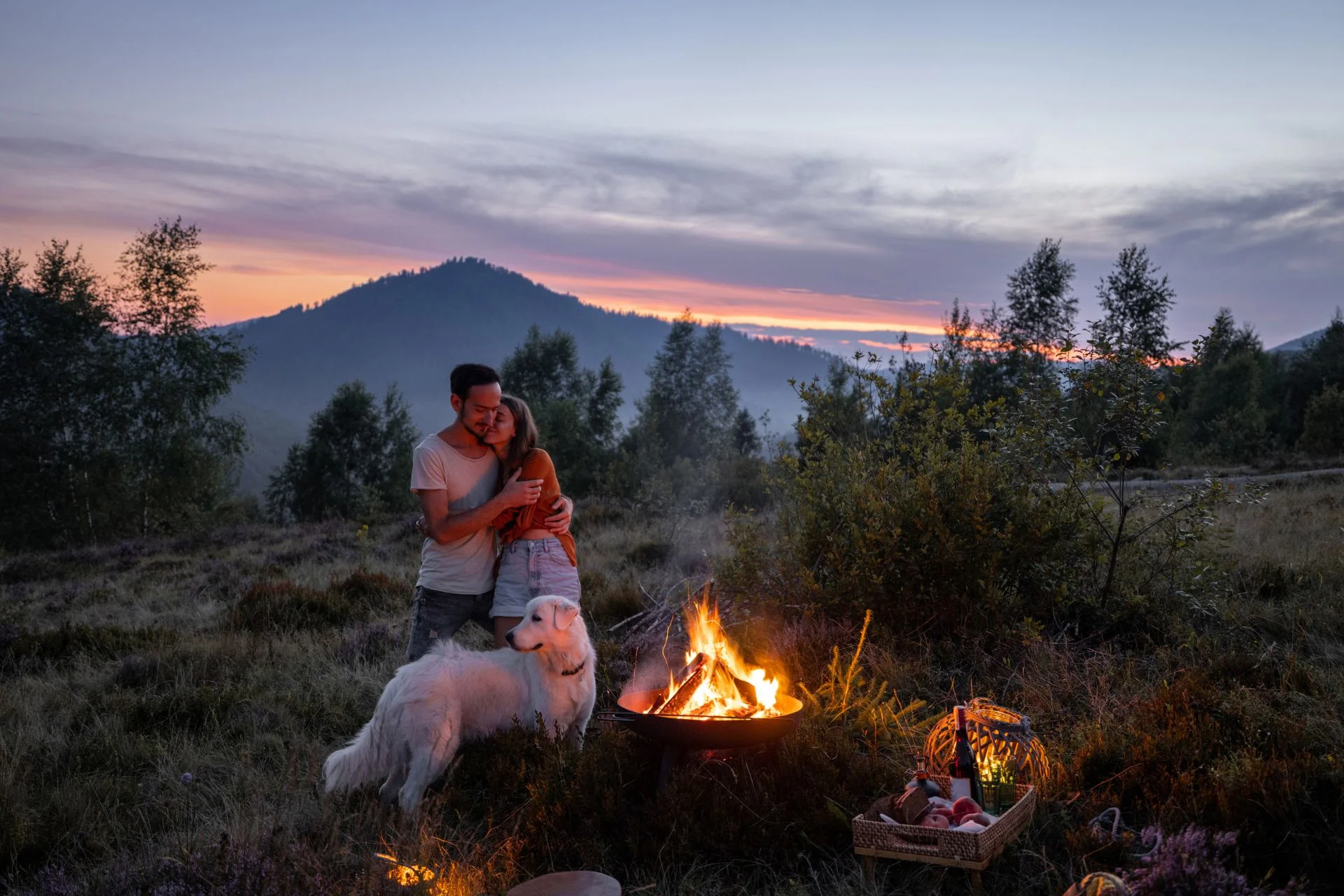
Campfire safety applies to dogs just as it does to children. Keep them a safe distance from the fire, supervise closely (dogs are attracted to warmth and moving flames) and make sure they can't access hot embers. Respect neighboring campers: keep your dog from approaching other pitches uninvited, even if your dog is friendly. Not everyone wants a stranger's dog bounding toward them.
When the campsite isn't dog-friendly: dog boarding and dog sitting options
Not every camping trip will allow dogs. National parks with strict rules, international travel, boat-based camping, or trips with specific terrain that isn't safe for your dog all create situations where the right call is to leave them behind with proper dog sitting or dog boarding in place.
For active, outdoor-oriented breeds (the Labs, Border Collies, Vizslas, and Shepherds that love camping), the dog boarding or dog sitting arrangement needs to match their energy level. A standard kennel with two short exercise walks per day is not adequate for a dog used to hiking several miles. Look for dog boarding with a family or active dog sitter who can exercise them properly, or in-home dog sitting where a pet sitter stays at your house and maintains the dog's normal routine and exercise pattern.
House sitting is often the best option for dogs who are attached to their home territory or who get anxious in new environments. A pet sitter who stays in your home keeps the dog's routine, their familiar smells and space, and their daily dog walking schedule intact. Doggy daycare works well as a supplementary option for social dogs who do better with other dogs around than in a quieter house sitting environment.
When finding a dog sitter for a camping-loving, high-energy dog, ask specifically about their daily exercise provision. A dog sitter who takes dogs for proper runs or long walks gets very different behavior from an active breed than one who covers the basics. On Petme, sitter profiles include a real social feed: you can see how they actually spend time with dogs in their care before reaching out. The guide to choosing a reliable dog sitter covers what to ask to confirm a match.
Frequently asked questions
1. Is it a good idea to take a dog camping?
For most dogs, yes. The combination of extended outdoor time, new terrain, varied smells, and close time with their owner suits dogs well. The caveat is preparation: a dog who is not vaccinated for the relevant environment, not reliable on leash or recall, or not used to new sleeping environments will have a harder time than a prepared one. Most challenges people have camping with dogs come from inadequate preparation rather than dogs being unsuited to camping.
2. Where should my dog sleep when camping?
Inside the tent with you. A dog left in a separate outdoor enclosure or tied outside overnight is exposed to predators, temperature drops, and the anxiety of being alone in an unfamiliar environment. A tent also heats up quickly in direct sun: never leave your dog inside a zipped tent unattended during the day. At night, a raised sleeping pad or insulated mat inside the tent keeps them off damp ground and warm enough in cooler temperatures.
3. What is the 7-7-7 rule with dogs?
The 7-7-7 rule is a rough adjustment timeline used in dog adoption and rehoming: seven days to decompress from stress, seven weeks to learn the new household routine, seven months to feel fully settled. It's most often cited for newly adopted dogs, but the same principle applies to any significant environmental change. A dog camping for the first time in unfamiliar terrain may be unsettled for the first day or so: that's normal, and sticking to their feeding and exercise routine helps them settle faster.
4. How do I find a dog sitter for a high-energy camping dog?
Look specifically for a dog sitter or dog boarding arrangement that includes real daily exercise, not a brief toilet walk but actual running or hiking. Ask during the meet-and-greet how much exercise they provide per day and what it looks like. In-home dog sitting or house sitting where the pet sitter stays in your home and maintains the dog's exercise routine is often the best fit for active breeds who are attached to their territory. A dog boarding family with outdoor space and an active lifestyle is a good alternative.
5. Can I leave my camping dog home while I go on a trip without them?
Yes, and it's often the right call for trips where dogs aren't permitted or aren't safe. Active breeds need dog boarding or dog sitting arrangements that match their energy; a dog used to long hikes won't do well with minimal exercise during your absence. House sitting, where a pet sitter stays in your home and maintains the dog's routine, typically produces the best outcome for high-energy dogs used to a structured daily schedule. Doggy daycare during the day can supplement this for particularly social or energetic dogs.
6. Are there dogs that shouldn't go camping?
Brachycephalic breeds (Pugs, Bulldogs, French Bulldogs) struggle with heat and strenuous activity, making warm-weather camping high-risk. Very young puppies whose growth plates haven't closed shouldn't be hiking on rough terrain. Elderly dogs with joint problems, heart conditions, or reduced mobility need honest assessment before a physically demanding trip. Dogs with severe anxiety or behavioral issues in new environments are better served by a reliable dog sitter at home than by forced exposure to a campsite. For these dogs, the best outdoor adventure is a comfortable home with good dog sitting coverage. 🐕
Camping with a dog is one of the better things you can do together: it exercises them well, engages their senses, and fits naturally into how most dogs want to spend their time. Getting the preparation right is what separates a trip that strengthens the bond from one that becomes a stressful management exercise. And for the trips that don't work with a dog, knowing where to find good dog sitting or dog boarding makes the decision to leave them behind an easy one rather than a guilty one.