TL;DR: Before you hit the trail, confirm the route is dog-friendly and matches your dog's current fitness level. Bring water, a collapsible bowl, a first aid kit, poop bags, and a well-fitted harness. Train your dog in basic trail commands - "come," "leave it," and "stay" - before you go. Avoid hiking in peak heat and watch for panting, slowing, or reluctance to continue, which indicate your dog needs a break or water.
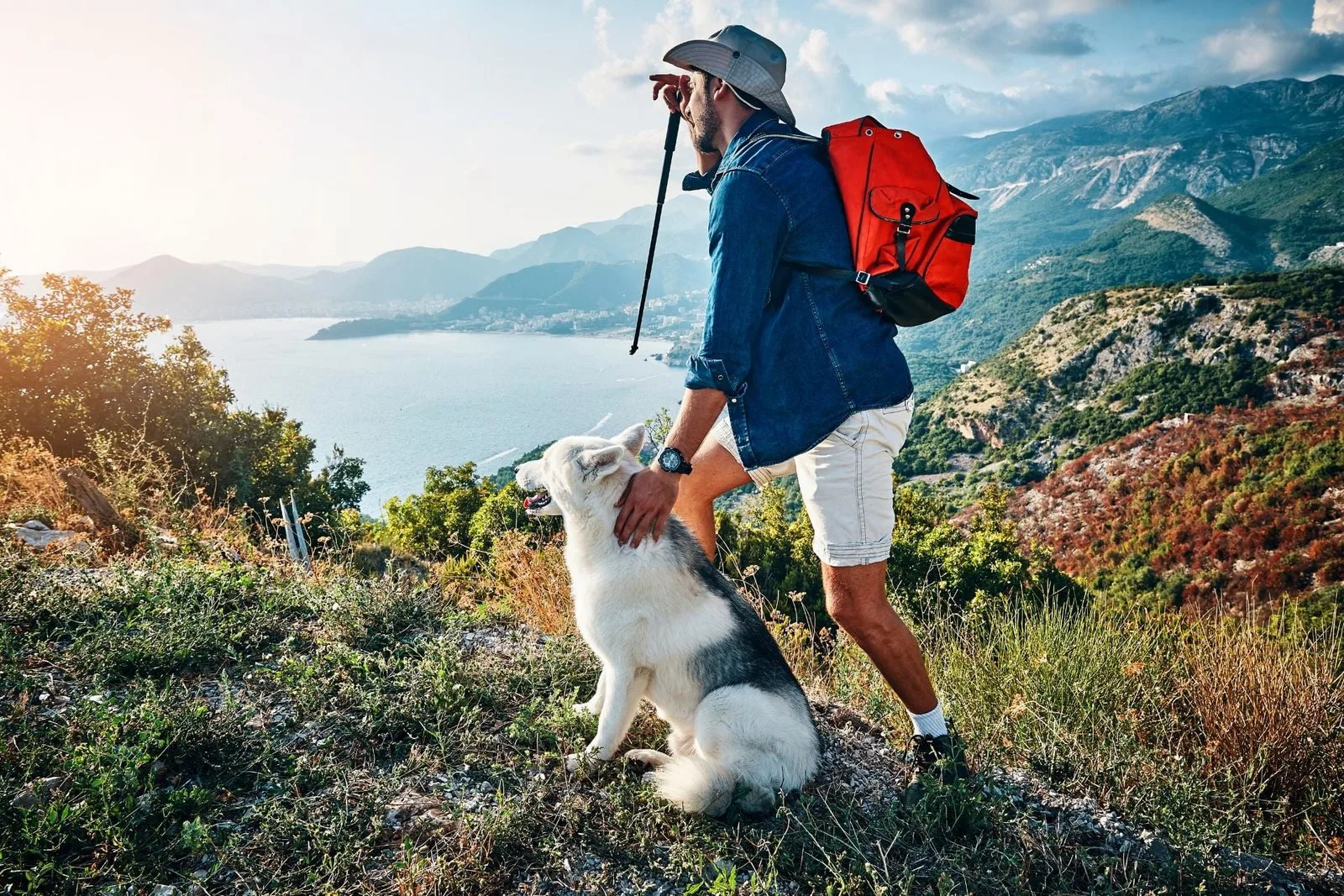
Hiking with a dog is genuinely one of the better ways to spend time together. Your dog gets physical exercise, mental stimulation from new smells and environments, and the kind of enrichment that no indoor toy can replicate. You get a hiking companion who is reliably enthusiastic about the plan. But a successful hike requires some preparation - for both of you.
Preparation before the hike
Pick the right trail
Not every trail is dog-friendly. Some parks prohibit dogs outright; others require on-leash control throughout. Look for this information before you drive out, not when you arrive at the trailhead.
Beyond rules, consider difficulty. If your dog has not been on a long walk in months, a 15km trail with significant elevation is not the right first outing. Start with something short and relatively flat, then build up over several weeks as your dog's fitness improves. Rocky surfaces, hot asphalt, and rough gravel can damage paw pads - check trail surface descriptions before you go.
Visit the vet first
Before taking a dog on regular hikes, confirm their vaccinations are current, particularly rabies and leptospirosis, which carry higher risk in wooded and water-adjacent environments. Talk to your vet about tick and flea prevention for the areas you plan to hike.
If your dog is older, overweight, or has a chronic joint condition, get a vet opinion on what activity level is safe before committing to longer hikes. Dogs will often push through discomfort rather than slow down, which means the owner has to make the call about when enough is enough.
Build fitness gradually
A dog that lives mostly indoors needs progressive conditioning before a demanding trail. Start with longer walks around the neighborhood, then introduce mild inclines and uneven terrain over several weeks. Pay attention to how your dog recovers - a dog that is stiff the day after a walk has been pushed a little too far, and the next session should be shorter.
Pack well
The essentials:
- Harness and leash (a backup leash is worth carrying)
- Collapsible water bowl and enough water for both of you, with extra
- Poop bags (on trails, pack out what your dog produces - do not leave it on the path)
- First aid kit with bandages, antiseptic wipes, and tweezers for ticks or splinters
- Dog-safe sunscreen if your dog has thin or light-colored coat on exposed areas
- Snacks for both of you on longer hikes
Training for trail behavior
Basic commands for the trail
Commands like "come," "stay," "sit," and "leave it" are not just useful at home - they are safety tools on a trail. "Leave it" prevents your dog from investigating wildlife, plants, or other hikers' food. "Come" with reliable recall means you can get your dog back to you quickly if something unexpected happens. If these are not solid yet, see the guide to basic commands for dogs before planning a challenging hike.
Leash manners
A dog that pulls constantly on the leash is exhausting over several kilometers. Use positive reinforcement to reinforce walking at a relaxed pace beside you, and stop forward movement whenever the leash goes taut. For off-leash sections, solid recall is non-negotiable. More detail on reinforcement techniques is in this guide to positive reinforcement dog training.
Socialization for trail situations
Dogs who are comfortable with new people, unfamiliar dogs, and novel environments are much easier to manage on a trail. A dog that reacts strongly to every passing hiker or bicycle is stressful for everyone and potentially dangerous near drop-offs or traffic. For younger dogs, see our tips on socializing your puppy to build this comfort gradually.
Knowing your dog's limits
Some breeds are built for long-distance activity: Vizslas, Weimaraners, Siberian Huskies, Border Collies, and Australian Shepherds handle demanding terrain well. Short-faced breeds (Bulldogs, Pugs, French Bulldogs) overheat faster and struggle with sustained exertion. For a guide to which breeds make the best trail companions, see our list of best dogs for hiking and camping.
Safety on the trail
Heat and hydration
Avoid hiking during peak heat hours, particularly in summer. Early morning and late afternoon are significantly cooler. Dogs do not sweat through their skin the way humans do - they regulate heat through panting, which is much less efficient. A dog overheating shows as heavy panting, drooling, slowing significantly, or stumbling. Stop, find shade, and offer water. For a full breakdown of the signs and what to do, read this guide to dehydration and heat stroke in dogs.
Offer water every 20-30 minutes on an active trail. Do not wait for your dog to ask - they often will not, especially when engaged with the environment.
Wildlife and terrain hazards
Keep your dog on the leash unless you are in a designated off-leash area with very solid recall. Wildlife encounters - snakes, porcupines, deer, and small animals - happen faster than most owners can respond. A dog off-leash that decides to chase something can get injured or lost in seconds. Even in off-leash areas, leash up before passing other hikers, cyclists, or dogs on the trail.
Check paws at the end of each hike for cuts, debris between the pads, or signs of soreness. Inspect for ticks, especially around the ears, neck, and between the toes.
Being a considerate trail user
Follow posted leash rules even if your dog is reliably well-behaved. Other hikers may be afraid of dogs, and not every off-leash dog is a safe interaction for yours. Pick up everything your dog produces and carry it to a proper bin - burying waste or leaving bags on the path side are not acceptable options on most trails. Stay on marked paths rather than letting your dog roam into vegetation that may be ecologically sensitive.
High-activity dogs and dog walkers
If you have a breed that needs more daily exercise than your schedule allows, a professional dog walker is worth considering. A dog walker who handles active or working breeds regularly will understand the exercise and mental stimulation needs of a hiking-capable dog. Some dog walkers offer off-leash trail sessions, group walks, and longer weekend outings - worth asking about if your dog is in this category.
For days when hiking is not possible, Petme connects you with local dog walkers who can provide the activity your dog needs. Dogs that get sufficient regular exercise are easier to train, less destructive at home, and more relaxed in new environments like a boarding facility or during a dog sitting stay.
FAQs
1. Can all dogs hike?
Most dogs can hike at a level appropriate for their breed and fitness, but not all are suited for demanding terrain. Short-faced breeds like Bulldogs and Pugs overheat easily and tire quickly. Very small breeds struggle with rough or steep terrain. Dogs with joint conditions like hip dysplasia need flat, even surfaces and shorter distances. Start any dog on easy, short trails and assess how they cope before increasing difficulty. A vet check before starting a regular hiking routine is sensible for any dog with a known health condition.
2. How much water does my dog need on a hike?
A general guideline is around 60ml per kilogram of body weight per day during normal conditions, with more needed during exercise and heat. On a hike, offer water every 20-30 minutes regardless of whether your dog asks for it. Bring more than you think you will need - running out of water with a dog 5km from the trailhead is a real problem. A collapsible silicone bowl is lightweight and easy to carry.
3. What should I do if my dog encounters wildlife?
Keep your dog leashed and calmly guide them away from the animal without running. Running triggers chase instinct in dogs and flight response in wildlife. With snakes specifically: freeze, identify the direction, and move your dog away slowly in the opposite direction without turning your back on the snake. If your dog has been bitten by a snake or has been near a porcupine or skunk, head directly to a vet even if the dog seems fine initially.
4. Are dog backpacks a good idea?
Yes, for suitable dogs. A well-fitted dog backpack allows your dog to carry their own water, collapsible bowl, and waste bags - reducing your load on longer hikes. The pack should fit snugly without restricting shoulder movement or gait, and the total weight should not exceed 10-15% of the dog's body weight. Introduce the pack at home first so the dog is comfortable with it before putting it on at the trailhead. Avoid packs on dogs with any shoulder, neck, or back issues.
5. What if my dog gets tired halfway through a hike?
Stop and rest in a shaded spot. Offer water and give your dog 10-15 minutes to recover. If they are enthusiastic to continue, carry on at an easier pace. If they remain reluctant, turn back. A dog that is limping, panting heavily, or refusing to move has been pushed past their limit. It is always better to cut a hike short than to push a tired dog further and end up carrying them out or dealing with an injury. Plan hikes as out-and-back routes so turning around early is always an option.
6. What do I tell a dog walker about my dog's trail habits?
If you hire a dog walker who offers trail or off-leash sessions, brief them on your dog's recall reliability, reactivity to other dogs and wildlife, any health conditions that affect exercise tolerance, and how your dog signals that they are tired or need water. Mention any specific commands your dog knows and how you use them, so the walker can maintain the same language. A good dog walker will ask all of this before the first session, but having it written down as a handover note means nothing gets missed.