Dogs cannot sweat through their skin the way humans do. Their primary cooling mechanism is panting, passing air over the moist surfaces of the mouth and airways to release heat through evaporation. This works reasonably well in mild conditions, but in high heat or humidity it can be overwhelmed quickly. The result is a sharp temperature rise that can cause organ damage within minutes and death within hours if not managed correctly.
Dehydration and heat stroke are among the most time-sensitive emergencies a dog owner or carer can face. This guide covers how to recognize the signs of each, what to do immediately, and what anyone caring for a dog (including dog walkers and pet sitters) needs to know before taking a dog out in warm weather.
Understanding dehydration in dogs
Dehydration occurs when fluid loss exceeds fluid intake. Water is essential to every physiological process, transporting nutrients, regulating temperature, lubricating joints, flushing waste. When dogs become dehydrated, the body prioritizes conserving water by reducing urine output and saliva production. This also depletes electrolytes, the minerals that regulate fluid balance in cells, which compounds the problem.
Common causes include vomiting and diarrhea (both of which cause rapid fluid loss), heat exposure, fever, kidney disease or diabetes, and certain medications that increase urine output. Dehydration is often an early stage of what can become heat stroke if fluid loss continues in a hot environment. If your dog is vomiting, the guide to why dogs vomit covers when it is a passing upset and when it needs a vet.
Understanding heat stroke in dogs
Heat stroke is defined as a body temperature exceeding 104°F (40°C) that causes tissue damage. At this temperature, the body's cooling mechanisms are failing rather than compensating. Above 106°F (41.1°C), proteins in cells begin to denature, which can cause irreversible organ damage within minutes.
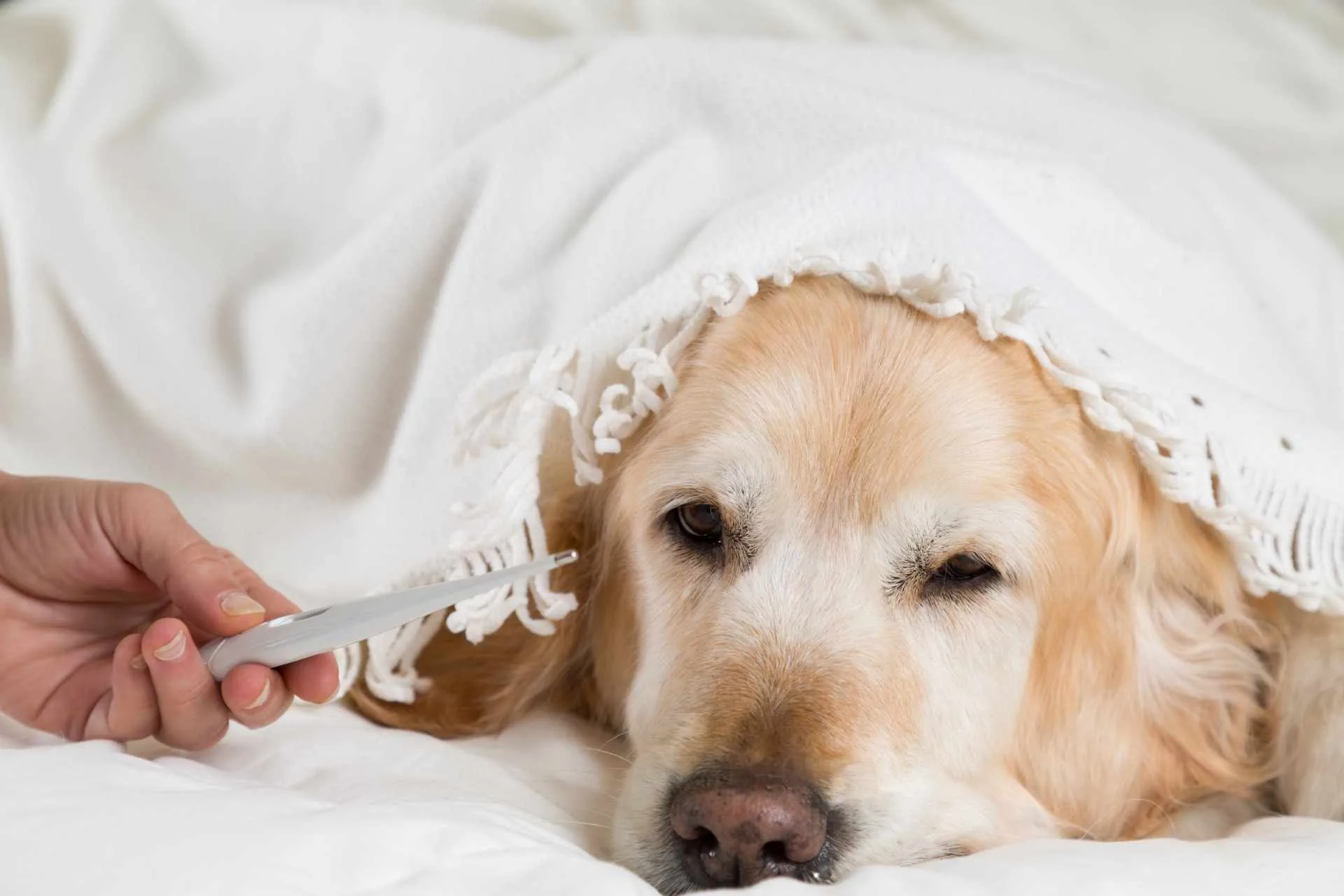
A dog's normal temperature range is 101°F to 102.5°F (38.3°C to 39.2°C). Temperatures above 103°F indicate overheating that needs immediate intervention. Above 104°F, the risk of organ failure is significant and emergency veterinary care is required regardless of how the dog appears outwardly.
Heat stroke can occur faster than most owners expect. A car parked in sun on a 70°F day can exceed 110°F inside within an hour. A dog exercising on a hot afternoon can overheat within 20 to 30 minutes. High humidity makes things worse because it reduces the effectiveness of panting: moisture doesn't evaporate efficiently in humid air, which is the mechanism dogs rely on to cool down.
Which dogs are most at risk
Brachycephalic (flat-faced) breeds (Bulldogs, Pugs, Boston Terriers, Boxers, French Bulldogs) are at significantly higher risk than other dogs. Their compressed airways make panting mechanically less efficient. They heat up faster than dogs who can pant effectively, and they reach dangerous temperatures at lower ambient heat levels.
Dogs with thick double coats (Huskies, Malamutes, Chow Chows, Saint Bernards) overheat quickly in warm or humid conditions because insulation that helps in winter becomes a liability in summer.
Puppies and senior dogs have less effective temperature regulation than healthy adults. Overweight dogs have additional insulation and less surface area relative to mass, which reduces their ability to dissipate heat. Dogs with heart or lung conditions are less able to compensate through increased circulation. Any dog with a pre-existing health condition should be treated as higher risk in warm weather.
Recognizing the signs
Dehydration signs
Early dehydration is often subtle. Knowing your dog's baseline helps identify when something has changed.
- Dry, sticky gums and dry nose
- Sunken or dull-looking eyes
- Skin tenting: when you gently pinch a fold of skin on the back of the neck and release it, it should spring back immediately. If it stays raised or returns slowly, dehydration is likely.
- Lethargy and reduced energy
- Reduced or dark urine
Heat stroke signs
Heat stroke symptoms are more dramatic and escalate faster. The progression can move from manageable to critical within minutes.
- Excessive, frantic panting: more intense and rapid than normal; thick, sticky drool
- Gum color changes, gums may be bright red (early heat stroke) or pale, white, or blue-gray (advanced, indicates shock or poor oxygenation)
- Fast heart rate and rapid breathing
- Vomiting or diarrhea, sometimes bloody
- Stumbling, disorientation, or uncoordinated movement
- Collapse, seizures, or loss of consciousness
You can check capillary refill time by pressing gently on the gums until they turn white, then releasing. The color should return within two seconds. Longer than two seconds may indicate poor circulation or dehydration. Check gum color at the same time: this quick assessment gives you a useful status update while you're taking other action.
What to do in an emergency
Heat stroke is a medical emergency. The steps below are first aid to stabilize the dog while you get to a vet: they are not a substitute for veterinary care.
1. Move to a cool environment immediately. Get the dog indoors into air conditioning or into deep shade out of direct sun. Remove from any confined space, including a car.
2. Cool with lukewarm or cool water, not ice cold. Wet the dog's fur, particularly around the neck, armpits, groin, and paws, with cool or lukewarm water. Do not use ice water or ice packs directly on the body, cold causes blood vessels near the skin to constrict, which actually traps heat in the core rather than releasing it. A fan aimed at the wet dog accelerates evaporative cooling significantly.
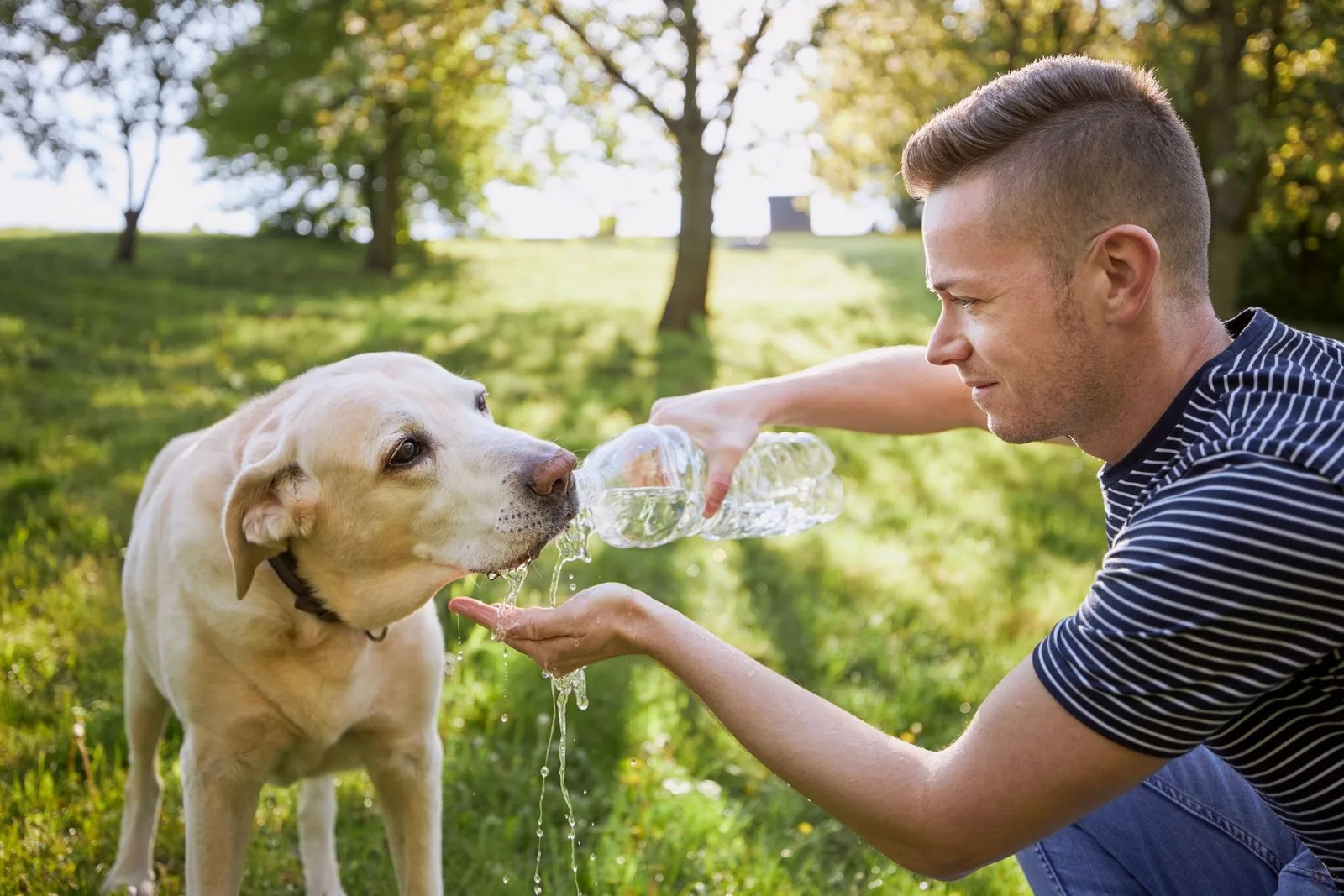
3. Offer cool water in small amounts. If the dog is conscious and able to swallow, let them drink small amounts of cool water at their own pace. Do not force water or allow them to drink large amounts quickly: this can cause vomiting.
4. Contact a vet immediately. Call ahead so the clinic can prepare. Continue cooling measures during transport. Even if the dog seems to be recovering, internal organ damage may not be visible externally, and veterinary monitoring is necessary.
Do not wait to see if the dog "comes good." Do not use ice water or ice packs. Do not give human medications. Do not leave the dog unattended while cooling.
What dog walkers and pet sitters need to know
Dog walkers and pet sitters are often with dogs during the hottest parts of the day, which makes awareness of these risks more than background knowledge: it is a practical safety requirement.
Walk dogs in the early morning or after sunset during warm weather. The ground temperature test applies: if you can't hold the back of your hand on the pavement for seven seconds, it's too hot for a dog's paws, and hot enough that the walk should be rescheduled entirely, not shortened.
Know which breeds you are walking or sitting. A brachycephalic dog should be treated as high-risk in any warm conditions, not just in extreme heat. A dog sitter with a Pug or Bulldog in summer should plan outdoor time very conservatively and have a cool indoor environment available at all times.
If you're a dog walker or pet sitter and you notice heat stroke signs (frantic panting, stumbling, gum color changes), begin first aid immediately: shade or AC, cool water applied to the body, small amounts to drink, and call the owner and an emergency vet simultaneously. Time matters more than anything else in these situations. The owner's vet contact details and the nearest emergency animal clinic should always be in your sitter instructions before any trip begins.
On Petme, sitter profiles show how a sitter actually operates with dogs in their daily care, including whether they exercise dogs appropriately for the conditions. For an owner with a heat-sensitive dog, this is worth looking for specifically when browsing profiles.
Prevention
Fresh water should be available at all times: at home, during walks, and at any location a dog will be spending time in. In warm weather, refill the bowl more frequently and consider ice cubes to keep it cool.
Never leave a dog in a parked car, even briefly and even with windows partially open. The temperature inside a car rises faster than most people expect, and a dog can reach dangerous temperatures within 10 to 15 minutes on a warm day.
Adjust outdoor activity based on conditions, not calendar or habit. A route that's fine in April can be dangerous in July. Avoid the hours between 10am and 4pm for any sustained outdoor activity in summer. Choose shaded routes and rest in shade when possible. If the dog is panting heavily and slowing down, stop before they give out: dogs will often continue exerting themselves past their safe limit because they want to keep up with their owner.
Frequently asked questions
1. How long does it take a dog to recover from heat stroke?
It depends entirely on the severity and how quickly treatment was started. Mild heat stroke with prompt cooling and fluids may resolve within a day or two with no lasting effects. Moderate to severe heat stroke can involve days of hospitalization and weeks of recovery, with ongoing monitoring for kidney damage, clotting disorders, and neurological effects. Some dogs do not survive severe heat stroke even with treatment, particularly if they were not cooled promptly and if internal organ damage was extensive. Early intervention is the single most important factor in the outcome.
2. What body temperature is dangerous for a dog?
A dog's normal temperature is 101°F to 102.5°F (38.3°C to 39.2°C). Temperatures above 103°F indicate the dog is overheating and needs to be cooled immediately. Above 104°F (40°C), the risk of organ damage becomes significant and emergency veterinary care is required. Above 106°F (41.1°C), cell damage begins and the situation is critical. Time from onset to organ failure can be measured in minutes at these temperatures.
3. How do I cool down a dog with heat stroke?
Move the dog to a cool environment immediately. Apply lukewarm or cool water, not ice cold, to the fur, particularly around the neck, armpits, and groin. Use a fan to accelerate evaporative cooling. Offer small amounts of cool water if the dog is conscious and able to swallow. Do not use ice water or ice packs directly on the body, as this causes vasoconstriction that traps heat in the core rather than releasing it. Call a vet immediately and continue cooling during transport. These are stabilization measures, not a replacement for veterinary care.
4. Can dehydration cause a stroke in a dog?
Severe dehydration does not cause a stroke (cerebrovascular accident) in the way that term is used in humans, but it can cause serious vascular complications. Dehydration thickens the blood, reduces blood pressure, and impairs circulation, all of which put stress on the cardiovascular system and can contribute to organ damage. In the context of heat stroke specifically, the combination of dehydration and elevated body temperature can produce brain swelling, seizures, and neurological damage that may superficially resemble stroke symptoms.
5. How do I know if my dog is dehydrated?
The most reliable home tests are skin tenting (pinch a fold of skin on the back of the neck and release: it should spring back immediately; slow return indicates dehydration) and gum condition (gums should be pink, moist, and slippery; dry, sticky, or pale gums indicate dehydration or poor circulation). Sunken eyes, lethargy, and reduced urine output are additional signs. Capillary refill time, pressing on the gums until white then releasing, should return to pink within two seconds; longer indicates circulatory compromise. If you see these signs, provide water and contact your vet.
6. What dogs are most vulnerable to heat stroke?
Brachycephalic (flat-faced) breeds (Bulldogs, Pugs, French Bulldogs, Boxers, Boston Terriers) are at highest risk because their anatomy limits panting efficiency. Thick-coated breeds overheat quickly in warm weather. Puppies and senior dogs have less effective temperature regulation. Overweight dogs have additional insulation and less effective heat dissipation. Dogs with pre-existing heart or lung conditions are less able to compensate through increased circulation. In any warm conditions, these dogs need more conservative management than the general advice that applies to healthy adult dogs. 🐕
Heat stroke and dehydration are not gradual conditions that give you time to deliberate. The difference between a dog who recovers fully and one who suffers lasting organ damage is usually measured in minutes. Knowing the signs, knowing what to do immediately, and getting to a vet without delay are the three things that determine the outcome.