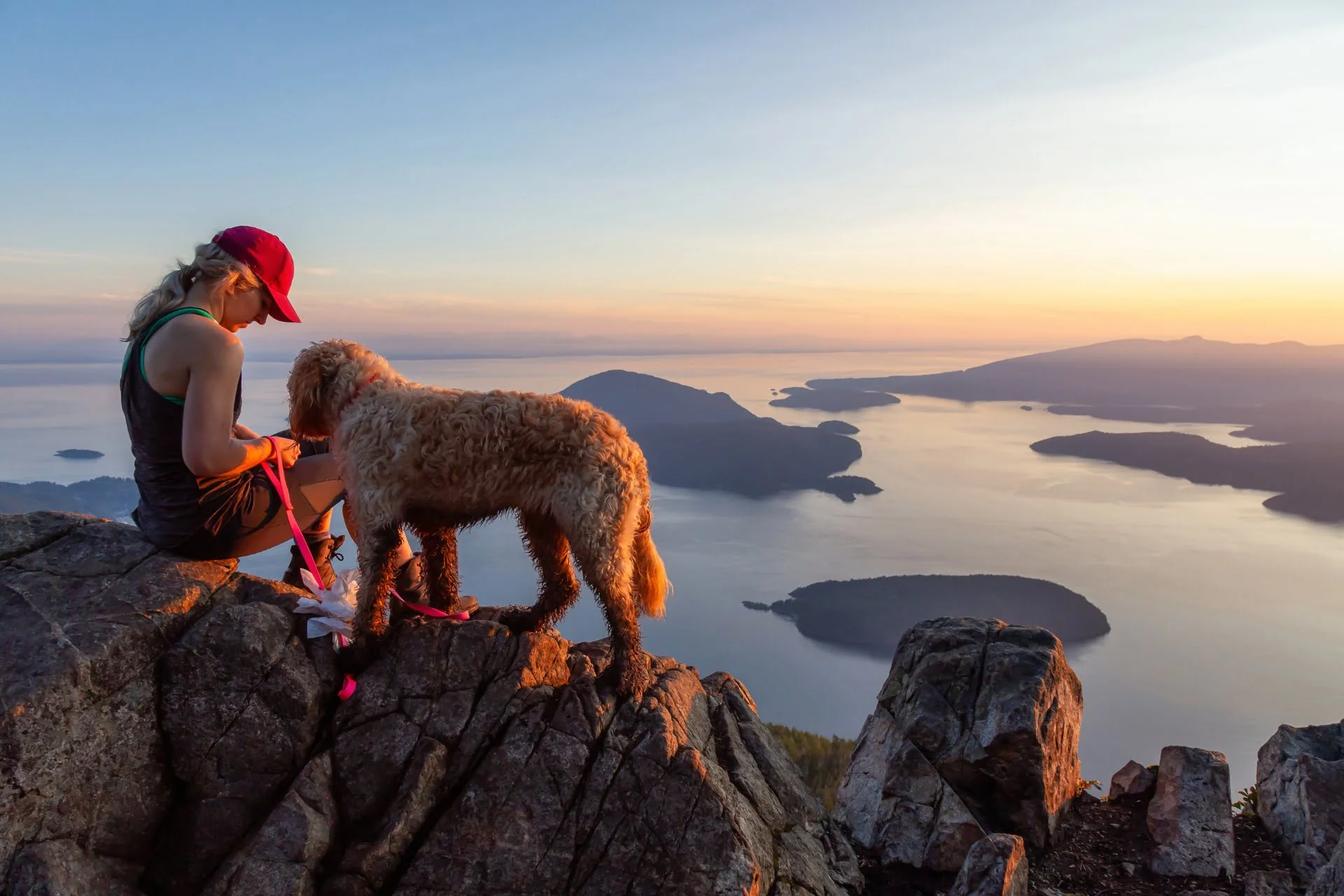
Hiking and camping with a dog is genuinely one of the better things you can do with them. The breeds that love trail life (sustained physical effort, new terrain, off-leash exploration) are usually the same ones that struggle most when that energy has nowhere to go. Choosing the right hiking dog means committing not just to weekends in the mountains, but to keeping them exercised and stimulated on the many ordinary days in between, including when you travel without them.
This guide covers the best breeds for trail and camp life, essential gear and safety, and what to look for in dog boarding, dog sitting, and dog walking for high-drive outdoor dogs. For a deeper guide on the camping side specifically, the guide to camping with a dog covers logistics in detail.
What makes a good hiking and camping dog
Three things matter above breed or size: stamina, recall, and temperament around wildlife. A dog who can't be reliably called back off-leash is a safety problem on any trail where wildlife, other hikers, or cliff edges are involved. Stamina needs to match the length and difficulty of the hikes you actually do, not the most demanding ones you might aspire to. And a dog who reacts unpredictably to deer, birds, or other dogs on the trail creates real problems in backcountry settings.
Beyond those three, look for a coat suited to your climate, paw durability for rocky terrain, and a dog who travels well and settles in new environments at night. The breeds below score well across most of these requirements. None of them suits a sedentary lifestyle, which is the most important thing to understand before you bring one home.
The best dogs for hiking and camping
1. Labrador Retriever
Labs are the most adaptable all-round hiking dog. Hardy, strong swimmers, and comfortable across varied terrain, they handle everything from muddy river crossings to rocky climbs without complaint. They're highly trainable and eager to please, which makes recall reliable once established. On non-hiking days, a Lab needs genuine exercise: a dog walker who covers real distance, not a ten-minute toilet walk. Doggy daycare suits them well: they're sociable, not dog-reactive, and burn energy through play rather than needing structured activity.
2. Australian Shepherd
Aussies are athletic, agile, and among the most intelligent dogs you can take on a trail. They learn commands fast and adapt well to changing conditions, which makes them excellent off-leash companions once their recall is solid. The commitment they demand is real: an under-exercised or under-stimulated Australian Shepherd will redirect that energy destructively. For owners who travel for work, finding a dog sitter or dog boarding arrangement that includes active exercise, not just feeding and a brief walk, is not optional for this breed.
3. Border Collie
No breed responds to voice commands more sharply than a well-trained Border Collie, which makes them outstanding trail companions in terrain where keeping a dog close matters. They have boundless energy and love working alongside their person on a demanding hike. The flip side is that they need a job on ordinary days too. A dog walker who engages them mentally, varying routes and practicing commands during the walk, gets much better results than one who simply clips a leash and covers distance. Doggy daycare with other active dogs works well as an occasional supplement.
4. Vizsla
Vizslas are built for endurance. They're lean, light-coated, and heat-tolerant in a way that heavier breeds aren't, which makes them particularly good for warm-weather hiking. They're affectionate and form strong bonds with their owners, which can tip into separation anxiety when arrangements change. When a Vizsla can't be taken on a trip, dog boarding in an active home, where they're exercised properly and around people, is far better than a kennel environment. House sitting, where a pet sitter stays in the dog's own home and maintains their routine, is often the best option for this breed specifically.
5. German Shorthaired Pointer
GSPs have extraordinary stamina and a natural curiosity that makes every new trail interesting to them. They're versatile, weatherproof, and comfortable covering long distances in varied terrain. Their prey drive is high, which means solid recall training is non-negotiable before taking them off-leash. On ordinary working days, a GSP who doesn't get proper exercise will find ways to make that clear. A daily dog walking session that actually covers distance, or doggy daycare a few days a week, keeps them even-tempered and manageable at home.
6. Beagle
Beagles are built for scent-following across terrain, which makes them natural trail dogs for moderate hikes. Their endurance is solid and their temperament is even. The consistent caveat is that a Beagle who catches an interesting scent has very limited interest in recall until they've followed it, which means leashed hiking in areas with wildlife, and a firm recall foundation built before any off-leash time is attempted. For pet sitting and dog boarding, Beagles are among the easier hiking breeds to place: they're sociable, not dominant, and adapt well to new environments.
7. Bernese Mountain Dog
Bernese Mountain Dogs are built for cold-weather, high-altitude terrain, gentle giants who cover ground steadily rather than at pace. They're loyal and calm on the trail, excellent with families, and surprisingly capable on rugged mountain paths. The practical considerations are their size and heat sensitivity: long summer hikes in hot climates are not well-suited to this breed. For dog boarding when they can't come along, look for a dog sitter with space: a Bernese is not a dog who does well in a small apartment dog-boarding arrangement.
8. Golden Retriever
Golden Retrievers are enthusiastic, durable, and almost universally good-natured on the trail. They handle water crossings happily, respond well to training, and are comfortable in both intense activity and quiet camp evenings. Their coat requires consistent grooming, which is worth noting in instructions to any dog sitter covering a longer trip. For dog boarding and house sitting arrangements, Goldens are among the easiest breeds to place. They're friendly with strangers and adapt quickly to a new pet sitter's routine.
9. Siberian Husky
Huskies are purpose-built endurance animals, at their best in cold terrain over long distances. They're independent thinkers with strong prey drive, which makes off-leash hiking in wildlife-heavy areas high-risk without extensive training. For owners who hike in cooler climates and can invest in that training, a Husky is one of the most capable trail dogs available. On non-hiking days, they need serious exercise: a dog walker who covers real distance, or doggy daycare with space to run. Standard drop-in visits are not enough for this breed between hiking trips.
Essential trail gear for dogs
A well-fitted harness is more practical than a collar for trail hiking, distributing pressure better if your dog pulls or needs to be steadied on difficult sections. A sturdy leash plus a longer lead line for campsite tethering covers most situations. If your dog is fit and the hike is long enough to warrant it, a dog pack lets them carry their own food and a portable bowl; keep the load under 10 to 12 percent of their body weight.
A basic canine first aid kit (gauze, vet wrap, styptic powder, tweezers for tick removal) is worth carrying on any multi-hour hike. Dog booties protect paws on sharp rock or hot pavement, though most trail dogs need gradual conditioning to tolerate them. For everything else on the trail preparation side, the hiking with a dog guide covers the full gear checklist.
Trail and camp safety
Leash laws vary by trail and park: many national parks and backcountry areas require dogs to be leashed at all times. Research the specific regulations before you go rather than assuming off-leash is permitted. In areas where it is, reliable recall is the minimum standard before letting your dog run free around wildlife or other hikers.
Water safety matters more than most owners expect. Stagnant ponds and slow-moving streams can carry Giardia and Leptospira: carry enough fresh water for your dog rather than relying on trail water sources. Perform a full body tick check every evening at camp, particularly around ears, armpits, and between toes. Keep tick and flea prevention current before any trip into woodland terrain.
Dog boarding, dog sitting, and dog walking for high-energy trail breeds
The breeds on this list are not dogs that tolerate neglect on non-hiking days. They need daily structured exercise: a proper dog walking session or doggy daycare, not a brief toilet break and an evening on the sofa. Understanding this before you adopt is as important as choosing the right breed for the trail.
For trips when your dog can't come with you, the care arrangement needs to match the dog's energy level. Standard dog boarding in a kennel is often a poor fit for high-drive breeds like Vizslas, Border Collies, and Australian Shepherds, as the confinement and limited exercise amplifies anxiety rather than providing rest. The better options are in-home dog sitting or house sitting, where a pet sitter stays in your home and maintains something close to your dog's normal routine, or dog boarding with an active family rather than a commercial facility.
Doggy daycare is a good regular arrangement for working owners of athletic breeds, providing the social interaction and physical activity these dogs genuinely need, and most daycare facilities are well set up for high-energy dogs. For shorter working days, a dog walker who actually exercises your dog properly, covering real distance and not just a fifteen-minute loop, is essential. Drop-in visits alone are insufficient for the breeds on this list; they're a supplement to exercise, not a substitute for it.
When finding a dog sitter or dog walker for a high-energy hiking breed, look for someone with relevant experience. On Petme, sitter profiles include a real social feed of their day-to-day life with dogs. You can see whether they run or hike with animals in their care, rather than just taking their word for it. For a trail breed, that matters considerably more than it would for a Shih Tzu. The dog sitting vs. doggy daycare guide helps you weigh up which arrangement works best for your dog's specific needs.
Frequently asked questions
1. What is the best age to start hiking with a dog?
Wait until growth plates have closed, around 12 to 18 months for most medium breeds, up to 24 months for larger breeds like Bernese Mountain Dogs. Hiking on hard or hilly terrain before growth plates close can cause lasting joint damage. Start with short, flat walks and build gradually. Your vet can confirm the right timing for your specific breed. In the meantime, a dog walker covering flat terrain is the right level of exercise for a growing dog.
2. Which medium-sized dogs are best for hiking?
Labrador Retrievers, Australian Shepherds, Vizslas, and German Shorthaired Pointers are all medium-to-large dogs that rank among the best hiking breeds. For a strictly medium-sized option, the GSP and Vizsla are the strongest performers: both have elite endurance, trainable temperaments, and coats suited to varied weather. All of them need active dog walking or doggy daycare on non-hiking days; their energy level doesn't switch off when you're not on a trail.
3. Can large dogs go hiking and camping?
Yes. Bernese Mountain Dogs and Golden Retrievers are excellent trail companions at a steadier pace. Newfoundlands do well in cooler, water-rich environments. The main considerations for large hiking dogs are heat management, joint health as they age, and dog boarding logistics: large breeds need pet sitters or dog boarding arrangements with enough physical space to be comfortable. A dog boarding family with a house and garden is a better fit than a small apartment dog sitter for a Bernese on a week-long trip.
4. What are the best dogs for hiking off-leash?
Border Collies, Labrador Retrievers, and Australian Shepherds respond most consistently to off-leash recall once properly trained. The Vizsla is also strong off-leash in open terrain. High prey-drive breeds like GSPs and Huskies need more extensive recall training before off-leash hiking is safe in wildlife-heavy areas. Whatever the breed, off-leash hiking should only follow reliable recall in low-distraction environments first, and any dog walker or pet sitter taking your dog to open spaces should know your dog's specific off-leash boundaries.
5. How do I find a dog sitter or dog boarding for a high-energy hiking breed?
Look specifically for pet sitters or dog boarding hosts who exercise actively, who run or hike and have outdoor space where your dog can move properly. Ask directly how much exercise they provide per day and what that looks like. A dog sitter who walks thirty minutes twice a day is not the right match for a Vizsla or Border Collie. House sitting, where a pet sitter stays in your home and maintains your dog's routine, is often the best option for these breeds when you travel without them.
6. What should I pack for a dog on a camping trip?
Fresh water and a portable bowl are the non-negotiables. Don't rely on trail water sources. Food portioned for the activity level (hiking burns more calories than a normal day), a basic first aid kit with gauze, vet wrap, and tweezers, a leash and long lead for the campsite, waste bags, and any regular medication. Dog booties are worth having for rocky terrain. Leave your vet's number and your dog's microchip details with whoever will be dog sitting at home, in case you're unreachable. 🐾
The best dogs for hiking and camping are also the ones that ask the most of their owners on quiet days. Getting the trail breed right is step one; building the daily care routine (dog walking, doggy daycare, a reliable pet sitter or dog boarding option for trips when they can't come along) is what makes that choice sustainable over the years of adventures ahead.