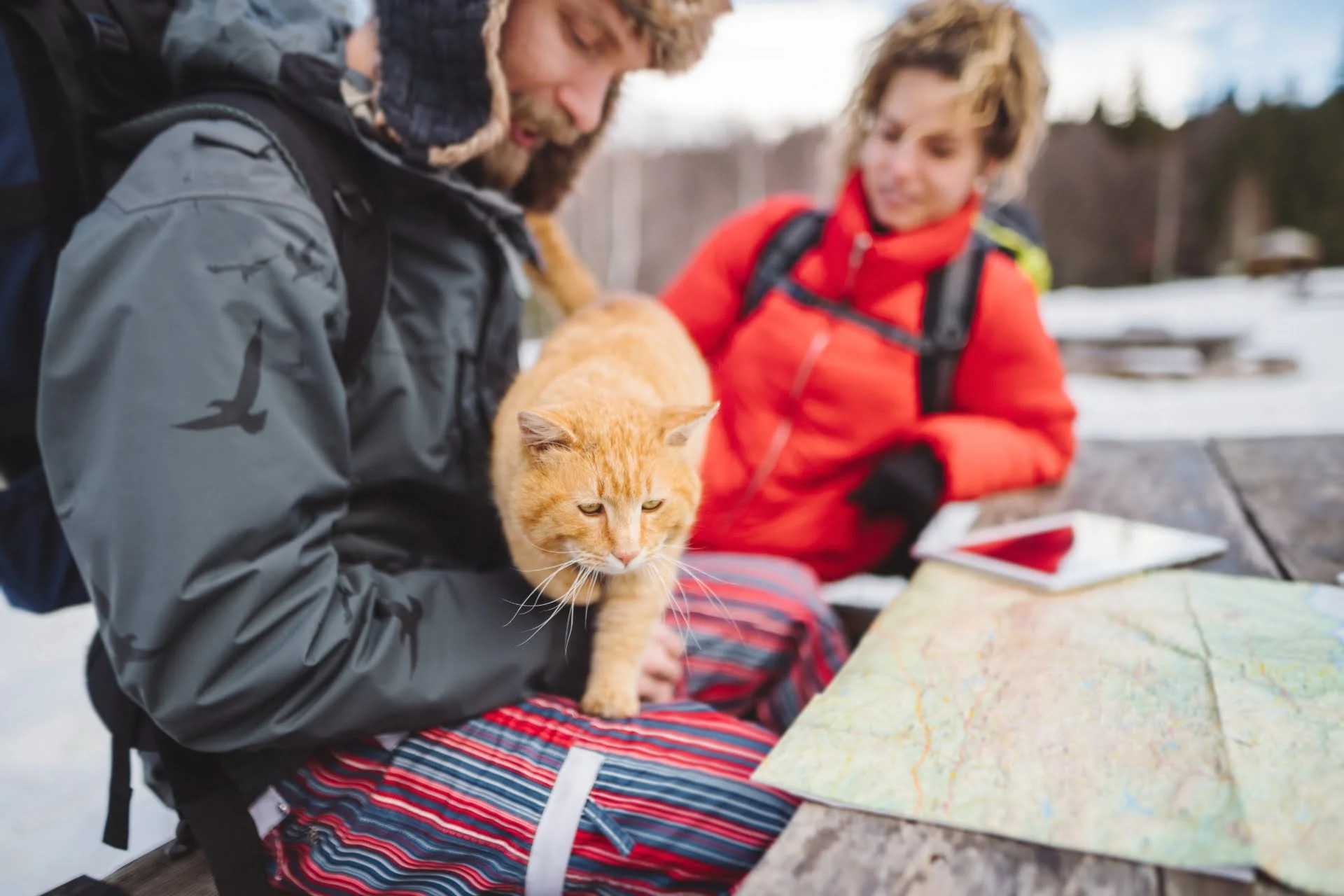
A growing number of cats accompany their owners on trails, and the results range from genuinely enjoyable mutual adventures to stressful experiences that shouldn't be repeated. The difference usually comes down to whether the cat was suited for it and whether the preparation was realistic. This guide covers the full picture: how to assess your cat honestly, what gear actually matters, the training progression that works, and how to manage the trail itself.
Is your cat suited for hiking
Not every cat is an adventure cat, and the sign that yours might be is specific: they actively seek novel environments rather than retreating from them. A cat who investigates new objects and spaces at home, who watches outdoor activity with focused curiosity rather than anxiety, and who tolerates handling and restraint calmly is a better candidate than one who hides when routines change.
Breed is a partial guide. Maine Coons, Bengals, Abyssinians, and Savannahs are frequently described as the most hiking-compatible, largely because of their higher activity levels and environmental curiosity. Persian cats and other flat-faced breeds can struggle with exertion and temperature regulation. But individual temperament matters more than breed: a calm, curious mixed breed is a better hiking companion than an anxious pedigreed Bengal.
Age and health are practical gates. Young, healthy adult cats are the most appropriate candidates. Kittens under a year old should not be taken on strenuous outdoor excursions, their immune systems and growth plates need time. Senior cats or those with health conditions need veterinary assessment before any outdoor exertion. Whatever your cat's age, vaccinations and parasite prevention should be current before any trail exposure: discuss what's appropriate for your region with your vet.
Essential gear for hiking with a cat
Harness
Never attach a leash to a collar. A cat who is startled can slip a collar instantly, and neck injury from a sudden pull is a real risk. Use a properly fitted vest-style or H-style escape-proof harness. Vest harnesses (like the Kitty Holster) wrap more securely around the torso and are harder to escape than simple strap designs. The fit test: you should be able to fit two fingers between the harness and your cat's body, but not more. A spooked cat can compress significantly and force through a harness that seemed snug indoors.
Backpack carrier
Cats cannot hike sustained distances the way dogs can. They will tire, overstimulate, or simply decide they are done. A backpack carrier is not optional equipment for a real hike: it is the difference between a manageable outing and a situation where you are carrying an unwilling animal with no support. Choose a well-ventilated carrier with a stable frame so the cat isn't pressed against your back, and train your cat to be comfortable in it before any outdoor use.
GPS tracker
A lightweight GPS tracker (Tractive is the most commonly recommended) attached to the collar gives you immediate location information if your cat escapes the harness. This is most relevant on wooded trails where a spooked cat can disappear into cover within seconds. It is cheap insurance for a situation that would otherwise be extremely difficult.
Remaining gear
Collapsible bowls and fresh water are essential: cats can be encouraged to drink more on the trail if wet food or water-enriched food is offered, which helps with hydration in a way that a still bowl often doesn't. A basic first aid kit should include tweezers for tick removal, styptic powder for minor bleeding, and bandage material. Cat-specific sunscreen is worth having for cats with exposed skin or very light fur, particularly on the ears and nose: consult your vet for a suitable product. Waste bags and a small portable litter option cover hygiene for longer outings.
The training progression
There is a specific sequence that produces the best results. Skipping steps or rushing through them is the most common reason cats don't take to hiking.
Step 1: Harness familiarity. Leave the harness near your cat's food bowl or sleeping area for several days before putting it on. Let them investigate it at their own pace. When you do put it on, keep it brief (five to ten minutes) and pair it immediately with high-value treats. Gradually increase wearing time over days until your cat shows no reaction to the harness being fitted. This stage is complete when your cat walks and behaves normally while harnessed indoors.
Step 2: Leash introduction. Attach a lightweight leash and let it drag behind your cat while supervised indoors. Then pick it up and follow your cat's lead around your home: you are not directing them yet, you are getting them comfortable with the sensation of being connected to something. Move to a secure outdoor space (fenced garden or balcony) and repeat. For full leash training methodology, the cat leash training guide covers the process in detail.
Step 3: Backpack carrier familiarity. Place the open carrier in your home and encourage your cat to enter voluntarily by putting food inside. Let them sleep in it. Once comfortable entering and resting inside, begin short carrying sessions around the house, then around the neighborhood. The carrier should feel like a safe space, not a confinement: this is what makes it useful when you need your cat to retreat to it quickly on the trail.
Step 4 (Short outdoor outings. With harness, leash, and carrier all familiar, take your cat to a quiet outdoor space) not a trail yet. Start with 10 to 15 minutes and focus on observation and exploration rather than covering distance. Allow them to investigate at their own pace. Add time and complexity gradually over multiple sessions before attempting any actual trail.
Choosing the right trail
Start with shorter, quieter trails rather than popular routes with heavy foot traffic. Dogs are the primary complication: your cat needs to be scooped up and placed in the carrier every time an off-leash or reactive dog approaches, and busy trails make this constant. Less trafficked trails give you more space to manage encounters calmly rather than reactively.
Choose trails with good shade and accessible rest spots. Cats overheat faster than dogs and need more frequent breaks, particularly in warm weather. Check pet-friendly regulations before going: many national parks and certain trail types have rules about cats that differ from dog policies.
Managing the trail
Let your cat set the pace. They will likely walk, stop to investigate, walk again, and occasionally need to be carried: this is the normal rhythm of cat hiking, not a sign that things are going wrong. Do not force forward movement; the whole point of the experience is exploration on the cat's terms.
Scoop your cat up and put them in the carrier whenever another dog or group of hikers approaches. Don't wait to see how your cat will react: the stress of a close encounter with an unknown dog undoes multiple positive outings. Making the carrier retreat routine and fast reduces the chaos of unexpected encounters.
Watch for stress signals during the hike: excessive panting (not explained by heat), flattened ears, tail tucked low, attempts to climb onto your shoulders, or total disengagement from the environment. These mean the session has gone further than your cat is comfortable with. End it, let them rest in the carrier, and head back. A short positive outing is better than a longer stressful one in every respect.
Keep fresh water available throughout and offer it frequently. Cats often won't drink from a still bowl readily, but many will lap from a hand or take wet food that has water mixed in. Hydration management on the trail requires more active attention than with dogs.
If your cat isn't suited to hiking
If your cat's temperament makes hiking a poor fit, there are still ways to engage their outdoor curiosity. A catio or enclosed garden gives outdoor access without the risks of a trail. Short supervised garden sessions on a leash provide stimulation without the demands of trail hiking. For some cats, being carried in the backpack for a short walk (observing from inside the carrier without any on-leash walking) is enough enrichment and adventure for their comfort level. And if you want to plan an outdoor trip that involves your cat more extensively, the camping with a cat guide covers overnight options in more detail.
If you have an adventure cat but need to travel without them, leave clear notes for your cat sitter about their outdoor routine, whether they walk on a harness in the garden, use a backpack for outings, and whether those routines should be maintained during your absence. An active cat sitter who is comfortable continuing an outdoor routine with your cat provides a better experience than one who keeps an adventure cat entirely indoors for a week. On Petme, you can find cat sitters whose profiles show outdoor and active pet experience: for an adventure cat, this matters more than for an indoor-only cat.
Frequently asked questions
1. Can all cats hike?
No. Hiking requires a cat who is curious and comfortable in new environments, tolerates handling and restraint, and is physically healthy and appropriately aged. Cats with anxious or reserved temperaments, brachycephalic breeds with breathing limitations, senior cats with health conditions, and kittens under twelve months are generally not suited for trail hiking. A cat who is genuinely relaxed and engaged during the training progression is demonstrating suitability; one who consistently shows stress signals is not, and it is better to acknowledge this than to push forward.
2. What are the main risks of hiking with a cat?
Escape from the harness is the highest-risk scenario: a scared cat can disappear quickly in natural cover and may not return to a familiar person in an unfamiliar environment. Overstimulation and heat stress are the most common welfare concerns. Wildlife encounters (particularly dogs, birds of prey, and depending on region, larger predators) require active management rather than hope. A GPS tracker on the collar and a secure escape-proof harness address the escape risk; the others are managed through trail selection, pacing, and knowing when to end the outing.
3. How do I train my cat for hiking?
In sequence: harness familiarity indoors → leash introduction indoors → carrier comfort → short outdoor outings in a controlled environment → quiet trail starts. Each step should be complete, your cat showing no stress response, before advancing to the next. Rushing the sequence is what most commonly produces a cat who tolerates rather than enjoys the experience. The full leash training methodology is in the cat leash training guide.
4. Do I need a backpack carrier for hiking with a cat?
Yes, for any genuine trail hiking. Cats will not walk continuously for the length of most hikes, and you need a carrier available not just for fatigue but for fast retreat when other dogs or stressful situations arise. A well-ventilated backpack carrier that your cat has been trained to treat as a safe space is functional gear for cat hiking, not an optional extra. Choose one with a stable frame so the cat isn't being pressed against you, and make sure the ventilation is adequate for warmer conditions.
5. Can I go hiking with my cat and a dog at the same time?
With significant caveats. If you have a dog and a cat who are well-established companions at home, the trail dynamic is manageable but requires two-person management: one handler per animal is the realistic setup. Encounters with unfamiliar dogs are much harder to manage when you already have a dog on leash. For most people, hiking with a cat is best done without a dog present, or with a very calm, cat-experienced dog and two experienced handlers. For hiking with dogs specifically, the guide to hiking with a dog covers that separately.
6. How far can a cat hike?
The realistic expectation for most cats is that they will walk short stretches and require carrying for the majority of the outing. Even well-conditioned adventure cats rarely walk continuously for more than a few hundred meters without wanting to stop, investigate, or rest. Distance isn't the frame for cat hiking: time and experience quality are. A 45-minute outing on a quiet trail where the cat explores willingly and returns home calm is a more successful hike than a 5km route where the cat spent most of it in the carrier. Build toward engagement and enjoyment rather than distance. 🐈
Cat hiking works best when it is approached on the cat's terms: gradual preparation, appropriate gear, honest assessment of when the outing is going well versus when it has gone far enough. The cats who genuinely enjoy trail time are a specific personality type, and when you have one, the investment in the training progression pays off with an experience that is genuinely unlike anything else in cat ownership.