Most cats have no interest in camping. They're territorial, habitual, and deeply unsettled by unfamiliar environments. But a subset of cats, typically those with confident temperaments, exposure to outdoor experiences from a young age, and solid harness training, take to it surprisingly well. The gap between those two groups is wide, and taking the wrong cat camping without adequate preparation creates a stressful, potentially dangerous situation for the cat and a miserable trip for you.
This guide covers how to prepare properly if your cat genuinely is suited for camping, what gear and safety measures matter most, and, just as usefully, when the right answer is to arrange cat sitting at home and go camping without them.
Is your cat actually suited for camping?
Before you buy a cat backpack and book a campsite, be honest about your cat's temperament. A cat who hides under the bed when a stranger visits, panics at loud noises, or has never been comfortable on a leash is not a camping candidate regardless of how much you want them there. Forcing an anxious cat into an unfamiliar outdoor environment doesn't build confidence. It causes real stress that can manifest as escape attempts, aggression, or behavioral regression.
Cats who do well camping tend to share a few traits: they're curious rather than fearful in new situations, they tolerate handling and restraint calmly, they've been leash-trained before, and they've been exposed to outdoor environments incrementally. The 3-3-3 pattern that rescue and behaviorist communities use for cats in new environments (three days to decompress, three weeks to settle into routine, three months to feel at home) is a useful benchmark. A cat who isn't settled in their own home won't find a campsite easier.
If your cat is anxious, elderly, has a health condition, or has simply never shown any interest in outdoor exploration, the kindest decision is to arrange a cat sitter for the trip rather than subjecting them to an experience they won't enjoy. A good cat sitting arrangement keeps their routine intact, their environment familiar, and their stress levels low, which is exactly what a home-loving cat needs when their owner is away.
Preparing your cat before the trip
If your cat is a genuine candidate for camping, preparation takes weeks, not days. There are two things to start long before any trip: harness training and tent familiarization.
Harness training needs to happen in stages. Start in the living room: let your cat wear the harness for short periods while doing something positive, like eating. Once they're comfortable with the harness, attach the leash and practice inside. Move to the backyard when they're relaxed on leash indoors, then to quiet outdoor spaces, and only then to more stimulating environments. A cat who is anxious on the leash at home will be worse on a campsite, not better. Never attach a leash directly to a collar. Use a properly fitted, escape-proof harness.
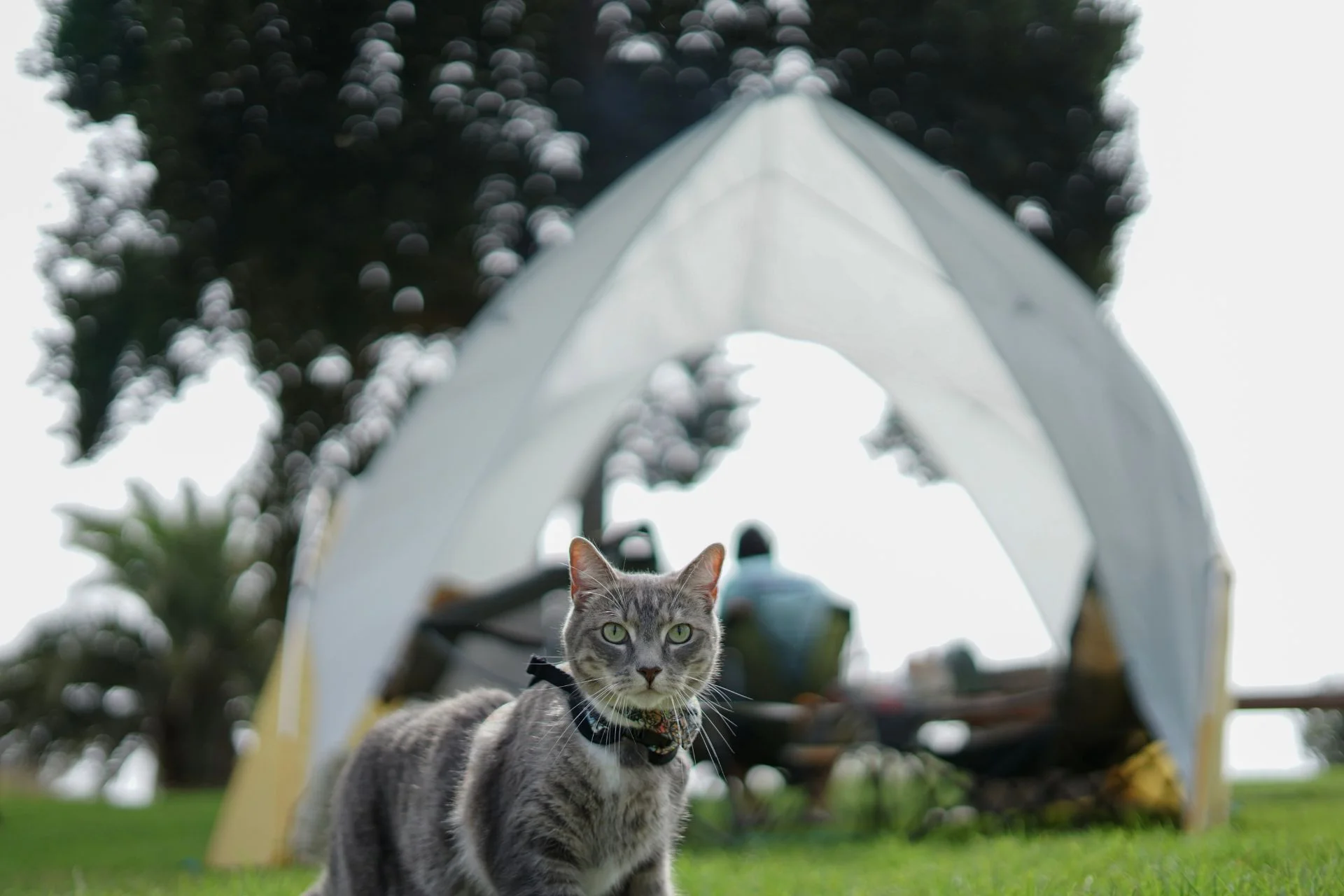
Tent familiarization follows a similar pattern. Set your tent up in the living room or garden well before your trip. Feed your cat meals inside it, let them nap there, and spend time in it with them so it registers as a known, safe space rather than a threatening enclosure. A cat encountering a tent for the first time in a dark campsite surrounded by unfamiliar sounds is a cat who is about to have a very bad night.
Before departure: confirm vaccinations and flea and tick prevention are current, and check that your cat is microchipped with up-to-date contact information. Add an ID tag with your phone number, and the specific campsite number if you know it, to their collar. Consider a GPS tracker like Tractive attached to the collar or harness; the peace of mind on a campsite is worth it.
Essential gear for camping with a cat
A secure carrier or soft-sided crate is the non-negotiable first item. This serves as your cat's home base at the campsite: their sleeping space inside the tent and their safe zone when they're overwhelmed. It needs to be escape-proof and familiar before the trip.
Bring a portable collapsible litter box and your cat's usual litter. A new litter in a new location adds unnecessary adjustment; familiar litter in an unfamiliar place is already enough change for most cats. Clean the litter box at least once daily at camp, and dispose of waste responsibly: cat feces can carry Toxoplasma gondii, which is why scattering it is not appropriate in wilderness areas.
Pack your cat's regular food rather than switching to something new for the trip. Digestive upset from a food change on top of environmental stress is easily avoided. Collapsible bowls, a supply of fresh water (don't let your cat drink from streams or stagnant sources), and a length of rope or a ground stake for tethering at the campsite complete the practical kit. A small pet first aid kit with gauze, antiseptic, tweezers for tick removal, and your vet's emergency number rounds it out.
Safety at the campsite
The single most important rule: never leave your cat unattended outside. This is not a guideline to bend in good weather. Tethering a cat to a tree and walking away means a cat who can get tangled, slip the harness, or attract coyotes, owls, or other predators. Inside the tent with you is the safe baseline; on harness and leash with you supervising is the only safe version of outdoor time.
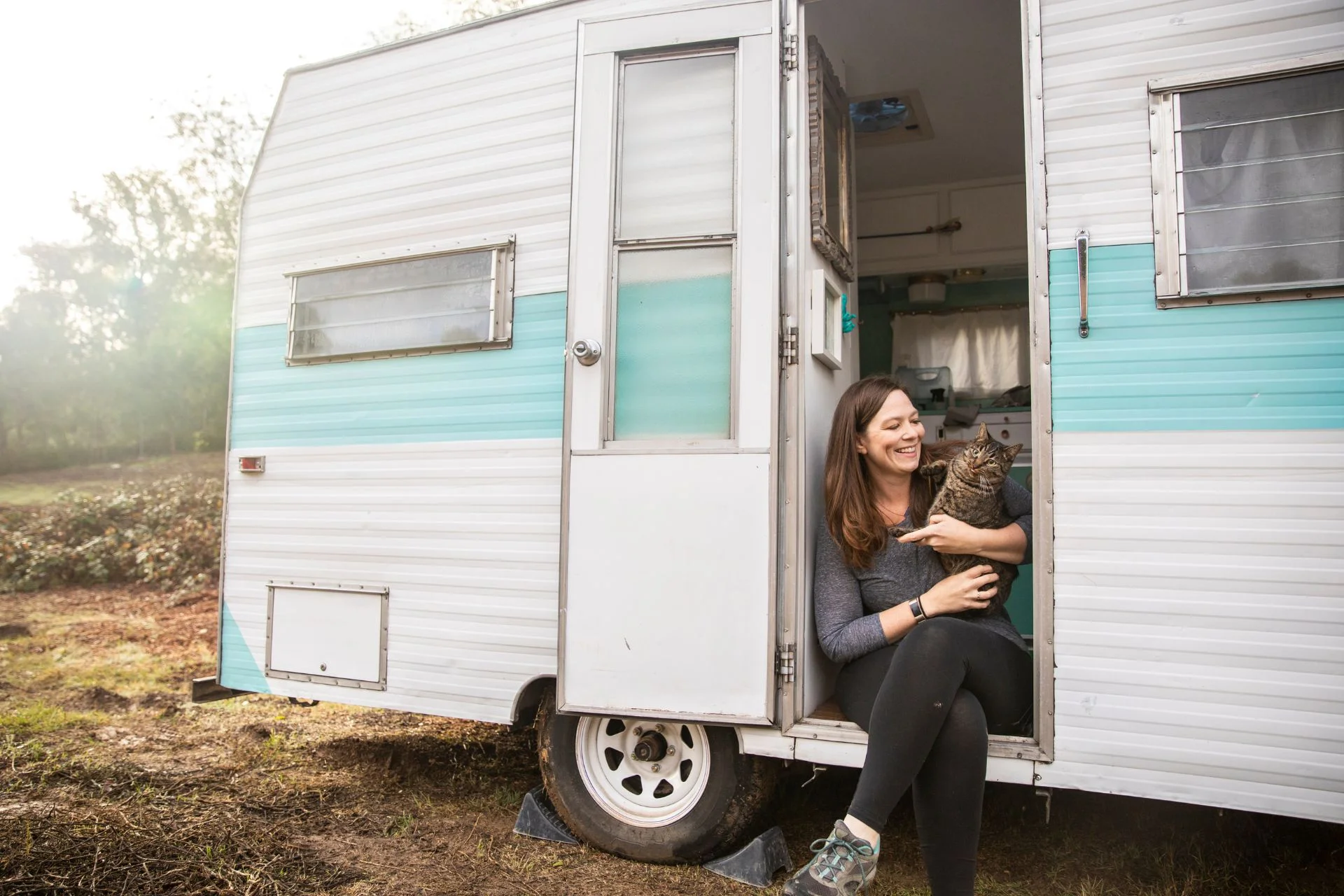
Tent security matters more than most people anticipate. Cats can push through partially open zippers, and claws can tear mesh panels. Get into the habit of securing zipper pulls together (a bread bag tie or a small carabiner works) every time you enter or exit. Your cat should sleep inside the tent or trailer with you at night, not in a separate outdoor enclosure.
Campfire supervision requires the same level of attention as you'd give a small child near an open flame. Cats are attracted to warmth and movement; keep them at a safe distance and never leave them near hot embers unsupervised. Be aware of the local wildlife in your camping area: research what predators are present before you go, not after you arrive.
When it makes more sense to leave your cat at home
Most cats are not adventure cats. For the majority of cat owners who want to go camping, the right answer is to arrange cat sitting at home and enjoy the trip without guilt.
Cats are territorial and routine-dependent in a way that most other pets aren't. Their home (their space, their smells, their established geography) is a significant part of their wellbeing. A cat left at home with a reliable cat sitter maintaining their normal routine is genuinely fine. The same cat dragged into an unfamiliar environment to satisfy their owner's desire for company is not.
For a camping trip of two to three days, regular drop-in visits from a cat sitter, twice daily to cover feeding, fresh water, a litter clean, and some interaction, is usually all that's needed for most cats. For longer trips or for cats who are more social and don't do well with minimal contact, a cat sitter who stays in the home provides more consistent company and is often the better arrangement. The guide to cat sitter visit frequency covers what's appropriate by trip length.
On Petme, you can browse cat sitter profiles and their social feeds before reaching out. Seeing how a pet sitter actually interacts with cats in their daily life is far more useful than a bio alone when you're leaving your cat for several days. For everything to prepare before you hand over the keys, the guide to preparing your cat for a sitter covers what to sort in advance.
For camping with a dog, where the calculus is often reversed (dogs typically love it), the camping with a dog guide covers the logistics in full.
Frequently asked questions
1. Is it safe to take a cat camping?
It can be, with the right cat and serious preparation. The risks (escape, wildlife encounters, stress-induced illness, and disorientation in unfamiliar territory) are real and require active management rather than hoping for the best. A cat who is harness-trained, confident in new environments, and well-prepared before the trip is a reasonable camping companion. A cat who is anxious, elderly, or leash-averse is not, and is far better served by a cat sitter at home.
2. What should I do with my cat while camping?
Keep them on harness and leash whenever they're outside the tent, supervised at all times. Provide a familiar crate or soft carrier inside the tent as their home base. Maintain their regular feeding schedule and routine as closely as possible. Give them time to acclimate to the campsite at their pace rather than forcing exploration. And at night, they sleep inside the tent with you, never left in an outdoor enclosure unattended.
3. Can a cat be left alone for 24 hours while I go camping?
Most healthy adult cats can manage 24 hours with adequate food, water, and a clean litter tray. For anything beyond that, drop-in cat sitting visits, at least twice daily, are strongly recommended. It's not just the physical care that matters; it's the contact. Most cats benefit from daily human interaction, and a cat sitter who checks in morning and evening provides that alongside the practical care. For longer absences, house sitting or a live-in cat sitter is worth considering.
4. What is the 3-3-3 rule for cats?
The 3-3-3 rule describes the typical adjustment timeline for cats in a new environment: three days to stop hiding and start exploring cautiously, three weeks to settle into a routine and feel comfortable in the space, three months to feel fully at home. It applies to new homes after adoption, but also to any significant environmental change, including a campsite. A cat who needs three months to feel at home is not a cat who will be comfortable in a tent overnight, which is why honest temperament assessment matters before any camping plan is made.
5. What gear do I actually need for camping with a cat?
An escape-proof harness and leash, a secure carrier or soft crate for the tent, a portable litter box with familiar litter, your cat's regular food and water, collapsible bowls, a GPS tracker, a breakaway collar with ID tags including the campsite number, and a basic pet first aid kit. The harness and carrier are the two items that matter most. Everything else is practical logistics. For hikes during the camping trip, the hiking with a cat guide covers trail-specific preparation.
6. How do I find a cat sitter if I decide to leave my cat at home?
Look for a pet sitter with specific cat experience who is comfortable with your cat's temperament, whether that's confident and social, or shy and slow to warm up. Arrange a meet-and-greet before your trip so your cat has time to register the sitter as a familiar person. Leave detailed written instructions covering feeding, litter routine, any health notes, and your vet's emergency contact. On Petme, cat sitter profiles include a real social feed so you can see how they interact with cats before reaching out. The guide to choosing a trustworthy cat sitter covers everything worth asking before you confirm. 🏕️
Camping with a cat can be a genuinely good experience for the right animal. For the majority of cats, a comfortable home with a reliable cat sitter is the better arrangement, and that's not a compromise. A cat who is stress-free at home while you enjoy the outdoors is a better outcome than a cat who is anxious and overwhelmed in a tent. Know your cat, prepare honestly, and make the decision that actually suits them.