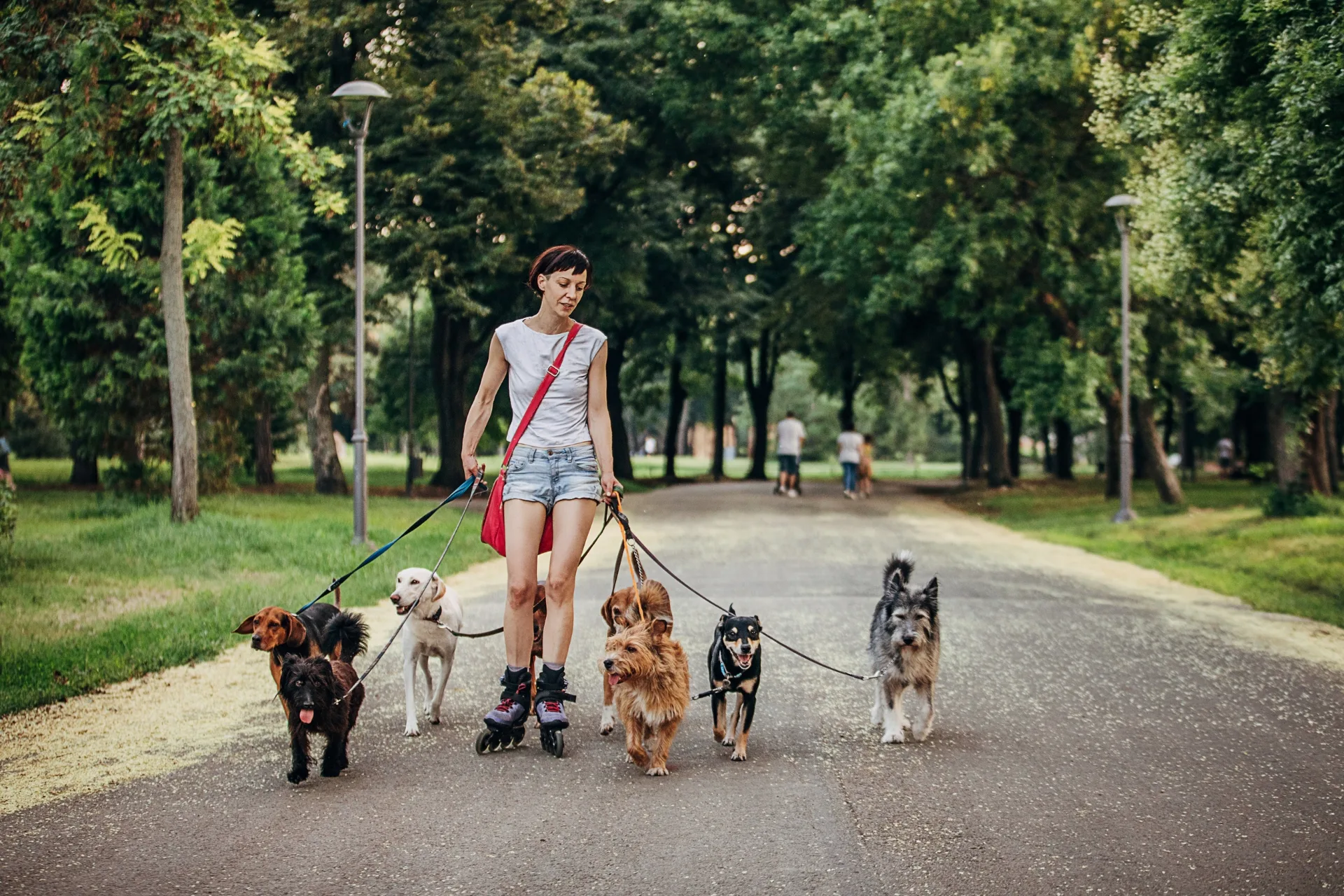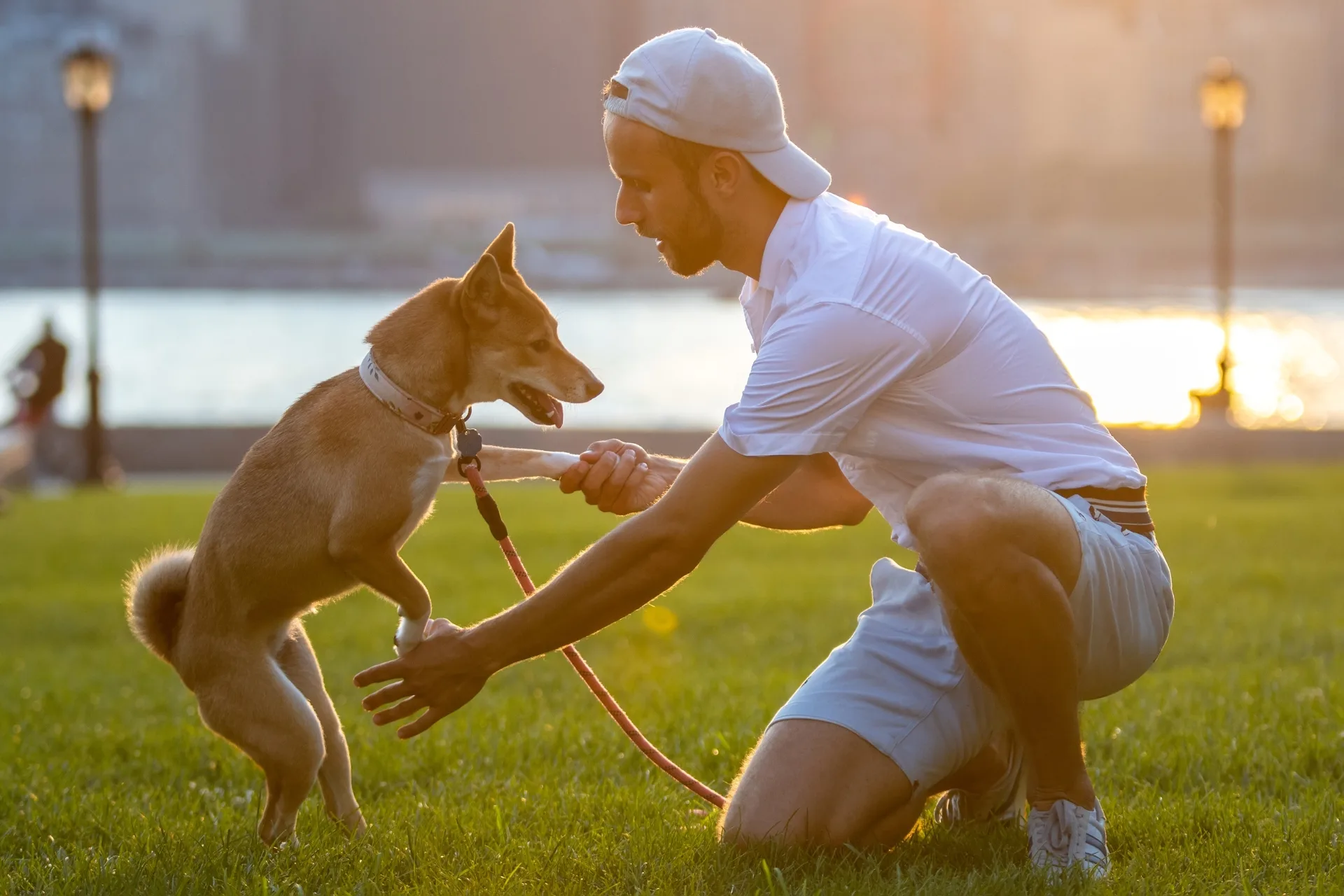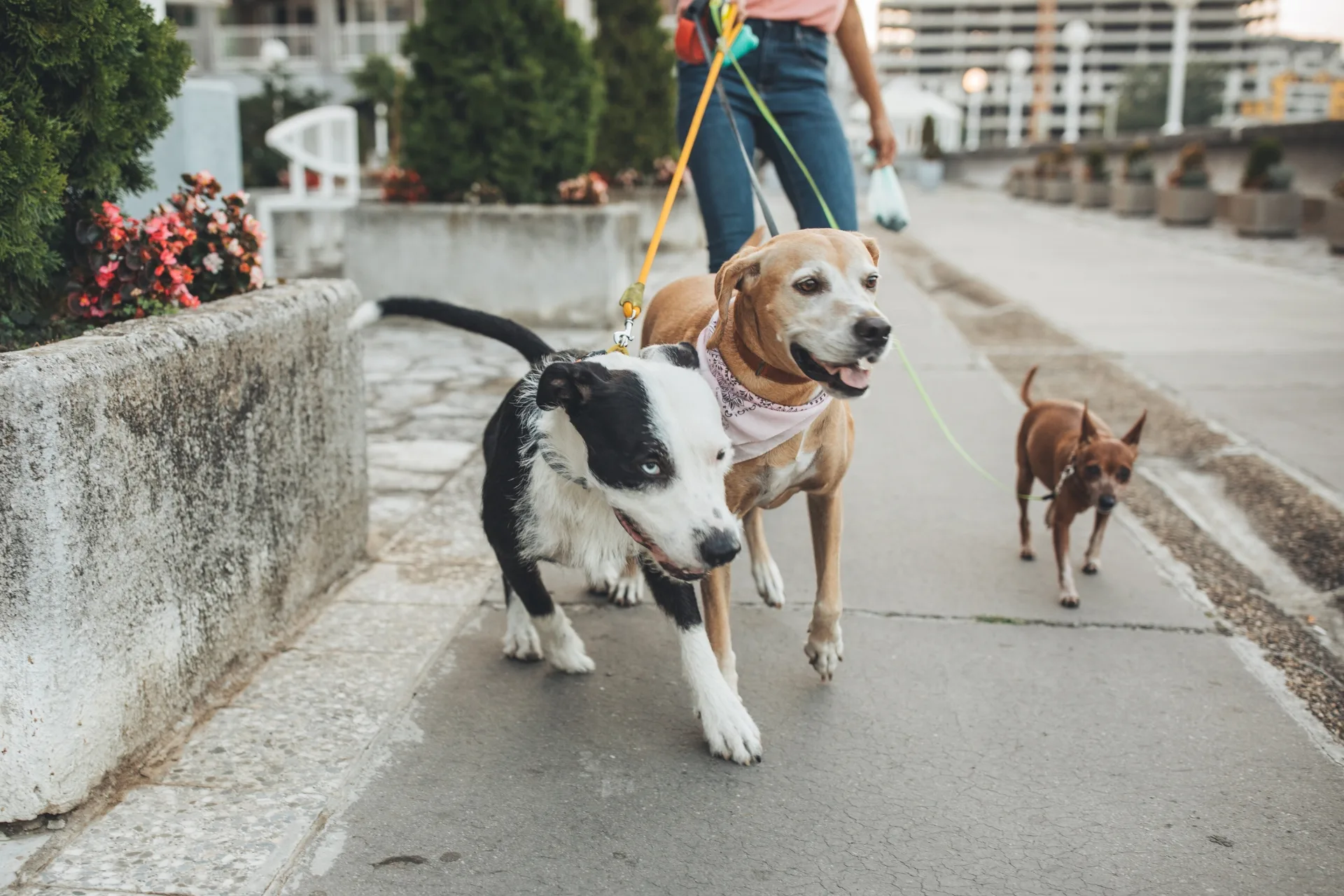
What does a dog walker do?
A professional dog walker takes your dog for a scheduled walk, adapted to their needs and energy level. This differs from a friend covering for you in a few practical ways: a professional walker tracks your dog's health and behavior during the walk, sends you a short update or photo afterward, follows your specific instructions about routes and handling, and shows up consistently. Walks typically last 15-60 minutes, depending on your dog's age and energy level. An older dog with joint problems needs a gentle 20-minute walk at a pace they can manage. A young working breed with high exercise requirements may need 45-60 minutes that includes off-lead time if that is safe in your area. A good walker adjusts the walk to the dog rather than applying a fixed template to every booking. If your dog pulls, the guide to stopping leash pulling helps make walks calmer for you and any walker.How long should a dog walk be?
The right walk length depends on the dog:- Puppies (under 6 months): Short, frequent walks of 10-15 minutes. Too much impact exercise before growth plates close can cause joint problems later.
- Adult small dogs: 20-30 minutes, once or twice daily. Many small breeds are more energetic than their size suggests.
- Adult medium to large dogs: 30-60 minutes, ideally twice daily. High-energy breeds like Border Collies, Huskies, and Vizslas need closer to 60-90 minutes of total daily exercise.
- Senior dogs: Shorter, slower walks with rest breaks. Frequency matters more than duration for older dogs. Two 20-minute walks are usually better than one 40-minute one.
Benefits of professional dog walking
Regular professional walking provides benefits beyond the exercise itself:- Physical health: Regular activity maintains a healthy weight, supports joint health, and burns energy that would otherwise go into destructive behavior
- Mental stimulation: Sniffing new routes and encountering different environments is cognitively engaging for dogs in a way that a garden or indoor play cannot replicate
- Behavioral improvement: Dogs with sufficient daily exercise are calmer at home. Many problems (excessive barking, chewing, jumping) reduce significantly when the dog is getting consistent activity
- Routine for dogs that need it: Dogs that expect walks at specific times and do not get them become frustrated or anxious. A professional walker provides consistency even on days when the owner's schedule does not allow it
Solo walks versus group walks
Many walkers offer both individual and group walks. The right choice depends on your dog: Solo walks suit dogs that are reactive on the lead, anxious around other dogs, in training, or need the walker's full attention throughout. Solo walks cost more per booking but the walker's focus is entirely on your dog. Group walks (typically two to four dogs together) suit sociable, well-behaved dogs that are comfortable with other animals. They cost less per walk and provide socialisation alongside exercise. They are not appropriate for dogs that pull strongly, are reactive, or have significant behavioral needs that require close management. If you are not sure which fits your dog, a solo walk for the first few sessions while the walker gets to know your dog's behavior is the safer starting point.When dog walking alone is not enough
Dog walking covers exercise and a bathroom break. It does not cover the situations where your dog needs more continuous care:- If your dog is left alone for more than five to six hours at a stretch, a single daily walk does not address the isolation. Drop-in visits at two or three points through the day are a better fit.
- For puppies or dogs with separation anxiety, more contact throughout the day matters more than the walks themselves. Boarding or house sitting provides the company that walking visits cannot.
- During a longer absence, such as a work trip or holiday, a dog walker cannot substitute for overnight care. Boarding or house sitting is the right arrangement when you are away overnight or longer.
How to find a reliable dog walker
The same signals that indicate a reliable sitter apply here: recent and specific reviews, a clear description of experience with your dog's breed and energy level, prompt responses to messages, and a willingness to arrange a meet-and-greet before the first walk. At the meet-and-greet, watch how the walker handles your dog on the lead. A walker who reads your dog's body language, stays calm when the dog is excited, and handles the lead with confidence is showing you how every walk will go. The meet-and-greet guide covers what to assess and what to ask. On Petme, dog walkers complete identity verification and a background check before taking bookings. You can browse profiles by neighborhood, filter by service type, and read reviews from owners with similar dogs before reaching out.What to tell your dog walker before the first walk
Clear instructions prevent most problems. Before the first walk, cover:- Walk duration and preferred routes, or areas to avoid
- Lead behavior: does your dog pull, react to other dogs, or fixate on cyclists or squirrels?
- Any health conditions that affect the walk, such as joint problems, heart conditions, or breathing difficulties in heat
- Emergency contacts: your number and your vet's
- House access: key location or lockbox code
Frequently asked questions about dog walking
1. How does dog walking work?
A professional dog walker comes to your home, collects your dog, takes them for a walk tailored to their energy level and health, and returns them. Most walkers send a short message or photo after each walk so you know your dog is back safely. The walker follows your specific instructions on route, lead handling, and how long to walk. Most bookings are arranged through a pet care platform, which handles scheduling, payment, and communication in one place.
2. How much does a 30-minute dog walk cost?
A 30-minute walk typically runs $15-$25 in the US, depending on your city, the walker's experience, and whether it is a solo or group walk. In major cities like New York and San Francisco, rates can reach $30+ for an experienced solo walker. The dog sitter rates guide covers what to expect by service type and location.
3. How much should I charge for a 1-hour dog walk?
An hour-long walk typically runs $25-$40. Rates vary by city, dog size, and whether you are building your first reviews or have an established track record. Large, high-energy dogs or reactive dogs that need close management on the lead justify a premium above the standard rate for your area.
4. Is a 30-minute walk enough for my dog?
For adult small dogs with moderate energy, a 30-minute walk covers the basics. For medium and large breeds, or dogs with high exercise needs, 30 minutes once a day is the minimum rather than the ideal. A second walk of similar length, or one 45-60 minute session, is closer to what most active dogs need. Supplement shorter walks with garden time or mental enrichment activities when possible.
5. Should my dog walk alone or with a group?
Solo walks suit reactive dogs, anxious dogs, dogs in training, and dogs that need the walker's full attention. Group walks suit sociable, well-behaved dogs that are comfortable around other animals and do not pull excessively. If you are not sure which fits your dog, start with solo walks while the walker gets to know your dog's behavior, then reassess after a few sessions with a better picture of how they respond.
6. How do I find a trustworthy dog walker near me?
Look for walkers with recent, specific reviews that describe dogs similar to yours. A review that says "she handled my reactive terrier on busy streets without any issues" is more useful than a five-star rating with no detail. Arrange a meet-and-greet before the first paid walk. Watching how the walker handles your dog on the lead in person is the most reliable signal of how every future walk will go. Check that any platform you use verifies identity and runs background checks before listing walkers.