Few things sour a walk like a dog that drags you down the street. The good news is that pulling is not stubbornness or a bid for dominance, it is a simple, learned habit, and that means it can be unlearned. The core of every effective method is the same idea: stop letting pulling pay off. This guide covers that method, the gear that helps, and how to make it work on a busy city sidewalk where the distractions never stop.
Why dogs pull on the leash
Dogs pull for one basic reason: it gets results. When a dog pulls toward an interesting smell, another dog, or just onward, and the walk continues in that direction, the pulling has been rewarded. Do that a few hundred times and you have a committed puller. Add that dogs naturally move faster than we do and get genuinely excited on walks, and pulling becomes the default. Seeing it as a rewarded habit rather than bad behavior is what makes the fix obvious: you have to stop the pulling from working.
The gear that helps
The right equipment makes training far easier. A front-clip, no-pull harness is the single most useful tool, because the leash attaches at the chest and gently turns your dog back toward you when they pull, instead of letting them lean into it. Pair it with a standard fixed lead of about four to six feet, which gives you consistent, predictable contact. Avoid retractable leads entirely, since they teach a dog that pulling simply extends their range, the exact opposite of what you want. Skip choke and prong collars too, which risk injury and suppress pulling through discomfort rather than teaching your dog how to walk.
The stop-and-go method for loose-leash walking
This is the heart of it, and it is simple to describe and harder to stay patient with. The moment the leash goes tight, stop walking and stand still. Do not yank the dog back, just become an immovable object. The instant your dog eases the tension, even by turning to look at you, mark that moment and move on, which rewards the loose leash with the forward motion they wanted. Reward walking beside you generously with treats and praise, so being near you becomes the best place to be.
Changing direction helps too: when your dog forges ahead, calmly turn and walk the other way, so they learn to pay attention to where you are going. Keep sessions short and upbeat, and expect early walks to be slow and stop-start. The techniques in the guide to positive reinforcement training are exactly what you use to mark and reward the loose leash you want.
Practising for busy city sidewalks
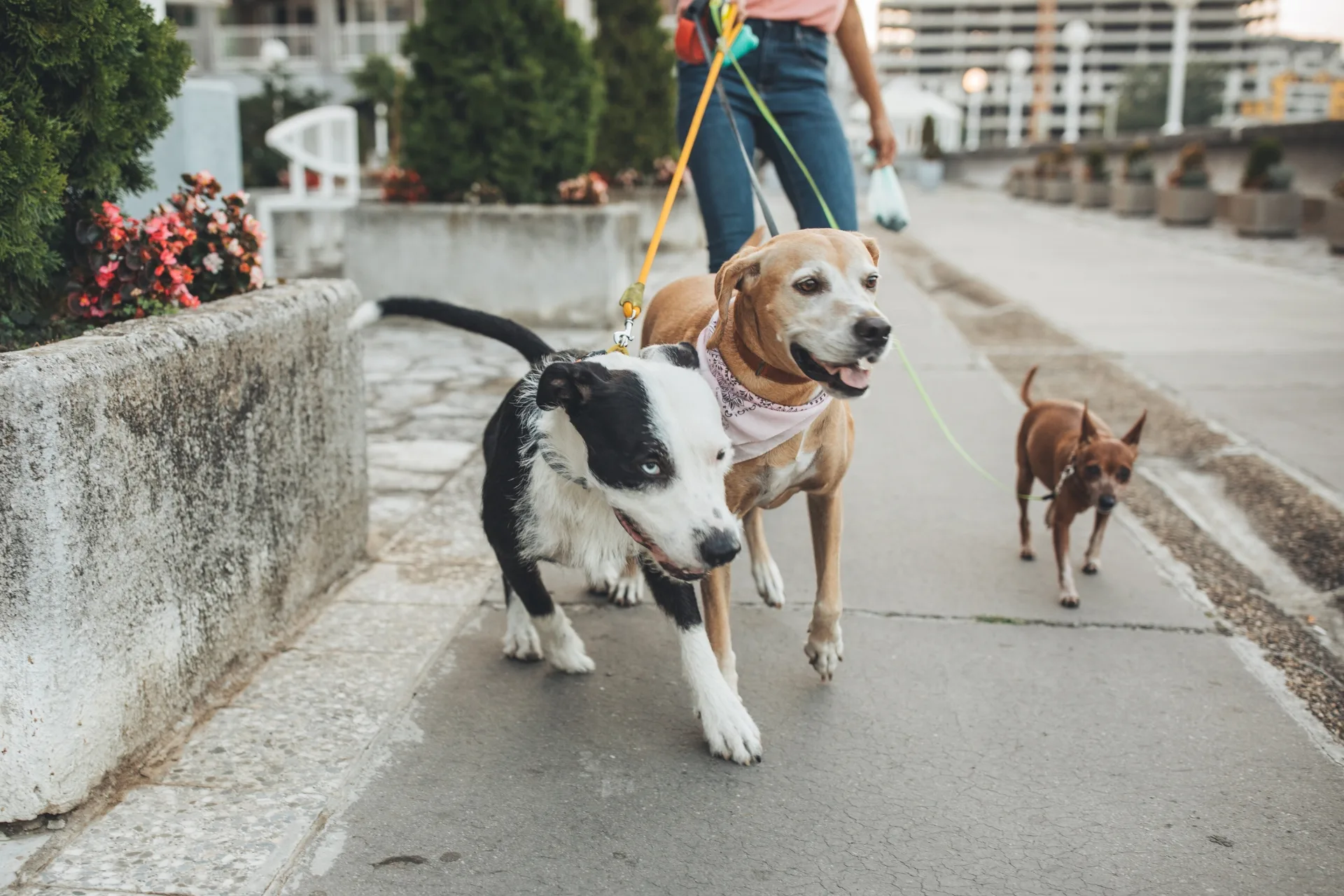
A dog that walks beautifully in a quiet park can unravel on a crowded street, and that is not a failure, it is just too much at once. Busy sidewalks pile on triggers: other dogs, people, traffic, and a stream of smells, each one raising your dog's excitement and the urge to pull. The answer is to build up gradually. Master loose-leash walking somewhere calm first, then add distractions one layer at a time, choosing quieter routes and off-peak times before the busiest ones. If your dog is over threshold and cannot focus, you have made the jump too big and should step back to an easier setting.
Common mistakes
Most leash-training problems come from inconsistency. If pulling works even some of the time, because one person lets the dog drag them or you give in when you are in a hurry, the habit holds. A retractable lead undermines the whole effort by rewarding pulling with more length. And moving to busy environments too soon sets a dog up to fail. Keep the rules identical on every walk, from every handler, and progress comes.
The payoff: calmer walks, and a dog a walker can handle
A calmer walk is only part of the payoff. A dog that walks calmly is also safer and easier for anyone to handle, which matters when someone else takes the leash. A professional walker managing city sidewalks, or more than one dog at once, gets far more from a dog that does not pull. If you use a dog walking service, tell your walker exactly what method and gear you are using, so the training stays consistent between your walks and theirs. The guide to what a professional dog walker does covers what to expect, and pairing calm walks with good habits at home, from crate training to reducing nuisance barking, gives you an all-round easier dog.
FAQs: stopping leash pulling answered
1. Why does my dog pull on the leash?
Dogs pull because it works. When pulling gets them closer to an exciting smell, another dog, or simply forward, the pulling is rewarded and repeats. It is not stubbornness or dominance. Dogs also naturally walk faster than we do and get excited on walks. Understanding that pulling is a learned, rewarded habit is what points you to the fix: make pulling stop the walk and a loose leash keep it going.
2. How do I stop my dog pulling on the leash?
Use the stop-and-go method: the instant the leash goes tight, stop walking, and only move again once your dog eases the tension. Reward your dog for walking near you with a loose leash, using treats and praise. Practice in a quiet area first, then build up to busier places. A front-clip no-pull harness gives you more control while your dog learns, and consistency from everyone who walks the dog is essential.
3. What is the best harness or lead to stop pulling?
A front-clip, no-pull harness is the most useful tool for a dog that pulls, because it redirects your dog toward you instead of letting them power forward. Pair it with a standard fixed lead of around four to six feet. Avoid retractable leads, which teach a dog that pulling extends their range, and skip choke or prong collars, which risk injury and do not teach loose-leash walking.
4. How long does it take to train a dog not to pull?
It varies with the dog and your consistency, but expect weeks rather than days. Loose-leash walking is a skill built through repetition, and early walks will be slow because you stop every time the leash tightens. Progress is faster if every walk follows the same rules, so the dog never learns that pulling sometimes works. Short, frequent practice sessions beat occasional long ones.
5. Why does my dog pull more on busy streets?
Busy streets are full of triggers, other dogs, people, traffic, and strong smells, and each one raises your dog's excitement and the urge to pull. A dog that walks well in a quiet park can fall apart on a crowded sidewalk simply because there is too much going on. The fix is to build up gradually: master loose-leash walking somewhere calm, then add distractions slowly rather than starting in the busiest place.
6. Will a dog walker still take a dog that pulls?
Most will, but a dog that walks on a loose leash is safer and easier for a walker to handle, especially on city sidewalks and with more than one dog. If you are working on it, tell your walker exactly what method and gear you use so the training stays consistent between your walks and theirs. Consistency across everyone who walks the dog is what makes loose-leash walking stick. 🐕
A dog that walks on a loose leash turns a daily chore back into the pleasure it should be. Remember that pulling is simply a habit that has been paying off, use the stop-and-go method and the right harness to stop rewarding it, and build up to busy streets one step at a time. Stay consistent, loop in anyone else who walks your dog, and calm city walks become the new normal.