Barking is not a behavior problem in itself. It is how dogs communicate, and a dog that barks at everything is usually telling you something: they are bored, anxious, under-exercised, or reacting to a trigger they cannot ignore. That is good news, because it means the answer is rarely to suppress the noise and almost always to address the cause. This guide walks through finding the trigger and fixing the barking behind it, with a focus on the close quarters of apartment living.
Why dogs bark
Most barking falls into a handful of categories, and telling them apart is the whole game.
- Alert or territorial barking at sounds, people, or other dogs near the home.
- Attention-seeking barking aimed at you, for food, play, or company.
- Boredom or frustration barking from a dog with too little to do.
- Fear or anxiety barking, including at unfamiliar people, noises, or situations.
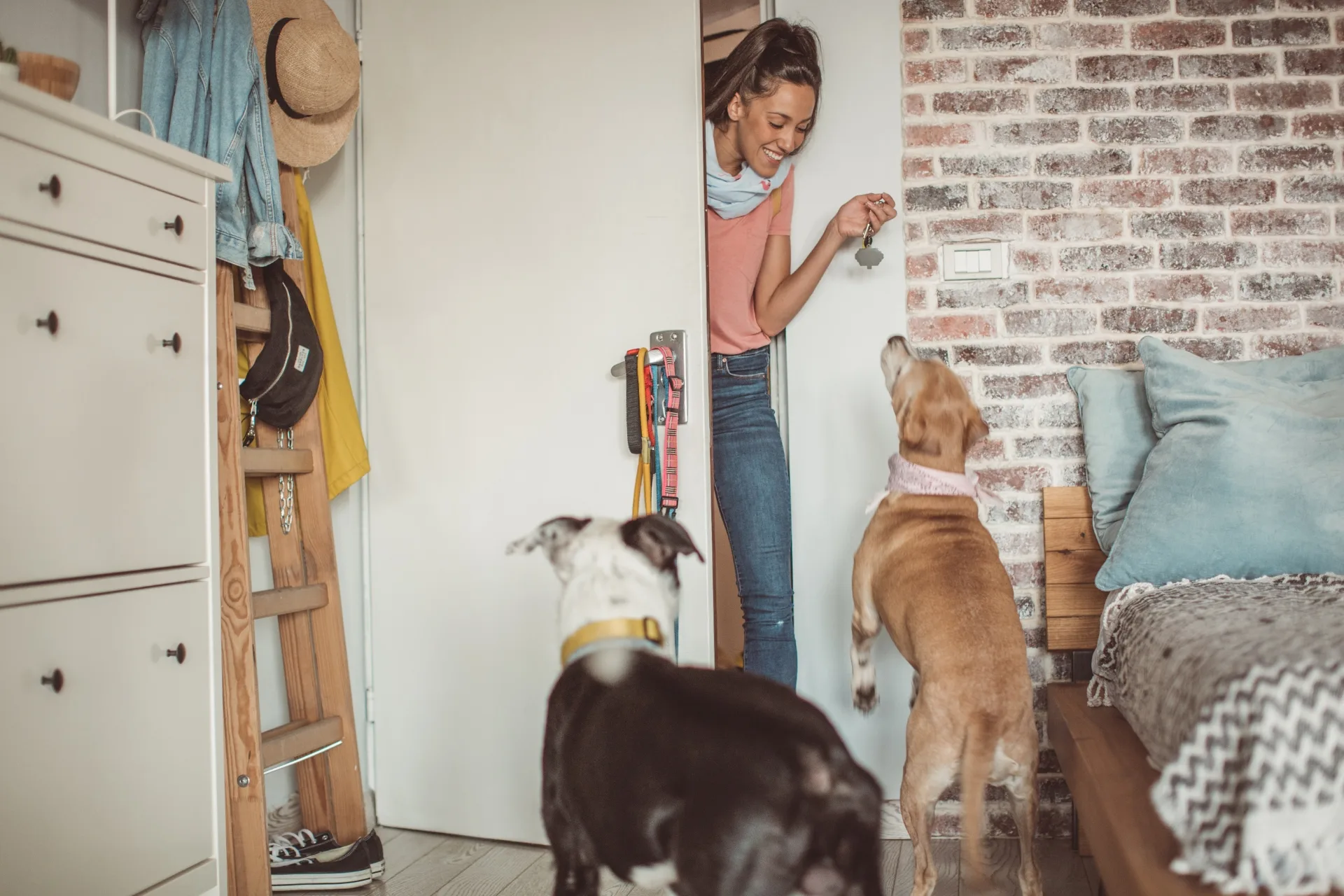
- Greeting and excitement barking when you come home or a visitor arrives.
- Separation-related barking that happens specifically when the dog is left alone.
Step one: find the trigger
Before you can change the barking, you need to know what sets it off. Pay attention to when and where it happens: at the doorbell, at the window when someone passes, when you are on the phone, when the dog is left alone, or when they have not been walked. Keeping a simple note for a few days often reveals a clear pattern, and the pattern tells you which fix to reach for. A dog barking at the street from a window needs a different solution than one barking for your attention.
How to stop barking, by trigger
Once you know the cause, the fix follows from it.
For alert barking at the doorbell or visitors, manage the environment and teach an alternative. Block the dog's line of sight to the door, and teach a calm cue such as going to a mat, rewarding heavily when they settle there instead of barking. For window barking at passersby, remove the view: close blinds, use privacy film on the lower part of the window, or move furniture your dog uses as a lookout. For attention-seeking barking, the rule is simple but hard: do not reward it. Wait for a pause, then reward the quiet, so your dog learns that silence gets your attention and noise does not.
Boredom barking is solved with a fuller day. More physical exercise and mental enrichment, from a proper walk to puzzle feeders and chews, drains the energy that fuels aimless barking. A dog getting enough exercise and stimulation simply has less reason to bark at nothing. The techniques in the guide to positive reinforcement training are what you use to reward the quiet you want to see more of.
What not to do
Do not shout at a barking dog. To the dog, it can sound like you are barking too, which adds to the noise rather than stopping it. Avoid rewarding barking with attention, treats, or letting the dog out, even accidentally. And modern trainers generally advise against spray, vibration, or shock bark collars, which punish the symptom without meeting the underlying need and can worsen fear and anxiety. The reliable path is to manage triggers, meet needs, and reward quiet.
Apartment and neighbor barking
In an apartment, barking is both more likely and more of a problem, because triggers are close and neighbors are closer. Block the visual and, where you can, the audible triggers: close blinds, use white noise or a radio, and move your dog's resting spot away from the front door and shared walls. The single biggest factor, though, is time alone. A dog left for long stretches with nothing to do will bark, and a dog that barks or howls the entire time you are out is likely dealing with separation anxiety rather than boredom. The guide to dogs with separation anxiety covers that distinct problem, which needs a gentle, structured plan and sometimes professional help.
Barking when you are not home: the walker and sitter angle
A lot of nuisance barking is really an alone-time problem, and the most effective fix is often to shorten the time your dog spends by themselves. A midday drop-in visit or a dog walk breaks up the day, drains energy, and gives your dog company during the hours when boredom and isolation barking build. On Petme you can arrange that regular visit with a verified local sitter, and if your dog is already learning good habits, briefing the sitter on what triggers the barking and what calms it keeps the progress going while you are out. Pairing this with solid crate training and calm leash walking gives an anxious barker a calm, defined space to settle and better walks.
FAQs: stopping dog barking answered
1. Why does my dog bark at everything?
Dogs bark to communicate, and constant barking usually means one or more unmet needs or a repeated trigger. Common reasons are alerting to sounds and movement, seeking attention, boredom, fear or anxiety, and being left alone. A dog that barks at everything is often under-exercised, under-stimulated, or reacting to a stream of triggers like a window onto a busy street. Finding the reason is the first step to fixing it.
2. How do I get my dog to stop barking?
Start by identifying the trigger, then manage it and reward quiet rather than punishing noise. Block the view of passersby, teach a calm cue, and meet your dog's exercise and enrichment needs so boredom barking fades. Reward the moments your dog is quiet, and never shout, since that adds to the noise and can look like you are joining in. Consistency from everyone in the home is essential.
3. Should I ignore my dog when it barks for attention?
For attention-seeking barking, yes. Any response, even telling the dog off, can reward the barking with the attention it wanted. Wait for a pause in the barking, then calmly give attention or a reward for the quiet, so your dog learns that silence works and noise does not. This takes patience and consistency, because the barking often gets briefly worse before it improves.
4. How do I stop my dog barking when left alone?
First reduce boredom with a good walk and enrichment before you leave, and remove triggers like a view of the street. If your dog barks or howls the entire time you are out, becomes distressed as you prepare to leave, or is destructive, that suggests separation anxiety, which needs a gentle, structured approach rather than a correction. Breaking up the day with a dog walker or drop-in visit often helps a great deal.
5. Do anti-bark collars work?
Bark collars that spray, vibrate, or shock are not recommended by most modern trainers and behavior experts, because they punish the symptom without addressing the cause and can increase fear and anxiety. They also do nothing to meet the underlying need driving the barking. A better path is to identify the trigger, manage the environment, meet exercise and enrichment needs, and reward quiet, or to get professional help for anxiety-driven barking.
6. What should I tell my dog sitter about barking?
Tell your sitter what your dog barks at and what helps, whether that is closing the blinds, a calm cue word, a walk, or a stuffed chew. Ask them to reward quiet rather than react to the noise, and to keep to your dog's exercise routine so boredom does not build. A sitter who breaks up the day with a walk or visit often reduces the barking that comes from being left alone. 🐕
Stopping nuisance barking is rarely about silencing your dog and almost always about understanding them. Find the trigger, meet the need behind it, reward the quiet, and shorten the hours your dog spends alone, and the barking fades because the reason for it has gone. That is a calmer dog, a quieter home, and happier neighbors, all at once.