Why litter box cleaning matters
A dirty litter box is more than an odor problem. Cats will avoid an unclean box and find other places to go, which creates cleaning problems elsewhere in the home. Beyond that, a neglected box is a source of bacterial growth that can cause urinary tract infections and other health issues. Managing litter box cleaning consistently is a straightforward part of cat care that has a significant impact on your cat's health and behavior.How often to scoop the litter box
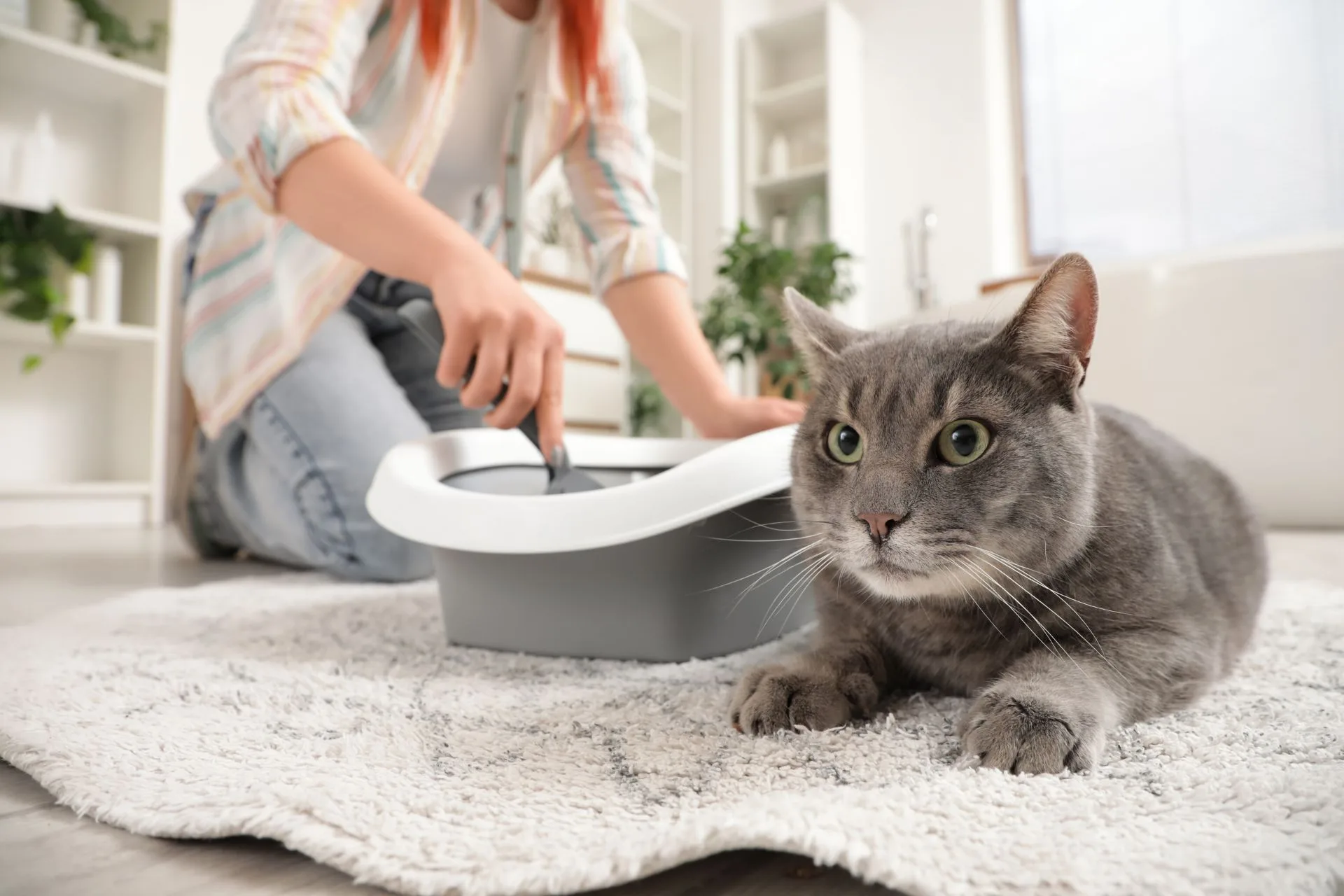
Scoop at least once a day. Remove clumps, solid waste, and any wet spots to keep the box fresh. For multiple cats sharing a box, twice daily scooping is the better standard. Cats typically poop once or twice a day and urinate two to four times, so daily scooping prevents the box from becoming unacceptable before you notice. Staying on top of it also keeps odors manageable for everyone in the household.How often to do a full litter change
A full litter change means emptying the box entirely, washing it, and refilling with fresh litter. Do this once a week for a single cat, or every five to seven days for multiple cats. When you do a full change, wash the box with mild, unscented soap and warm water. Avoid bleach and strong chemical cleaners, which can irritate a cat's sensitive nose and deter them from using the box. Let the box air dry completely before adding new litter to prevent moisture buildup and bacterial growth.How often to wash the litter box
Wash the box itself every one to two weeks, ideally during your full litter change. Use mild dish soap, warm water, and a gentle scrub to remove stuck residue and lingering odors. Rinse thoroughly to remove all soap traces. If you notice persistent smell even after scooping, a more frequent wash is warranted. Some cats are sensitive enough to detect residue that humans cannot smell.Choosing the right litter
Clumping litters, including clay and tofu-based options, make scooping easier because they form tight, removable clumps. Tofu cat litter is low-dust and non-toxic, and it clumps well for quick cleaning. Non-clumping litters like pine pellets are harder to spot-clean and typically need a full change more frequently. Choose a litter that suits your cat's texture preferences, since some cats avoid unfamiliar substrates, and one that simplifies your cleaning routine.Managing litter box cleaning with multiple cats
For multi-cat households, the standard guideline is one litter box per cat plus one extra. Two cats need three boxes. Scoop each box at least twice a day, since more cats means more waste accumulating faster. Full litter changes may need to happen every five days rather than weekly. Place boxes in different areas of the home to reduce territorial competition, and watch for signs that one cat is monopolizing a box.What to watch for while cleaning
Cleaning the litter box gives you a daily opportunity to monitor your cat's health. Poop and urine output can signal problems before other symptoms appear. Watch for:- Absence of bowel movements for more than 48 hours, which may indicate constipation
- Diarrhea or bloody stools, which may signal a digestive issue or infection
- Straining to urinate or no urine output, which is an emergency in male cats
- Avoiding the box entirely, which may mean the box is too dirty, the cat is stressed, or there is a health issue
How a cat sitter handles litter box duties
When you travel, a cat sitter should scoop the litter box at every visit as part of the standard routine. Most sitters treat this as non-negotiable. For longer trips, you may also need to arrange for a full litter change during the stay. Leave clear instructions for any sitter: which litter brand you use, where supplies are stored, how often to scoop, and what your cat's normal output looks like. Include guidance on what changes in litter box use should prompt them to contact you, since this is also a health monitoring task. On Petme, cat sitters are familiar with this expectation, and you can specify your exact routine in your care notes before any booking.Tips for making litter box cleaning easier
- Use a good scooper: a sturdy metal or heavy-duty plastic scooper with slots lets loose litter fall through and speeds up the process
- Use litter box liners: they make full changes easier, though some cats dislike the texture and scratch through them
- Keep supplies nearby: storing litter, a scooper, and disposal bags near the box reduces friction in the daily routine
- Wear a mask: if you are sensitive to dust, a mask helps during scooping or litter changes, especially with clay litters
- Set a schedule: tying scooping to an existing daily habit, like morning feeding, makes it easier to stay consistent
Frequently asked questions
1. How often should I scoop my cat's litter box?
At least once a day, twice daily for multiple cats. Daily scooping keeps the box acceptable to your cat, controls odor, and lets you monitor health through changes in output frequency or consistency.
2. How often should I do a full litter change?
Once a week for a single cat, or every five to seven days for multiple cats. A full change involves emptying the box completely, washing it with mild soap, letting it dry, and refilling with fresh litter.
3. How often should I wash the litter box?
Every one to two weeks with mild soap and water. Washing removes odors and residue that scooping leaves behind. Rinse thoroughly to avoid leaving soap traces that may deter your cat from using the box.
4. What litter is best for easy cleaning?
Clumping litters are the easiest to maintain because they form tight clusters that scoop out cleanly. Tofu-based litters are a low-dust, non-toxic option that clumps well and is gentle on a cat's paws. The best choice also depends on your cat's texture preference, since a cat that refuses a particular litter defeats the purpose.
5. Can a cat sitter handle litter box cleaning?
Yes. Litter box scooping is a standard part of cat sitting. Leave written instructions covering which litter you use, how often to scoop, and what your cat's normal output looks like. For longer stays, specify whether a full litter change is needed and when. A good sitter treats litter box maintenance as part of health monitoring, not just cleaning.
6. What does it mean if my cat stops using the litter box? 🐾
It usually means the box is too dirty, the litter type has changed, the box location is problematic, or the cat is experiencing stress or a health issue. Elimination outside the box is rarely behavioral defiance; it is most often a signal. Check the box first, then consider any recent changes to the cat's environment or routine. If the behavior persists after cleaning and litter changes, a vet visit is the next step to rule out urinary tract infection or other medical causes.