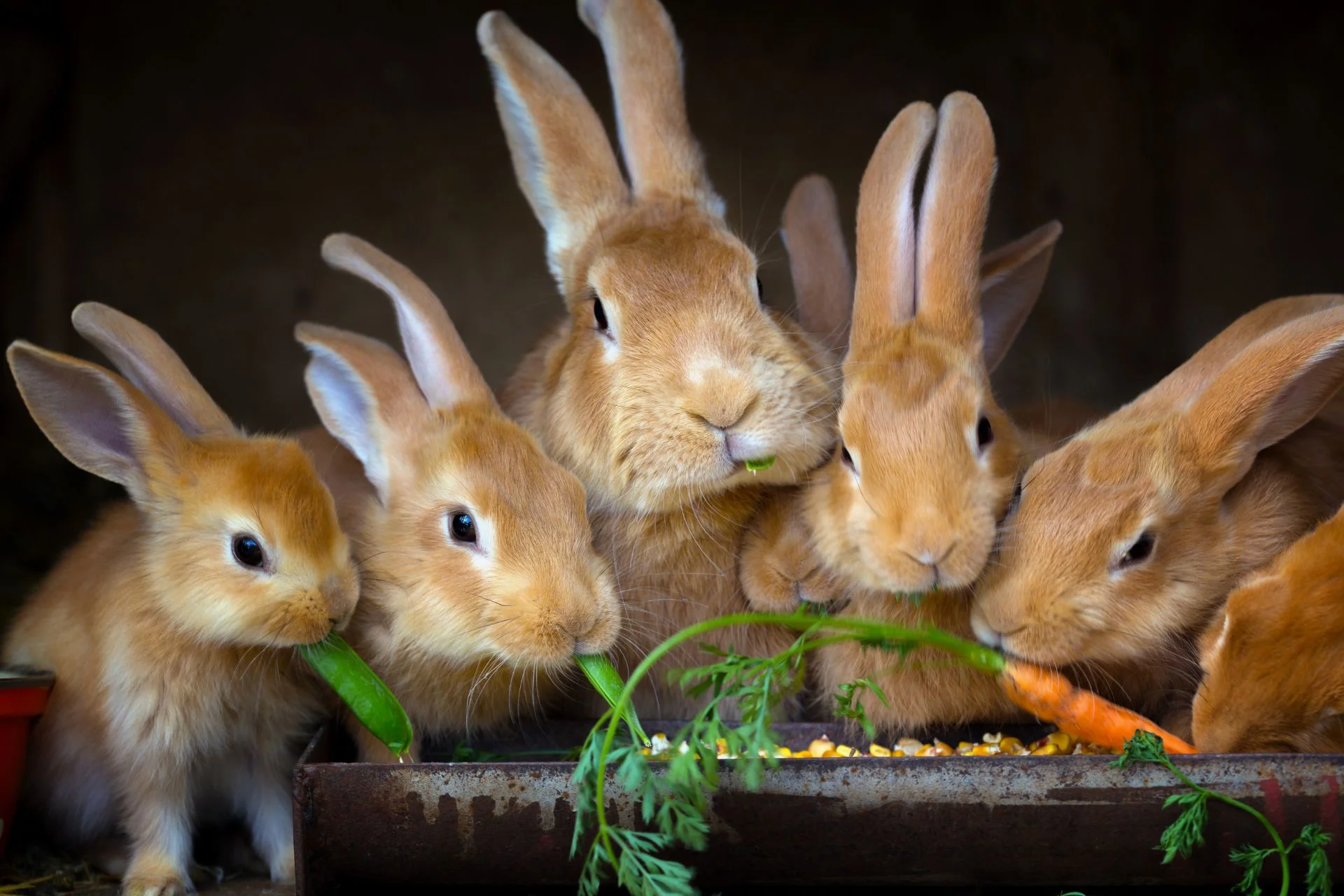
Rabbits are herbivores with a digestive system specifically designed to process large amounts of fibrous plant material. Understanding how that system works explains most of the feeding guidelines: why hay is non-negotiable, why pellets need to be measured, and why certain foods that seem harmless can cause serious harm.
Understanding a rabbit's digestive system
Rabbits practice hindgut fermentation. Fibrous plant material passes through the stomach and into the cecum, where bacteria break it down and extract nutrients. This process produces cecotropes - soft, nutrient-rich droppings that rabbits eat directly from their bodies, usually at night. Seeing your rabbit eat these droppings is normal and necessary. The digestive system requires a continuous flow of fibrous material to function correctly. When hay intake drops, gut motility slows. In serious cases, this progresses to gastrointestinal stasis - a life-threatening condition where the gut stops moving entirely. Hay is not optional.Hay: the most important part of the diet
Hay should form roughly 70 to 80 percent of a rabbit's total diet and must be available at all times, not rationed. It provides the fiber that keeps the digestive system moving, wears down continuously growing teeth, and keeps caloric intake in check. A rabbit that always has access to fresh hay is less likely to overeat pellets and less likely to develop dental problems. Timothy hay is the standard choice for adult rabbits. Orchard grass and meadow hay are good alternatives or additions. Alfalfa hay is higher in calcium and protein, making it appropriate for young rabbits under six months or nursing females, but not for healthy adult rabbits. Replace hay daily or at minimum every other day. Stale, dusty, or moldy hay should be removed and discarded.Fresh vegetables and leafy greens
A daily serving of fresh leafy greens provides vitamins, minerals, and hydration. Suitable options include romaine lettuce, kale, flat-leaf parsley, cilantro, watercress, and fresh herbs like basil and mint. Introduce new vegetables gradually and one at a time. Some rabbits develop loose droppings when a new food is introduced too quickly. Monitor the rabbit's droppings when changing the vegetable rotation, and reduce or remove a food that causes consistent digestive disruption. Vegetables to avoid include onions, garlic, leeks, potatoes, rhubarb, and iceberg lettuce. These can cause digestive problems, toxicity, or in some cases serious harm.Pellets: a measured supplement, not a staple
High-quality rabbit pellets provide additional nutrients and are a practical part of the diet, but they should supplement hay and greens, not replace them. Pellets are calorie-dense and low in fiber compared to hay. Rabbits fed primarily pellets develop dental problems from insufficient chewing resistance and gain weight rapidly. A general guideline for adult rabbits is a quarter cup of pellets per five pounds of body weight per day, though specific needs vary by breed, age, and health status. Your vet can advise on the appropriate amount for your rabbit. Choose pellets that are high in fiber (18 percent or more) and do not contain added seeds, dried fruit, or colored pieces.Water
Fresh, clean water must always be available. Rabbits that do not drink enough water are more susceptible to gastrointestinal stasis and urinary problems. Use a heavy bowl that resists tipping or a sipper bottle cleaned weekly to prevent algae and bacterial growth. Check water levels daily, particularly in warm weather.Treats and fruit
Fruit and commercial treats should be occasional, not daily. Most fruits are high in sugar and can cause weight gain, digestive disruption, and dental problems if fed regularly. Small amounts of apple (seeds removed), strawberries, or blueberries are appropriate treats when offered no more than a few times per week. Avoid grapes and raisins, dried fruit of any kind, and anything containing added sugar. Commercial rabbit treats marketed at pet shops often contain ingredients that are not suitable for regular feeding. Checking the ingredient list is worthwhile before buying.Foods to avoid entirely
Some foods are genuinely dangerous for rabbits and should never be given:- Chocolate and anything containing caffeine
- Avocado
- Onions, garlic, leeks, and chives
- Rhubarb leaves
- Raw potatoes and potato leaves
- Bread, pasta, and grains
- Seeds and nuts
- Human food leftovers of any kind
Feeding instructions for pet sitters
Rabbit diet is one of the areas where pet sitters most commonly make errors, usually because owners assume the sitter already knows the basics or because verbal instructions are easy to misremember. Before leaving your rabbit with a sitter, prepare written feeding instructions covering:- How much hay to provide and how often to replenish it (the answer is: freely available at all times)
- The exact pellet quantity, where pellets are stored, and how often they are given
- Which vegetables are approved, how much to offer, and when during the day
- Any foods the rabbit has reacted badly to in the past and should not be given
- Whether any treats are permitted and if so, which ones and how often
- Water setup and how often to check and refill
Frequently asked questions
1. Can rabbits eat fruit?
Yes, in small amounts. Fruits like apples (with seeds removed), strawberries, and blueberries are safe in limited quantities. Because of their sugar content, fruit should be an occasional treat rather than a daily addition. A piece the size of a thumbnail two or three times a week is a reasonable amount for an average-sized rabbit.
2. Can rabbits eat grass?
Yes, and fresh grass is a natural and nutritious part of the diet. It provides fiber and hydration, and most rabbits enjoy it. Avoid grass from areas treated with pesticides, herbicides, or fertilizers. Also avoid grass alongside busy roads where contamination from vehicle exhaust may be present. Dried grass hay, which most rabbits already eat daily, is essentially the same thing.
3. Can rabbits eat bread or grains?
No. Bread, pasta, crackers, and grains are not suitable for rabbits. They are high in simple carbohydrates, low in fiber, and can disrupt the balance of bacteria in the rabbit's gut. Even small amounts fed regularly can contribute to digestive problems and weight gain. Stick to hay, leafy greens, and measured pellets as the diet's foundation.
4. How much should I feed my rabbit each day?
Hay should be available continuously - a rabbit should never run out. Daily leafy greens for an average-sized rabbit amount to roughly one to two packed cups. Pellets should be measured: approximately a quarter cup per five pounds of body weight per day is a common guideline for adults, though specific needs vary. Your rabbit's body condition - not eating to a fixed quantity - is the best guide. Consult a vet if you are unsure about appropriate portions for your specific rabbit.
5. Are there vegetables I should avoid feeding my rabbit?
Yes. Onions, garlic, leeks, and chives can cause blood problems in rabbits and should never be given. Iceberg lettuce has very little nutritional value and high water content that can cause loose droppings. Rhubarb and potatoes are toxic. When introducing any new vegetable, start with a small amount and observe for 24 hours before adding it to the regular rotation.
6. How do I make sure a pet sitter feeds my rabbit correctly? 🐾
Write out the feeding routine in full before your trip: what the rabbit eats, in what quantities, at what times, and what to avoid. Do not assume the sitter knows that pellets should be measured or that hay must be replenished daily. Leave the food supplies clearly labeled and stored where the sitter can find them easily. Run a trial feeding session with the sitter present before you leave so you can catch any misunderstandings before they become a problem during the actual sit.