Rabbit pregnancy moves fast. From conception to birth takes less than a month, which means owners who miss the early signs can find themselves entirely unprepared when a litter arrives. Understanding what happens at each stage, what to watch for, and how to care for the doe through to kindling gives you the foundation to handle everything that follows.
How long is a rabbit pregnant?
The gestation period for rabbits is typically 28 to 31 days. Smaller breeds tend to deliver at the shorter end of that range; larger breeds may take a day or two longer. If a doe has not given birth by day 35, veterinary advice is warranted, as this can indicate a false pregnancy or a complication requiring intervention. Because rabbits are induced ovulators, mating itself triggers the release of eggs. This means that when mating occurs, pregnancy is likely unless the doe was already pregnant or has a health issue affecting fertility.Signs of pregnancy in rabbits
Not every pregnant doe shows obvious signs early on. The most reliable indicators appear from the middle of the pregnancy onward.- Increased appetite: a doe eating noticeably more than usual from around day 8 to 14 onward may be supporting a growing litter
- Weight gain and abdominal swelling: visible from around day 14 to 20, though this varies by doe and litter size
- Behavioral shifts: some does become more territorial or reclusive; others show increased contact-seeking behavior, at least early on
- Nesting behavior: from around day 22, a pregnant doe begins pulling fur from her dewlap and body to line a nest, and gathers hay or available bedding material
- Palpation: an experienced vet or breeder can feel developing kits by gently palpating the abdomen around day 12 to 14. This should not be attempted without training, as incorrect handling can cause miscarriage
Pregnancy stages: what happens week by week
Days 1 to 7: fertilization and early development
After mating, eggs are fertilized and embryos begin forming. Rabbits are induced ovulators, so ovulation happens in response to mating rather than on a regular cycle. No visible signs appear at this stage.Days 8 to 14: embryo implantation
Embryos attach to the uterine wall. The doe may show a slight increase in appetite or mild behavioral restlessness. A vet can confirm pregnancy by gentle palpation around day 12 to 14.Days 15 to 21: fetal growth
The fetuses develop rapidly. The doe's abdomen may begin to look and feel fuller. Weight gain becomes more noticeable. Some does become more protective of their space and less tolerant of handling.Days 22 to 28: nesting and final preparation
This is the most visible stage. The doe pulls fur from her body and builds a nest in the nesting box or in a corner of the enclosure. She may become territorial and spend more time in or near the nest. The nesting box should already be in place before this stage begins.Days 28 to 31: kindling
The doe gives birth, typically at night or in the early morning. Most does deliver quickly, within 15 to 30 minutes for a full litter. Litter size ranges from 4 to 12 kits depending on breed. A quiet environment and minimal disturbance are important during and immediately after delivery.How to care for a pregnant rabbit
Diet is the most immediate concern. Provide unlimited fresh hay throughout the pregnancy. Timothy hay and orchard grass are appropriate for adult does; alfalfa hay can be offered in small amounts to nursing does after birth for its higher protein and calcium content. Fresh leafy greens should continue daily, but avoid introducing new foods during pregnancy to prevent digestive upset. Check with your vet about whether a pellet formulated for pregnant or nursing rabbits is appropriate for your doe's breed and condition. Water must always be available. Dehydration increases the risk of gastrointestinal stasis, which is already a concern during the physiological stress of pregnancy. Minimize handling in the later stages, particularly from day 22 onward. Keep the enclosure in a quiet area of the home, away from loud noise, other pets, and frequent disturbances. Stress can trigger premature birth or cause a doe to reject her litter. Set up a nesting box by day 22 at the latest. The box should be large enough for the doe to turn around comfortably, with low enough sides for her to enter easily but high enough to contain the kits. Line it with hay, and let the doe finish the nest herself with her own fur.After the birth: caring for the doe and kits
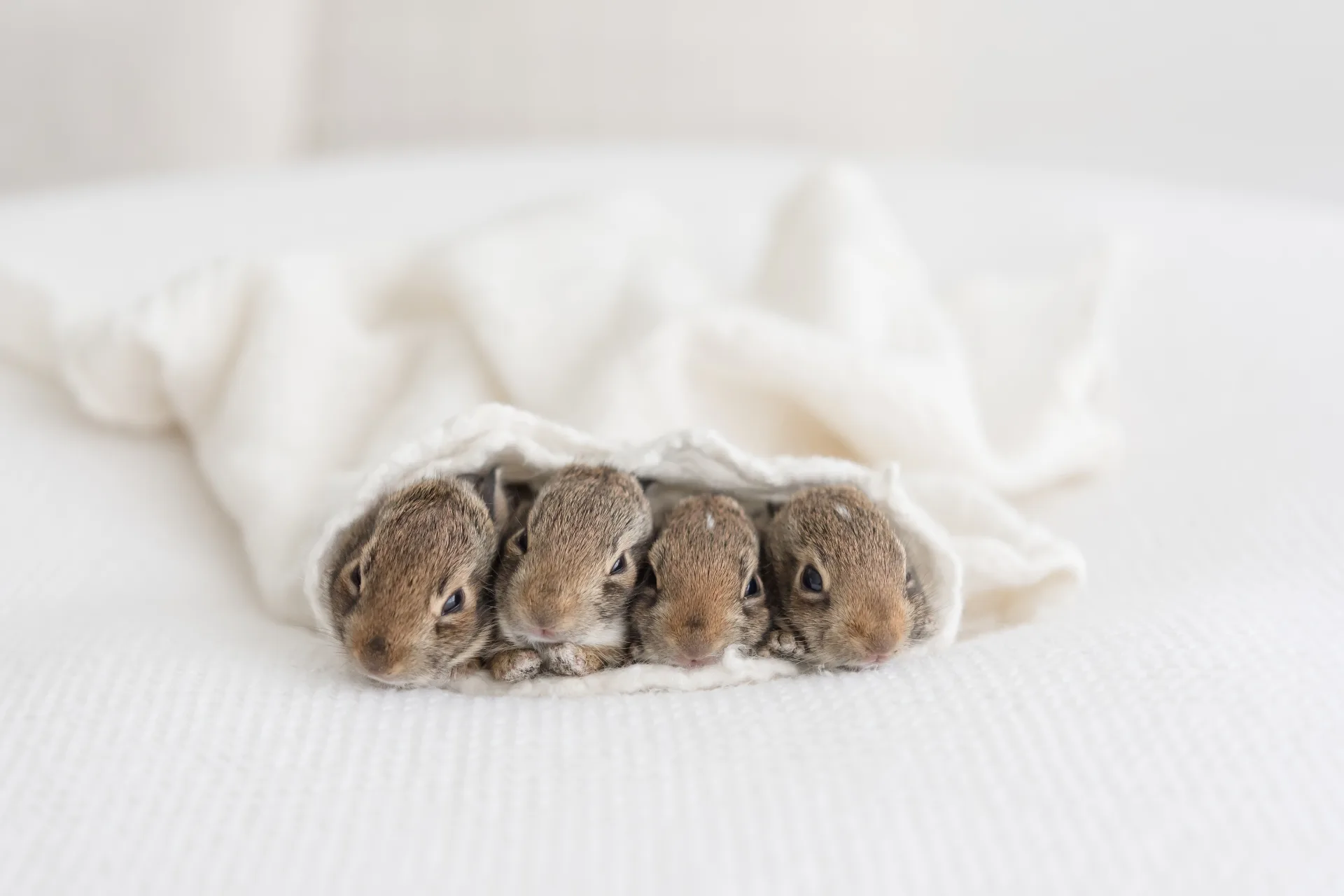
Kits are born blind, deaf, and hairless. They depend entirely on their mother for warmth and nutrition. Do not handle newborn kits for the first seven to ten days. Human scent on a kit can cause the doe to reject it, particularly if she is already stressed. Check that kits are nursing by observing their abdomens from a distance. A well-fed kit has a rounded, full-looking belly. Eyes open around day ten. By day three weeks, kits begin to emerge from the nest and eat solid food alongside nursing. A doe can become pregnant again within hours of giving birth. If you are not planning another litter, separate the buck immediately after the doe delivers or keep them separated throughout the pregnancy.What to tell a pet sitter if your rabbit is pregnant
A pregnant rabbit requires a higher level of care than a non-pregnant rabbit, and leaving her with a sitter during the final week of pregnancy carries real risk. If your travel dates overlap with expected kindling, the most responsible option is to adjust the trip or arrange for an experienced rabbit keeper or vet to provide support. If the travel is unavoidable or the pregnancy is in an earlier stage, the sitter needs specific written instructions:- The expected delivery date range, based on the known mating date if available
- That handling should be minimal and gentle, particularly from day 22 onward
- The feeding routine, including hay replenishment, vegetable types, and water checks
- That the nesting box is in place and should not be moved or cleaned during the final week
- Signs that warrant immediate vet contact: labor lasting more than 30 minutes without a kit being born, visible distress, abnormal discharge, or a doe that has not eaten for more than 12 hours
- What to do if the doe delivers: observe from a distance, do not disturb the nest or handle kits, and contact the vet if something seems wrong
- Emergency vet contact details
Frequently asked questions
1. How long are rabbits pregnant?
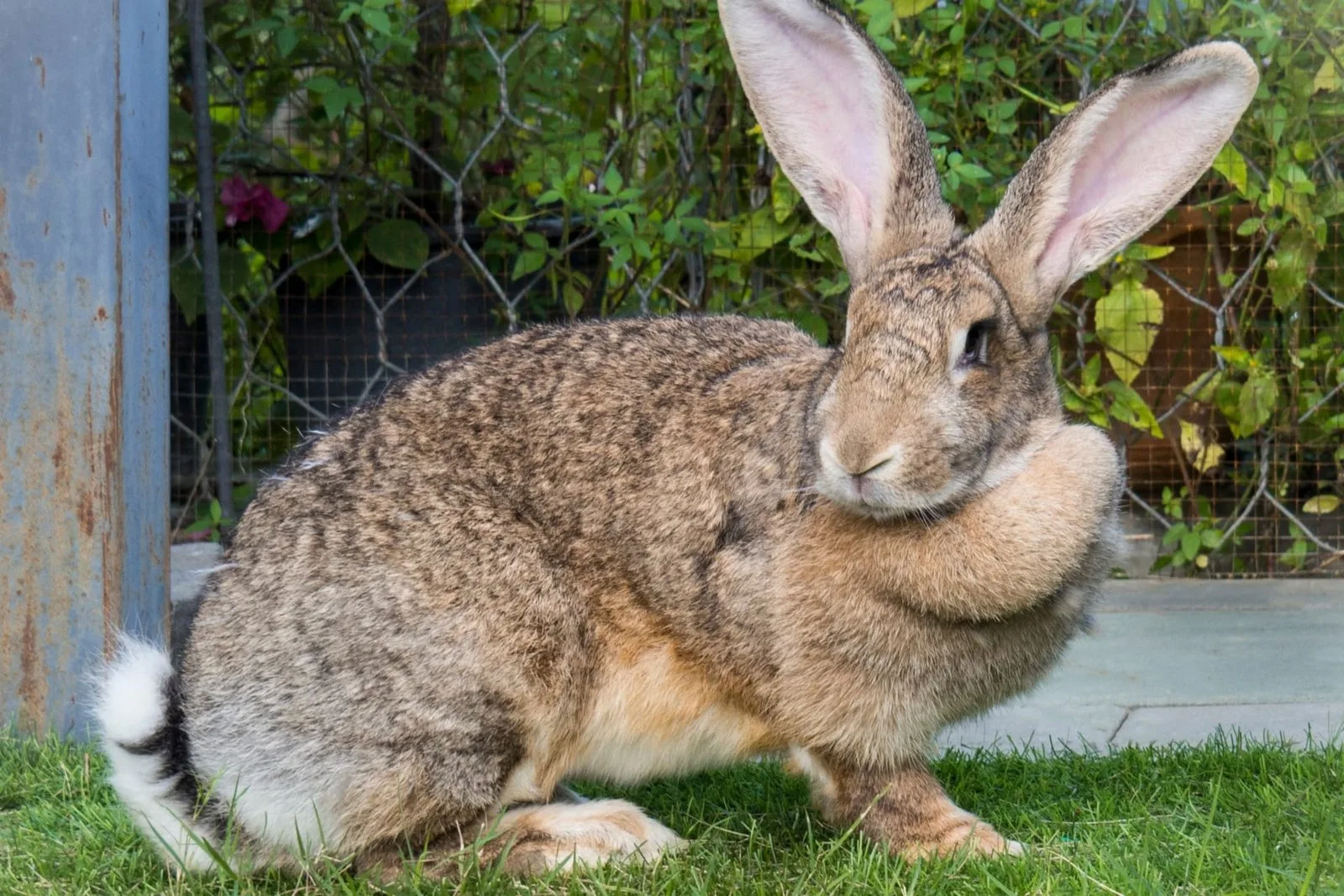
Most domestic rabbit breeds have a gestation period of 28 to 31 days. Smaller breeds like the Netherland Dwarf tend to deliver closer to 28 to 30 days; larger breeds like the Flemish Giant may take 31 to 35 days. If delivery has not occurred by day 35, contact a vet.
2. Can a rabbit be pregnant without showing signs?
Yes, particularly in the first two weeks. The earliest visible signs typically appear around day 8 to 14 as increased appetite or mild behavioral changes. More obvious signs like nesting and visible abdominal swelling usually appear from day 15 to 22 onward. A vet can confirm pregnancy earlier via palpation or ultrasound.
3. What do I need to have ready before my rabbit gives birth?
Have the nesting box in place by day 22. Ensure hay is available at all times. Keep the enclosure in a quiet, low-traffic area. Have your vet's number and the nearest emergency vet's contact ready. Other than that, minimize intervention and let the doe manage the birth herself. Most does deliver without complications and require no assistance.
4. What should I do if my rabbit does not give birth by day 35?
Contact your vet immediately. A pregnancy extending beyond day 35 can indicate a false pregnancy, fetal reabsorption, or dystocia (obstructed birth). Do not wait to see whether the situation resolves on its own. Timely veterinary attention prevents serious complications.
5. How many kits does a rabbit have per litter?
Litter size varies by breed. Most domestic breeds deliver between 4 and 8 kits per litter. Larger breeds like the Flemish Giant can have litters of 8 to 12. First-time does often have smaller litters. Litter size also depends on the doe's age, health, and overall condition at the time of conception.
6. Is it safe to leave a pregnant rabbit with a pet sitter? 🐾
It depends on the stage of pregnancy and the sitter's experience. During the first three weeks, a well-briefed sitter with some rabbit experience can manage routine care without difficulty. During the final week before expected kindling, having an inexperienced sitter manage potential birth and immediate newborn care is a significant risk. If your travel coincides with the last five to seven days of the expected gestation period, either adjust the dates or arrange for an experienced rabbit keeper or vet to be on call throughout.