TL;DR: If your cat resists nail trimming, the solution is gradual desensitization rather than force. Start by handling paws daily without clippers, then introduce the clippers as a neutral object before attempting any cutting. Use high-value treats throughout, work one nail at a time, and keep sessions short. A pet sitter or professional groomer may be able to help if your cat only tolerates handling from certain people - but whoever does the trimming needs to know your cat's specific reactions and limits.
Most cats do not enjoy having their nails trimmed. Some will sit still with minor complaint; others will pull away, hiss, or fight from the moment you pick up the clippers. The difference between these cats is usually not temperament - it is how much paw handling they experienced early in life, and how previous trimming sessions went.
Resistance to nail trimming can almost always be reduced with the right approach, even in adult cats. The key is working below the cat's anxiety threshold rather than pushing through it.
Signs your cat needs a nail trim
Check your cat's nails every two weeks. Signs that trimming is needed:
- Clicking sounds on hard floors when the cat walks
- Visible curving at the tip of each nail
- Nails snagging on carpet, fabric, or upholstery
- Scratching that leaves deeper marks than usual
- The cat frequently getting paws stuck on soft surfaces
If nails have already curled significantly or appear to be pressing toward the paw pad, see a vet or professional groomer rather than attempting to correct it at home.
Getting your cat comfortable with paw handling
The most effective preparation for nail trimming happens before you ever bring out the clippers.
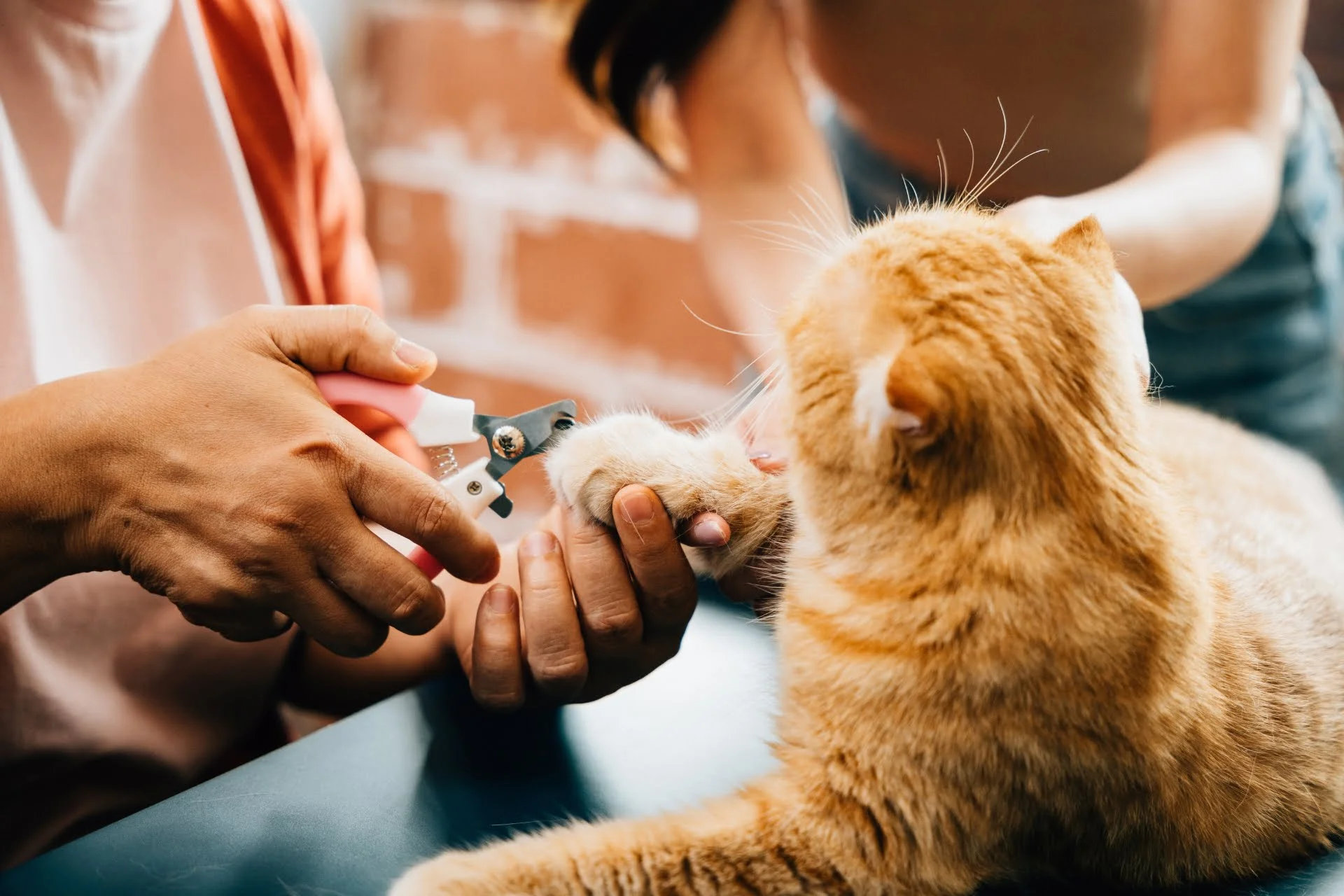
Handle your cat's paws daily during calm, relaxed moments - while they are resting on your lap or settling in after a meal. Hold the paw gently, press the pad briefly to extend a nail, and then release. Keep the interaction brief and follow it with a treat. Do this consistently for one to two weeks before attempting to trim anything.
The goal is to make paw touching completely unremarkable. A cat that has their paws handled as part of normal daily contact will be significantly more tolerant during the actual trimming session than one whose paws are only touched when something is about to happen.
Preparing for the trimming session
Gather your supplies first: cat-specific nail clippers, styptic powder or cornstarch, and high-value treats. Work in a calm, quiet room. Wait for a sleepy, recently-fed cat - not one that is alert, playful, or already agitated.
Once your cat is comfortable with paw handling, introduce the clippers as a neutral object. Let them sniff the clippers, click them near the cat without touching them, and place them on the floor for the cat to investigate. Pair the clippers' presence with treats over several sessions so they carry a positive association rather than triggering alarm.
Techniques for trimming a reluctant cat
Start with one nail
There is no rule that says you must trim all twenty nails in one sitting. If your cat tolerates one nail and then pulls away, stop there, reward them generously, and return the next day. Most cats build tolerance over sessions. After a few weeks of one-or-two nail sessions with consistent rewards, many cats will sit through a full paw.
Use high-value treats throughout
Offer a small, high-value treat immediately after each individual nail you clip - not after all ten, but after each one. This gives the cat frequent positive markers during the session and keeps their attention partly on the reward. Chicken, tuna, or soft commercial training treats work better than dry kibble during clipping sessions.
Try a licking mat or treat puzzle
Some cats respond well to a licking mat spread with wet food or peanut butter placed in front of them during trimming. They focus on working out the food while you work on the nails. This is worth trying for cats that are moderately resistant but not fully opposed.
Use a loose towel wrap if needed
For a cat that repeatedly pulls paws away, a loose towel wrap helps. Wrap the cat's body gently in a towel, leaving one paw accessible at a time. The wrap is not forceful restraint - it reduces the cat's ability to bat at the clippers while preventing them from feeling exposed. Keep it loose, move slowly, and stay calm throughout.
Identifying the quick and trimming
Hold the paw gently and press the pad with your thumb and forefinger to extend the nail. The pink quick is visible inside the transparent nail. Clip only the clear, pale section beyond the quick, staying a few millimetres away from where it begins. A smooth, decisive cut is less uncomfortable than a slow squeeze.
For the complete step-by-step process, see the full nail trimming guide.
Dealing with challenges
An anxious or aggressive cat
If your cat becomes genuinely distressed - panting, struggling hard, growling, or biting - stop immediately. Continuing past this point makes future sessions harder, not easier. Let the cat settle fully before attempting again, and take a smaller step next time: just touching the paw with no clipping, then rewarding.
For cats that remain aggressive despite a proper desensitization process, a professional groomer or vet can trim nails in a controlled setting. Some cats are genuinely more manageable with someone they do not have an established relationship with, since they respond to a calm stranger differently than to a known family member.
Managing an accidental cut
If you cut the quick, apply styptic powder or cornstarch to the nail tip and hold gentle pressure for 30 seconds. Stay calm - your reaction affects how the cat reads the situation. Most minor quick cuts stop bleeding within a minute or two. If bleeding does not stop within five minutes, contact your vet.
Older cats
Senior cats often have thicker, more brittle nails that grow more slowly but curl more aggressively if left untrimmed. They may also have arthritis or joint tenderness that makes paw handling painful. Approach with extra gentleness, keep sessions shorter, and consider asking your vet about the safest approach for your cat's specific health situation. More on caring for senior cats is in the senior cat care guide.
Nail trimming with a pet sitter or groomer
If your cat needs nail trimming while staying with a cat sitter, during a drop-in visit, or at a cattery, the person handling it needs specific information to do it safely. Before leaving your cat, tell the sitter:
- How your cat typically reacts to paw handling - whether they sit still, need distraction, or tend to bite
- Whether trimming with treats alone is enough or whether two people are usually needed
- Where the clippers and styptic powder are kept
- Whether you would prefer they skip trimming and book a professional groomer instead
For a cat that is genuinely difficult, asking the sitter to skip the trimming and refer to a groomer is a reasonable and sensible approach. The priority during a pet sitting stay is a calm experience for the cat - a stressful nail trimming session during an already unfamiliar situation can set back the cat's adjustment. The sitter knowing what to expect, rather than discovering the cat's resistance mid-session, makes all the difference.
FAQs
1. How often should I trim my cat's nails?
Most cats need trimming every 2-4 weeks. Check every two weeks and trim when the sharp, hooked tip is clearly visible. Cats that spend time outdoors may need less frequent trimming as rough surfaces naturally wear down nails. Indoor cats and older cats typically need the higher end of this frequency range.
2. What if my cat refuses to let me trim their nails at all?
Start from scratch with desensitization. Spend two weeks just handling paws daily with treats, without introducing the clippers at all. Then spend another week introducing the clippers as a neutral object near the cat. Only attempt trimming once paw handling and the clippers are both unremarkable to your cat. If the cat still strongly objects after this process, a professional groomer or vet can trim them in a controlled setting.
3. Can I use human nail clippers to trim my cat's nails?
Cat-specific clippers are strongly preferred. Human nail clippers are designed for flat nails and tend to compress and crush a cat's curved claw rather than making a clean cut. This is uncomfortable and can cause splitting. Cat-specific clippers in either guillotine or scissor style are shaped for curved claws and produce a cleaner result with less pressure.
4. Is it normal for my cat's nails to bleed slightly after trimming?
A small amount of bleeding after an accidental quick cut is normal and manageable. Apply styptic powder or cornstarch to the nail tip and hold gentle pressure for 30 seconds. The bleeding typically stops within a minute or two. If it continues beyond five minutes, contact your vet. Quick cuts happen occasionally even to experienced groomers - what matters is responding calmly and correctly.
5. What if my cat's nails are exceptionally long or have started curling?
If nails have curled significantly - particularly if they appear to be pressing toward the paw pad - do not attempt to resolve this at home. Contact your vet or a professional groomer. Nails in this condition are more likely to cause pain during handling and increase the risk of error during trimming. After the professional has addressed the overgrowth, resuming regular 2-4 week trimming will prevent it recurring.
6. Can a pet sitter help with nail trimming if my cat won't let me?
Yes, sometimes. Some cats that resist trimming with their owner will tolerate it with a calm, confident cat sitter or groomer simply because they respond differently to someone they do not have an established dynamic with. Before leaving your cat, brief the sitter on your cat's history - whether they bite, what techniques have helped, and where supplies are kept. For a cat that is genuinely a two-person job or has a history of biting during trimming, booking a professional groomer for the task is the safest and most sensible approach.