Reptiles make rewarding pets for people who take the time to understand their needs. Unlike dogs or cats, they communicate differently, need specific environmental conditions, and can live for decades. For beginners, the key is choosing a species with straightforward care requirements and a temperament that tolerates handling. The ten species below consistently appear at the top of beginner lists for good reason.
Top 10 best reptile pets for beginners
1. Leopard geckos
Leopard geckos (Eublepharis macularius) are among the most popular reptile pets, and for good reason. They are docile, relatively low-maintenance, and thrive in simple enclosures. They do not require high-humidity environments or complex lighting setups, making them one of the most accessible reptiles for first-time owners. Their calm temperament and small size also make them easy to handle.2. Ball pythons
Ball pythons (Python regius) are popular beginner snakes due to their predictable, calm temperament. They are non-venomous and rarely bite when handled gently and consistently. They need more enclosure space than a leopard gecko but are otherwise straightforward to care for. Their habit of curling into a ball when stressed is where their name comes from.3. Bearded dragons
Bearded dragons (Pogona vitticeps) are active during the day and known for their engaging personalities. They require larger enclosures, UVB lighting, and a varied diet of insects and vegetables, but their care is well documented and their handling tolerance is generally high. Learn more about bearded dragon diet here.4. Crested geckos
Crested geckos (Correlophus ciliatus) are arboreal lizards from New Caledonia. They prefer vertically-oriented enclosures with branches and foliage to climb. They can be fed a commercially available crested gecko diet rather than live insects, which many owners find convenient. They are fragile and should be handled carefully, but their care is relatively straightforward.5. Turtles
Turtles offer a long-lived, engaging pet experience. With a potential lifespan exceeding 30 years and an omnivorous diet that includes insects and vegetables, they require a commitment to proper aquatic setup and water quality maintenance. If you are considering a turtle and want help choosing a breed, see our list of 19 types of turtles that make great pets.6. Corn snakes
Corn snakes are small, docile, and come in a wide range of color morphs. They are curious and can escape easily if the enclosure is not secure, so a well-fitted lid is essential. Their feeding and care requirements are basic, and they are one of the most commonly recommended starter snakes.7. Fire-bellied toads
Fire-bellied toads (Bombina orientalis) are small, semi-aquatic amphibians native to Europe and Asia. They display their bright orange or yellow bellies as a warning signal when threatened. They are relatively easy to care for, need a semi-aquatic setup, and are active enough to be interesting to watch. Note that they produce a mild skin toxin, so washing hands after handling is important.8. Tortoises
Tortoises are long-lived herbivores that can grow to 12 inches or more depending on species. Some species live for over 50 years, making them a serious lifetime commitment. They are gentle and fascinating animals, and they benefit from environmental enrichment. They enjoy more play and stimulation than many owners expect. For help choosing a species, the list of 19 types of turtles that make great pets also covers several tortoise species.9. Water dragons
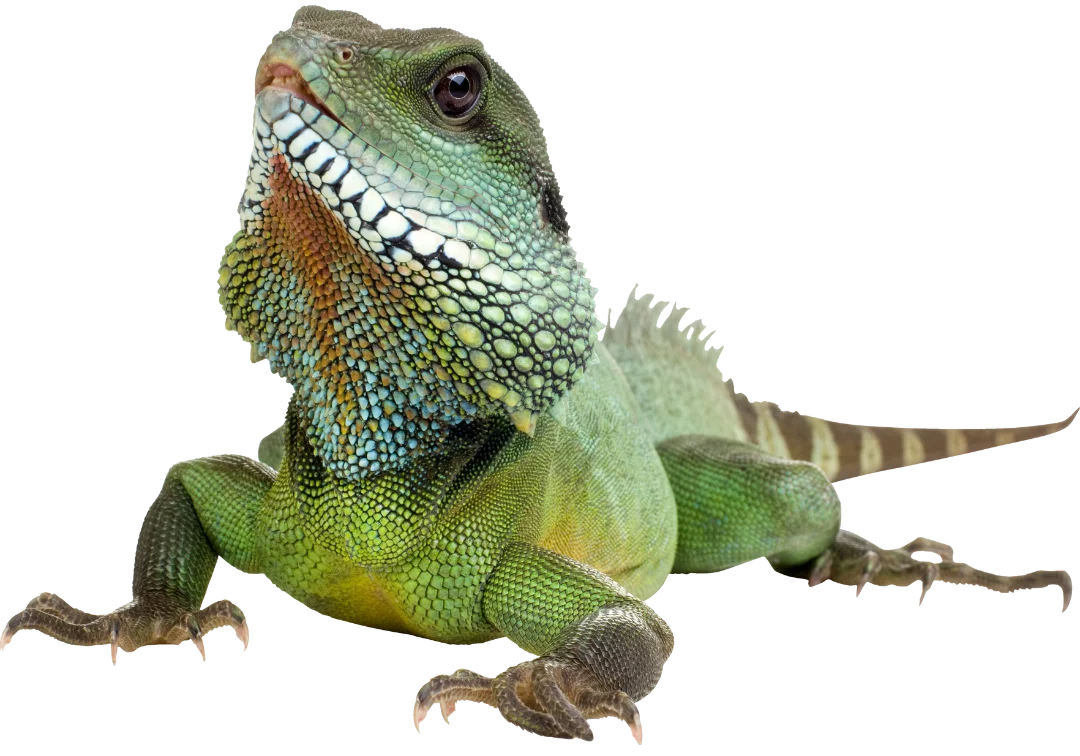 Water dragons are smaller and friendlier than iguanas, making them a good choice for owners who want a larger lizard without the aggression that larger species can bring. They need a well-regulated habitat with appropriate humidity and UVB lighting but are otherwise manageable for a dedicated beginner.
10. Chameleons
Chameleons (Chamaeleonidae) are fascinating for their color-changing ability, but they are among the more demanding species on this list. They need a humid environment, UVB lighting, and careful attention to stress levels, as they do not tolerate handling as readily as geckos or snakes. They are best suited to owners who already have some reptile keeping experience, but experienced beginners can manage them with thorough research.What to consider before choosing a reptile
Reptile ownership involves more commitment than it first appears. Before deciding on a species, think through these factors:- Space: every reptile needs an appropriately sized enclosure. A 10-gallon tank works for small geckos but is entirely inadequate for a water dragon or bearded dragon
- Temperament: some species are docile from the start; others take time to adjust to handling or are naturally more defensive. Research the specific temperament of your chosen species, not just the genus
- Feeding: insects, live prey, fresh vegetables, or commercial diets all carry different practical demands. Live feeder insects require their own housing and feeding, which some owners underestimate
- Cost: setup costs for a proper reptile enclosure with lighting, heating, and humidity control can be substantial. Vet care for reptiles also requires a specialist, which affects both availability and cost. For guidance on finding a trustworthy source for your reptile, see our guide on how to find a trustworthy exotic pets store
- Lifespan: tortoises and some turtles can outlive their owners. Ball pythons regularly reach 20 to 30 years. This is a long-term commitment that requires planning
Leaving a reptile with a pet sitter
Reptiles present specific challenges for pet sitters that most people with experience caring for dogs and cats have not encountered. Temperature gradients, UVB lighting schedules, live feeding, and the ability to recognize subtle signs of illness require explanation and ideally a hands-on walkthrough before you travel. Before leaving your reptile with a sitter, prepare:- Written instructions for the enclosure setup, including which lights turn on and off and at what times
- A feeding guide specific to your species, including how to handle live insects if applicable
- Notes on what normal behavior looks like for your animal, and what changes warrant a call to the vet
- Emergency vet contact details for a reptile-specialist vet in your area
- A brief video of your daily routine, which gives sitters a reference they can return to throughout the sit
Frequently asked questions
1. What is the easiest reptile to care for as a beginner?
Leopard geckos and crested geckos are consistently recommended as the easiest starting points. Both have simple enclosure requirements, tolerate beginner mistakes reasonably well, and do not need live prey. Ball pythons are an equally popular alternative for those interested in snakes, as their feeding is straightforward and their temperament is predictable.
2. Can I keep multiple reptiles together?
Many reptiles are solitary and do better housed separately. Cohabitation depends heavily on species, sex, and individual temperament. Some tortoise and gecko species can share space under the right conditions, but pairing reptiles without researching compatibility first often leads to stress, injury, or illness. When in doubt, house separately.
3. What temperature does a reptile enclosure need?
Each species has specific temperature requirements. Most require a temperature gradient with a warm basking end and a cooler retreat end. Bearded dragons need a basking spot around 100 to 110 degrees Fahrenheit (38 to 43 degrees Celsius), while crested geckos prefer room temperature environments and do not need a basking lamp. Research your specific species rather than applying a general rule.
4. How often should I feed my reptile?
Feeding frequency varies significantly by species and age. Young bearded dragons eat insects once or twice daily; adults eat insects every other day alongside daily vegetables. Ball pythons eat once every week to two weeks depending on size. Leopard geckos eat every two to three days. Follow species-specific guidance rather than a general schedule.
5. Do reptiles need special lighting?
Most lizards and tortoises require UVB lighting for calcium metabolism and bone health. Without it, they develop metabolic bone disease over time. Snakes typically do not need UVB, though some benefit from it. Research your species' specific requirements and invest in appropriate lighting from the start rather than retrofitting later.
6. Can I find an experienced pet sitter for a reptile? 🐾
Yes, but it takes more deliberate searching than for dogs or cats. When contacting potential sitters, ask directly about reptile experience: which species have they cared for, how do they handle live feeding, and what would they do if the animal stopped eating. A sitter who has cared for the same or a similar species is significantly better prepared than one working from written instructions alone. A trial visit before you travel, where you walk through the routine together, is worth the time investment for any reptile sit.