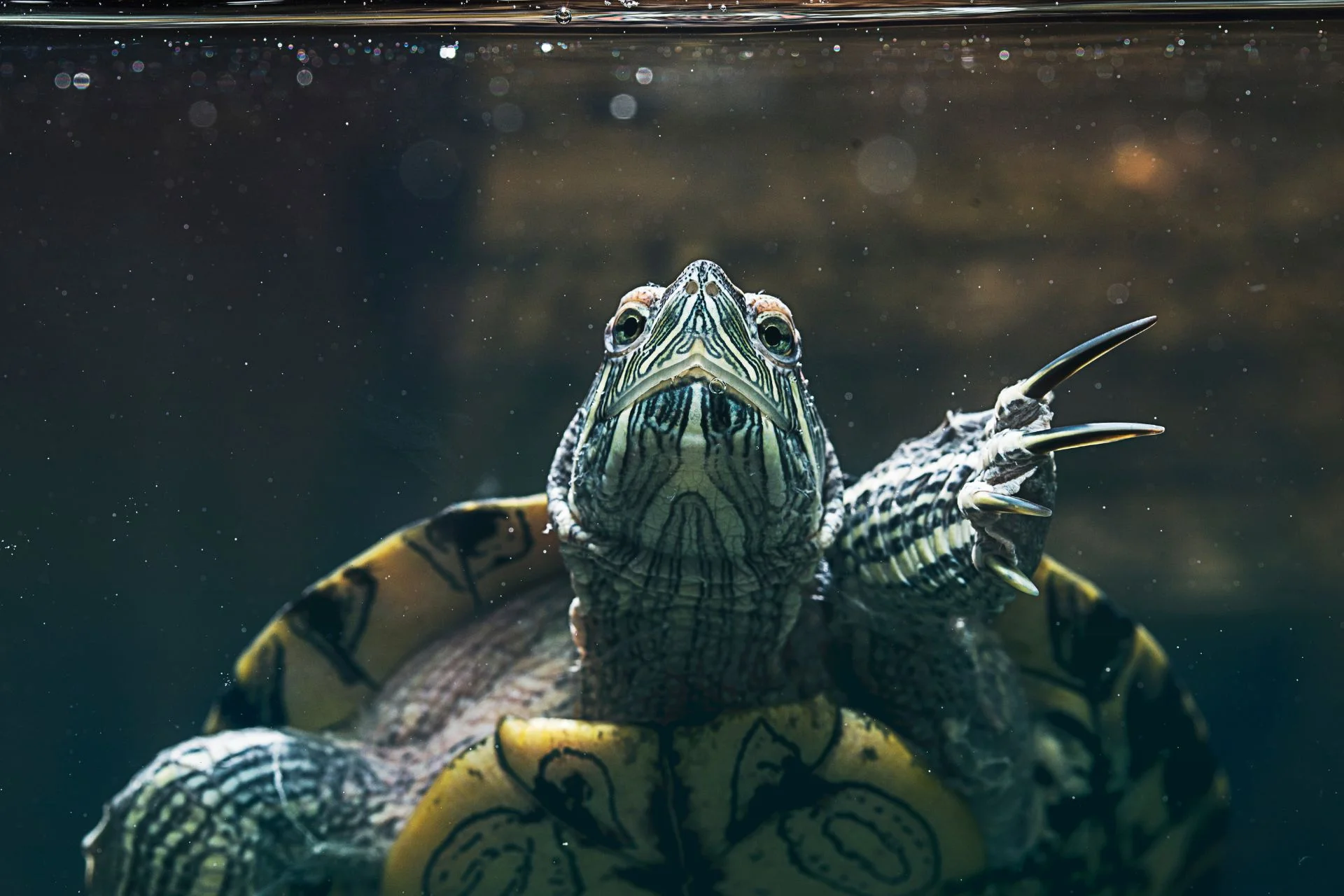
Turtles don't need walks or much interaction on a Tuesday evening. What they do need is consistent temperature, proper lighting, and the right environment, and that varies a lot depending on the species. They also live for a long time: sliders can reach 40 years, tortoises sometimes 80. So before you choose one, it's worth thinking past the initial setup and into the longer arc of ownership, including what happens when you travel.
TL;DR: The easiest pet turtles for beginners are the Red-Eared Slider, Musk Turtle, and Russian Tortoise, while species like the Alligator Snapping Turtle are best left to experienced keepers. Turtles and tortoises are not the same: turtles need water and filtration, tortoises need dry land and space. Whichever you pick, the harder question is who keeps the tank temperature, UVB, and feeding going when you travel, because none of it can lapse for a week.In short: Pet turtles range from a 3 inch Musk Turtle in a 20 gallon tank to a 26 inch Alligator Snapping Turtle needing 150 gallons or more. Sliders typically live 30 to 40 years and tortoises can reach 50 to 100, so the tank size and the lifespan are the two numbers that decide the commitment. The smallest setups, Musk and Spotted Turtles at 20 to 30 gallons and Russian Tortoises at 40, are the realistic starting points for a first turtle.
Finding a sitter for a turtle is different from finding one for a dog or cat. Water quality, basking temperatures, and UVB schedules aren't things you can skip for a week. Some species are manageable to hand off to someone with basic reptile knowledge; others need a specialist. This guide covers 19 pet turtles and tortoises to help you pick the right one for your life, and understand what their care involves for whoever is watching them while you're away.
One thing to clarify before we get into species: turtles and tortoises aren't the same. Turtles live in or near water. Tortoises live on land. Their housing, humidity requirements, and diets are completely different, and a sitter comfortable with one type isn't automatically equipped for the other. We cover both here, grouped by habitat type. For a broader look at reptile ownership, this guide to reptile pets is a good starting point.
Adult size and tank size at a glance
Every figure below is the adult size and minimum enclosure for that species, drawn from the individual entries further down. Use it to rule species out before you read further: the tank is the constraint most first-time owners underestimate.
| Species | Adult size | Minimum enclosure | Type |
|---|---|---|---|
| Musk Turtle | 3-5 in | 20-30 gal | Aquatic |
| Spotted Turtle | 3-5 in | 20 gal | Semi-aquatic |
| Bog Turtle | 3-4 in | 20 gal | Semi-aquatic |
| Eastern Box Turtle | 4-6 in | 20-30 gal | Semi-aquatic |
| Asian Box Turtle | 5-7 in | 30 gal | Semi-aquatic |
| Box Turtle | 5-7 in | 30 gal | Semi-aquatic |
| Russian Tortoise | 6-8 in | 40 gal | Land |
| Hermann's Tortoise | 6-8 in | 40 gal | Land |
| Greek Tortoise | 6-10 in | 40 gal | Land |
| Indian Star Tortoise | 5-10 in | 40 gal | Land |
| Map Turtle | varies by sex | 40-75 gal | Aquatic |
| Western Painted Turtle | 6-8 in | 50 gal | Aquatic |
| Painted Turtle | 6-10 in | 50-75 gal | Aquatic |
| Diamondback Terrapin | 5-9 in | 75 gal | Aquatic (brackish) |
| African Sideneck Turtle | 8-12 in | 75 gal | Aquatic |
| Red-Eared Slider | 8-12 in | 75-100 gal | Aquatic |
| Yellow-Bellied Slider | 8-13 in | 75-100 gal | Aquatic |
| Mata Mata Turtle | 18-20 in | 100 gal | Aquatic |
| Alligator Snapping Turtle | 15-26 in | 150 gal | Aquatic |
Common pet turtles
These three species are the most widely kept pet turtles. Care guides are plentiful, vets are familiar with them, and most exotic pet sitters will have encountered at least one.
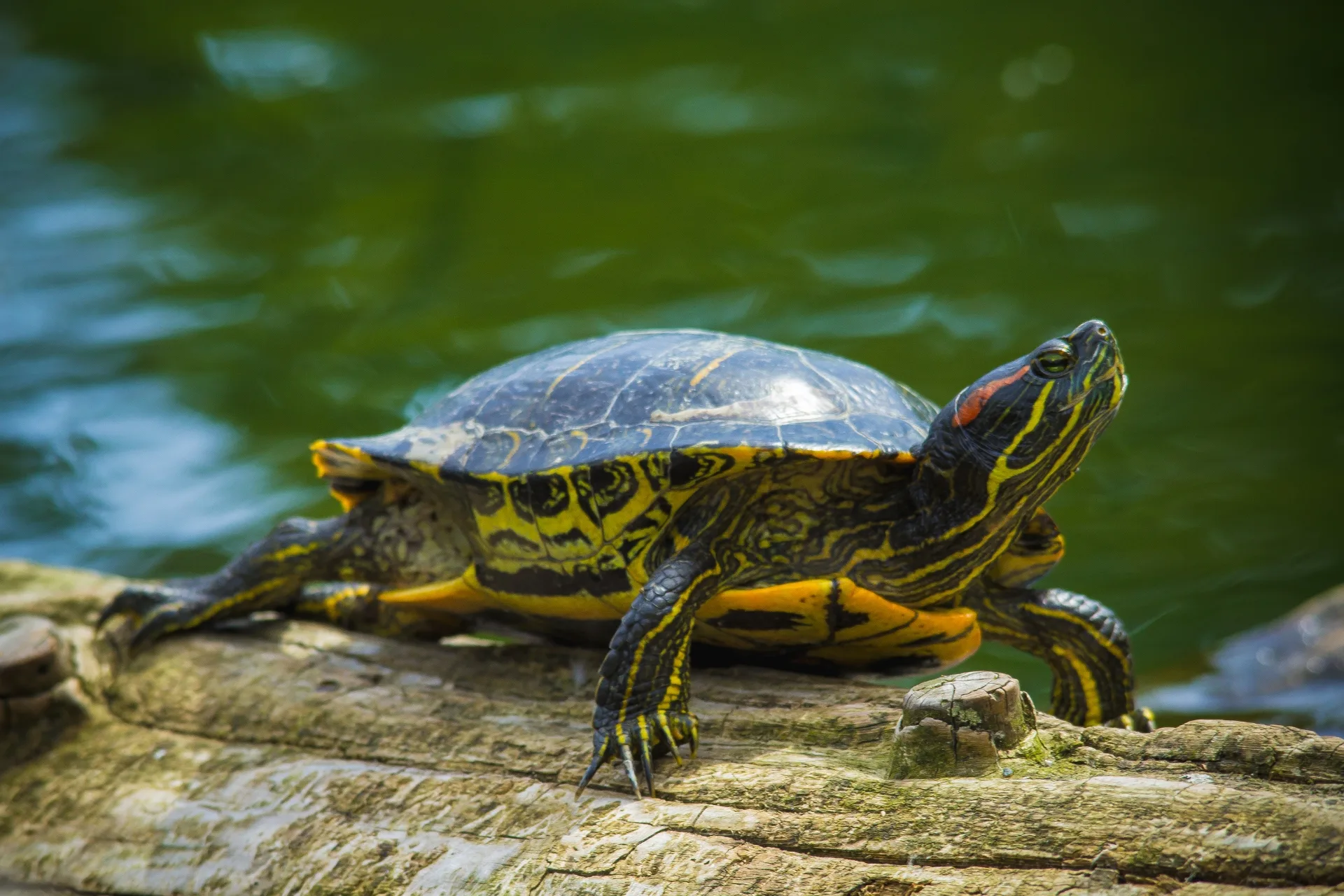
Red-Eared Slider
The most popular pet turtle in the world. They grow to 8-12 inches and can live 30-40 years with consistent care. You need a 75-100-gallon tank with a basking dock, UVB lighting, and water kept at 75-80°F. They eat turtle pellets, leafy greens like romaine, and occasional insects. Their care is well-documented, which makes them one of the easier turtles to hand off to a sitter, as long as the sitter is comfortable with a large aquarium and basic temperature monitoring.
Painted Turtle
Painted Turtles have red and yellow shell markings and stay smaller than sliders at 6-10 inches. They need a 50-75-gallon tank with a basking spot at 85-90°F, UVB, and filtered water at 70-75°F. Feed them pellets, aquatic plants like duckweed, and mealworms. Their care is close enough to sliders that a sitter familiar with one will manage the other without much extra briefing.
Eastern Box Turtle
Eastern Box Turtles are semi-aquatic with domed shells and orange-to-yellow markings, growing to 4-6 inches. They do better in a terrarium than a tank, 20-30 gallons with moist substrate like coconut coir, a shallow water dish, and a basking zone at 75-85°F with UVB. Their diet covers worms, berries, and chopped vegetables. They're more forgiving of minor humidity fluctuations than fully aquatic species, which can make the handoff to a sitter slightly simpler.
Aquatic turtles
Fully aquatic species spend almost all their time in water. The main thing a sitter needs to stay on top of is water quality. Clean, filtered water at the right temperature matters more than almost anything else for these species.
African Sideneck Turtle
African Sideneck Turtles get their name from their necks, which retract sideways rather than pulling back straight into the shell. They reach 8-12 inches and need a 75-gallon tank with deep water at 70-75°F, a basking platform at 85°F, and UVB. They eat pellets, small fish like minnows, and leafy greens. They're active swimmers and interesting to watch, but their water setup requires someone comfortable with aquarium maintenance before you hand over the keys.
Map Turtle
Map Turtles have shells with fine line patterns that look like elevation contours. Females grow considerably larger than males, reaching up to 10 inches. A 40-75-gallon tank with a basking area at 85-90°F, UVB, and filtered water at 70-75°F is standard. They eat aquatic insects, small fish, and plants like water lettuce. They're sensitive to poor water quality, so whoever is sitting for them needs to understand the filtration setup before you leave.
Musk Turtle
Musk Turtles, sometimes called Stinkpots because of the musky smell they release when stressed, are one of the smallest pet turtles at 3-5 inches. A 20-30-gallon tank with shallow water at 70-75°F, a basking spot at 85°F, and UVB is all they need. They eat snails, small fish, and some greens. The smaller tank footprint makes them genuinely easier for a sitter to manage than larger aquatic species.
Yellow-Bellied Slider
Yellow-Bellied Sliders are closely related to Red-Eared Sliders and share almost all of their care requirements. They grow to 8-13 inches and need a 75-100-gallon tank, a basking dock at 85-90°F, UVB, and water at 75-80°F. Feed them pellets, greens, and occasional insects. If you've already briefed a sitter on Red-Eared Sliders, the instructions are essentially the same here.
Semi-aquatic turtles
Semi-aquatic species split their time between land and water. Their setups tend to be more involved than purely aquatic or purely land species, which means more for a sitter to monitor and maintain.
Box Turtle
Box Turtles beyond the Eastern subspecies include the Ornate Box Turtle, which reaches 5-7 inches. Their hinged shells seal completely when threatened. They need a 30-gallon terrarium with a roughly even land-to-water split: moist soil, a shallow pool at 70°F, and a UVB basking zone at 80-85°F. They eat slugs, berries, carrots, and occasional insects. Leave written instructions on both the water level and basking temperature, a sitter who hasn't kept turtles before won't know which one to prioritise.
Diamondback Terrapin
Diamondback Terrapins are the only North American turtles that live in brackish water, a mix of salt and fresh water. That requirement makes them one of the more demanding species for a sitter unfamiliar with the setup. They grow to 5-9 inches and need a 75-gallon tank with maintained salinity at 1-2%, water at 75-80°F, a land area, and UVB basking at 85°F. They eat shrimp, clams, and small fish. Water chemistry needs to stay stable, not just temperature, and that's worth spelling out clearly in any care notes you leave.
Bog Turtle
Bog Turtles are among the smallest pet turtles at 3-4 inches, with orange cheek patches. They need a 20-gallon setup with muddy substrate, shallow water at 70-75°F, humidity above 80%, UVB, and a basking spot at 75-80°F. They eat worms, snails, and small insects. They're uncommon in the pet trade and typically require someone with specialist knowledge to care for them while you're away.
Western Painted Turtle
Western Painted Turtles have more defined yellow and red stripe markings than Eastern Painted Turtles, reaching 6-8 inches. They need a 50-gallon tank with a basking dock at 85-90°F, UVB, and water at 70-75°F. Diet covers fish, aquatic plants, and pellets. Care is broadly similar to other painted turtles, a reasonable choice if sitter availability matters to you.
Land turtles (tortoises)
Tortoises are fully terrestrial. No tank, no water heater, no filtration. Their care centres on temperature, substrate, and diet. For sitter purposes, tortoises are often easier to hand off than aquatic species, the setup is more visible and far simpler to explain in writing.
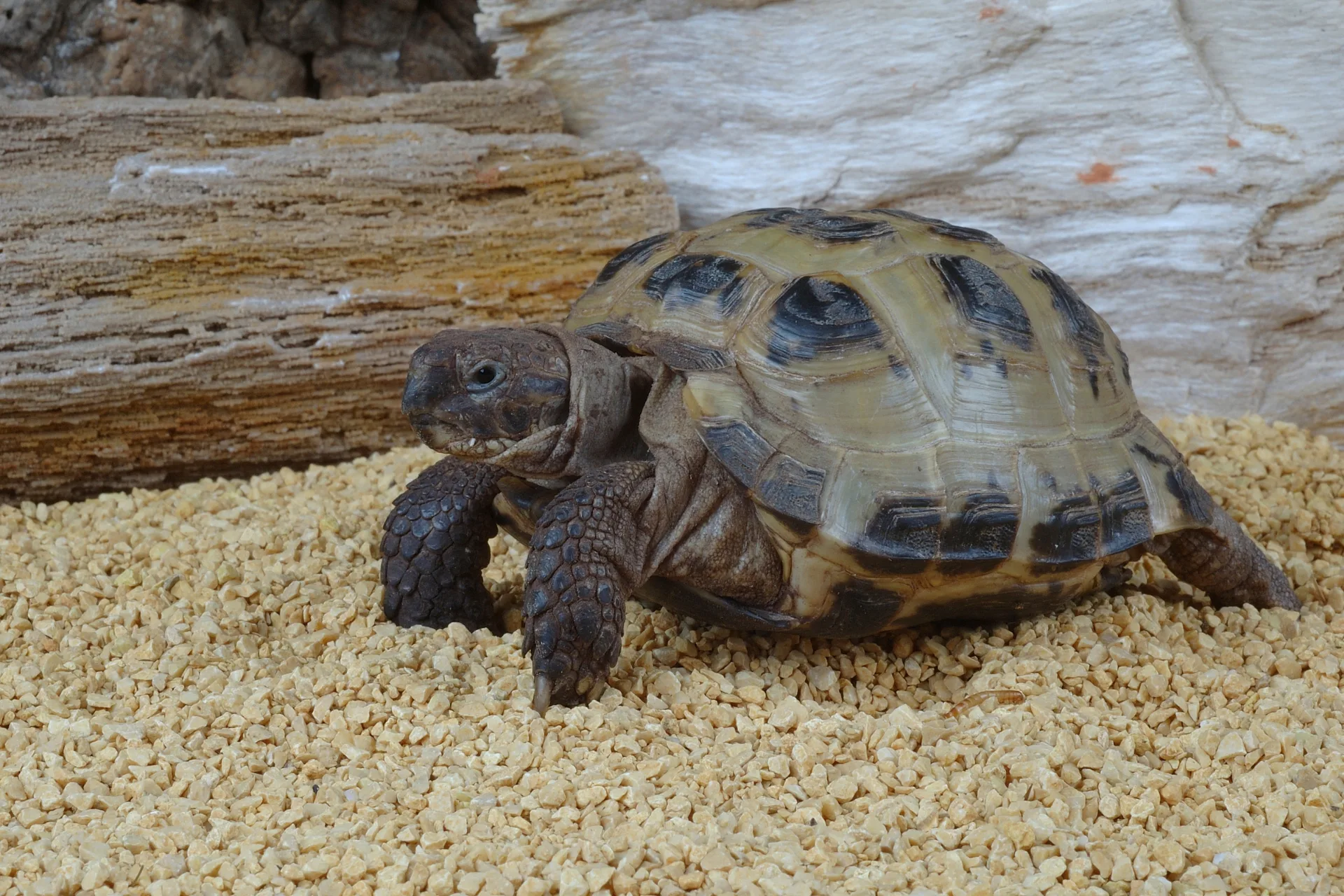
Russian Tortoise
Russian Tortoises are small at 6-8 inches, hardy, and widely kept. A 40-gallon enclosure with sandy soil, some rocks, and a basking spot at 90-95°F with UVB covers the basics. They're herbivores and eat dandelions, clover, hay, and leafy greens. They handle temperature variation better than most tortoises, which gives a sitter a bit more margin. For enrichment ideas, there's a useful list in this guide to tortoise toys.
Greek Tortoise
Greek Tortoises, also called Spur-Thighed Tortoises, reach 6-10 inches and are well regarded for their calm temperament. They need a 40-gallon terrarium with soil substrate, plant coverage, and a basking area at 90-95°F with UVB. Their diet is strictly herbivorous: kale, collard greens, occasional fruit. They also do well in outdoor pens in warmer weather, which can simplify care when you're away.
Hermann's Tortoise
Hermann's Tortoises have yellow and black patterned shells and stay around 6-8 inches. A 40-gallon indoor setup works, as does an outdoor pen with proper fencing. They need soil substrate, hiding spots, a 90-95°F basking zone, and UVB. They graze on weeds like plantain, leafy greens, and flowers. They're one of the more adaptable tortoise species, and sitters generally find them easy to manage with straightforward written instructions.
Asian Box Turtle
Asian Box Turtles are the terrestrial branch of the box turtle family, growing to 5-7 inches. They need a 30-gallon terrarium with moist substrate, a shallow water dish, and a basking spot at 75-85°F with UVB. Unlike their semi-aquatic relatives, they spend most of their time on land. They eat worms, strawberries, and leafy greens, a contained and manageable setup for a sitter to follow.
Indian Star Tortoise
Indian Star Tortoises have striking starburst patterns on each shell plate and grow to 5-10 inches. A 40-gallon enclosure with dry soil, rocks, and a basking spot at 90-95°F with UVB suits them well. They eat grasses, spinach, and zucchini. Despite the unusual appearance, their care is practical and well-suited to first-time tortoise owners who want something less common. For other unusual options, there's more in this guide to exotic pets.
Uncommon turtles
These three species are harder to keep than anything else on this list. Two of them, the Alligator Snapping Turtle and Mata Mata, aren't suitable for owners who travel regularly without access to specialist sitters.
Spotted Turtle
Spotted Turtles are small at 3-5 inches, with yellow spots on dark shells. Semi-aquatic, they need a 20-gallon tank with shallow water at 70-75°F, a land area, and UVB basking at 80°F. They eat insects, worms, and aquatic plants. They're uncommon in the pet trade but not especially difficult to care for compared to the other two species in this section.
Alligator Snapping Turtle
Alligator Snapping Turtles are large (15-26 inches), powerful, and genuinely dangerous if mishandled. They're fully aquatic and need a 150-gallon tank with deep water at 75-80°F, a basking spot at 85°F, and UVB. They eat fish, crayfish, and meat. If you own one and need to travel, finding a sitter with direct reptile handling experience isn't a preference, it's a requirement.
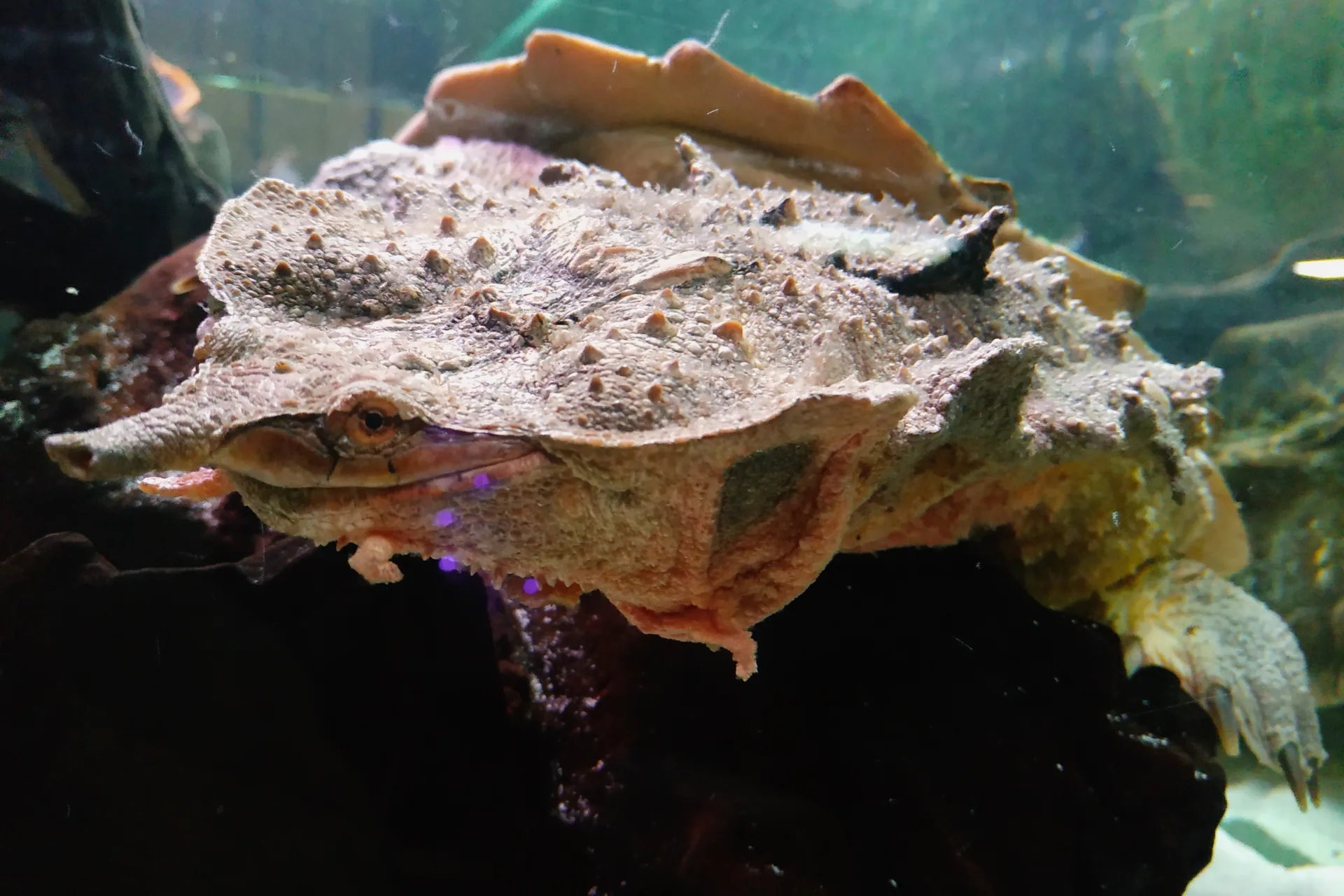
Mata Mata Turtle
Mata Mata Turtles look prehistoric: flat, leafy-looking shells, wide heads, and a feeding method that involves lunging and sucking prey whole. They grow to 18-20 inches and need a 100-gallon tank with tannin-rich, murky water at 75-80°F, a basking area at 85°F, and UVB. They eat live fish and invertebrates and won't accept dried food. Their care is specialised enough that most general pet sitters won't be equipped. If you plan to travel with one of these at home, build a network of specialist sitters before you need one.
Leaving your turtle with a sitter
The species you own determines how straightforward this is. A Musk Turtle in a 20-gallon tank is a very different ask from a Diamondback Terrapin or a Mata Mata. But across all turtle types, there are a few things every sitter needs before you leave.
Temperature and lighting are the most common failure points. A sitter who doesn't understand why the basking lamp needs to stay on for a set number of hours, or why the water heater has to hold a specific temperature, can cause real harm without meaning to. Write it down. Leave the instructions somewhere obvious, not buried in a text message thread.
Water quality is the second issue for aquatic species. Show the sitter how the filter works and what to check. For species that need regular water changes rather than relying on filtration alone, leave the schedule written out with the exact steps. Don't assume they'll figure it out.
Feeding schedules vary more with turtles than with most pets. Some eat daily, others every two or three days. Some turtles won't eat in front of strangers for the first few days, let your sitter know this is normal so they don't think something is wrong. For live-prey species like the Mata Mata, organise the food in advance and leave it with the sitter before you go.
Finding a sitter who's genuinely comfortable with reptiles makes all of this easier. On Petme, you can find pet sitters with exotic pet experience and connect with other turtle owners who can point you toward people they've actually used.
Final thoughts
The turtles and tortoises on this list cover a wide range, from Musk Turtles and Russian Tortoises that most experienced exotic pet sitters can handle, to Alligator Snapping Turtles and Mata Matas that need someone with specialist knowledge. Whichever species you choose, the setup matters as much as anything else. Get the tank, temperature, and UVB right from the start, and the day-to-day care becomes routine. Get it wrong, and no amount of good intentions fixes it.
If you're weighing other reptiles alongside turtles, this guide to reptile pets covers other species worth considering. And for tortoise owners looking for enrichment ideas, there's a practical list in this tortoise toys guide.
Petme and turtle owners
Turtle owners are a specific community with specific knowledge. On Petme, you can connect with other reptile owners, build a profile for your turtle, and find verified sitters who know what a UVB lamp actually does. Download the app at petme.social.
FAQs
- What's the easiest pet turtle for a first-time owner?
Musk Turtles and Russian Tortoises are reasonable starting points. Both are small, their setups are manageable, and care information is widely available.
- Can you leave a turtle alone for a week?
It depends on the species, but generally no. Aquatic turtles need their water quality and temperature maintained throughout. Most turtles also need feeding several times a week. An automatic feeder can handle that for hardy species, but someone still needs to check in on temperatures and water.
- How do I find a sitter for an exotic turtle?
Look specifically for sitters with reptile experience. A general pet sitter may not be familiar with basking temperatures or filtration systems. Petme is a good place to find sitters who know reptiles, and other turtle owners on the platform can point you toward people they've actually used.
- How long do pet turtles live?
Sliders typically live 30-40 years. Tortoises can reach 50-100 years with good care. That's worth factoring in before you commit to a species.
- Can different turtle species be kept together?
Usually not a good idea. Turtles can become territorial and mixing species often leads to stress or injury. Separate enclosures are safer, and this is especially true for large or aggressive species like Alligator Snapping Turtles.