Cats are obligate carnivores, which means their bodies are built to run on meat and they need specific nutrients, such as taurine, that human meals do not reliably supply. That does not mean every human food is off limits, but it does mean human food should stay an occasional extra rather than a substitute for a complete, balanced diet. This guide sorts the common foods into what is safe, what to give only in small amounts, and what to never feed a cat. For the full emergency list and what to do if your cat eats something dangerous, see the guide to foods toxic to cats.
Human foods cats can safely eat
The safest human foods for a cat are the ones closest to their natural diet: plain, cooked, and unseasoned animal protein. Small amounts of a few cooked vegetables are fine as an occasional novelty, though a cat gains far less from them than from meat.
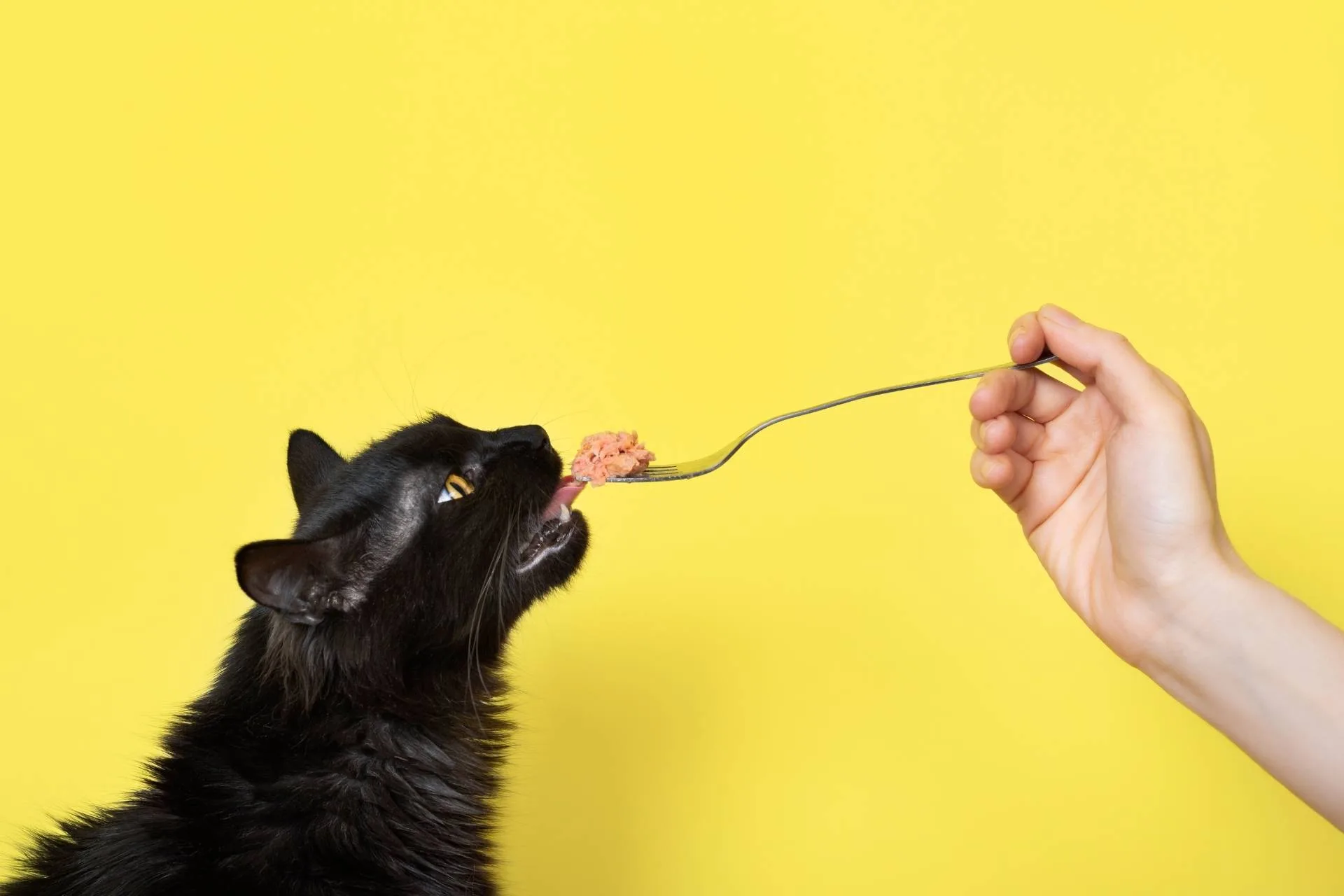
- Cooked meat: plain chicken, turkey, or lean beef with no salt, oil, skin, or bones. This is the most natural human food you can offer a cat.
- Cooked fish: boneless salmon or a little tuna, fully cooked. Fish is best as a treat rather than a staple, because oily fish in large amounts can cause problems over time.
- Cooked egg: scrambled or boiled with nothing added. Eggs are a good source of protein, but never serve them raw.
- Cooked vegetables in small amounts: pumpkin, carrot, peas, green beans, or a little cooked broccoli. Plain cooked pumpkin in particular can help a cat with mild digestive irregularity.
- Small amounts of certain fruit: a little blueberry, melon, or banana as an occasional novelty, with seeds and pits removed.
Serve any of these plain. The seasonings and cooking fats we add to our own food, especially onion and garlic powder, are where most human meals become unsafe for a cat.
Foods to give only in small amounts
Some foods are not toxic but are easy to overdo, and they cause problems when they become a regular part of the diet.
- Dairy: most adult cats are lactose intolerant, so milk, cheese, and cream tend to cause diarrhea and stomach upset. A tiny taste is unlikely to harm, but there is no reason to make it a habit.
- Tuna: cats love it, but tuna made for humans lacks the balanced nutrition of complete cat food and can crowd out better options. Keep it to an occasional treat.
- Fatty or salty scraps: bacon, deli meats, and other salty, fatty foods are hard on a cat's system and add empty calories. Skip them.
Human foods that are toxic to cats
These foods should never be given to a cat in any amount, and a cat that eats them needs a vet quickly.
- Onion, garlic, chives, and leeks: the allium family damages a cat's red blood cells and can cause anemia, even in powdered form hidden in cooked dishes.
- Chocolate: contains theobromine and caffeine, both toxic to cats.
- Grapes and raisins: linked to kidney injury in pets and best treated as toxic.
- Alcohol and caffeine: dangerous even in small amounts.
- Xylitol: an artificial sweetener in some gum, baked goods, and peanut butter.
- Raw dough, raw meat, and raw eggs: risk of bacteria and, with dough, dangerous expansion in the stomach.
If your cat eats any of these, contact your vet or the ASPCA Animal Poison Control or Pet Poison Helpline immediately. The full emergency response is covered in the foods toxic to cats guide.
How much human food can a cat have?
The single most useful rule is the 10% rule: all treats and human food together should stay under 10% of your cat's daily calories. For a typical indoor cat eating around 200 calories a day, that is roughly 20 to 25 calories of extras, which is a very small amount of chicken or fish. The remaining 90% should come from a complete, balanced cat food that supplies the taurine, vitamins, and minerals a cat cannot get from human meals.
To keep treats in proportion, it helps to know your cat's daily calorie target first. Work it out on the free cat food calculator, then keep human-food extras under a tenth of that number.
If you want the full breakdown of daily portions and how to split wet and dry meals around those treats, the guide to cat food portions works through the math. For gentle, food-based ways to support a cat's digestion and wellbeing, the natural remedies for cat health guide is a useful companion, and if treats ever upset your cat's routine, how often cats should poop covers what normal looks like.
What to tell your cat sitter about treats and food
Feeding is where a well-meaning cat sitter can slip up, usually by sharing a snack that seems harmless. Before you travel, write down which human foods are allowed, which are off limits, and the exact treat amount, and make clear that treats stay under 10% of daily calories. Spell out that onion, garlic, chocolate, grapes, and xylitol are never given, since a sitter may not know a cat's list differs from a dog's.
On Petme you can attach those feeding notes to a cat sitting booking and go over them at the meet and greet, so your cat's diet stays exactly as you intend while you are away.
FAQs: human foods for cats answered
1. What human foods are safe for cats?
The safest human foods for cats are plain cooked meat (chicken, turkey, beef), cooked boneless fish like salmon, and cooked egg, since cats are obligate carnivores. Small amounts of cooked pumpkin, carrot, peas, or green beans are fine too. Serve everything plain, with no salt, oil, onion, or garlic, and keep it to an occasional treat rather than a meal.
2. What human foods are toxic to cats?
The human foods most dangerous to cats are onion, garlic, chives, and leeks (which damage red blood cells), chocolate, grapes and raisins, alcohol, caffeine, and xylitol. Raw dough and very salty or fatty foods are also unsafe. If your cat eats any of these, call your vet or the Pet Poison Helpline right away rather than waiting for symptoms.
3. Can cats drink milk or eat cheese?
Most adult cats are lactose intolerant, so milk, cheese, and cream commonly cause diarrhea and stomach upset even though they are not toxic. Kittens handle their mother's milk, but that ability fades with age. If you want to offer dairy, keep it to a tiny taste, and stop if you see any digestive upset. Fresh water is always the better choice.
4. How much human food can I give my cat?
Keep all treats and human food under 10% of your cat's daily calories, which is roughly 20 to 25 calories for a typical 200-calorie-a-day cat. The other 90% should come from a complete, balanced cat food. Human food is a supplement to a proper diet, never a replacement, because cats need nutrients like taurine that human meals do not reliably provide.
5. Can cats eat fruit?
Cats can eat small amounts of certain fruits such as blueberries, melon, or banana, but they gain little from them because they cannot taste sweetness and do not need the sugar. If you offer fruit, give a tiny piece as an occasional novelty, remove any seeds or pits, and skip grapes and raisins entirely, since those are toxic to cats.
6. What should I tell my cat sitter about feeding treats?
Write down which human foods are allowed and which are off limits, the exact treat amount, and the fact that treats stay under 10% of daily calories. A cat sitter who is not told may share a snack that seems harmless but upsets your cat's stomach or, worse, is toxic. Clear written notes keep feeding consistent while you are away. 🐱
Sharing a little plain cooked chicken or fish with your cat is a small pleasure that does no harm when you keep it occasional and know the short list of foods to avoid. Lead with a complete cat food, hold treats under a tenth of the daily calories, and keep the toxic foods well out of reach, and the odd table-side morsel stays exactly what it should be: a treat.