A dog skipping a meal is often no big deal. A cat refusing food is different, and the difference matters more than most owners realize. Cats are built in a way that makes a hunger strike genuinely risky, so the right response to a cat that will not eat is closer attention and a quicker call to the vet than you might expect. This guide explains why, what tends to cause it, and how to safely encourage a reluctant cat to eat. If your cat is also being sick, the companion guide to cat vomiting covers when that needs a vet.
Why appetite loss in cats is urgent
When a cat stops eating, its body starts moving stored fat to the liver to use for energy. A cat's liver is not well suited to processing a sudden flood of fat, and it can become overwhelmed, leading to a condition called hepatic lipidosis, or fatty liver. It can develop after just a couple of days without proper food, and overweight cats are the most vulnerable because they have more fat to mobilize. The condition is serious and can be fatal, but it is treatable when caught early, which is exactly why appetite loss in cats is more time-sensitive than in dogs or people. The practical takeaway is simple: a cat that has not eaten for a day should not be left to wait it out.
Common reasons a cat stops eating
Appetite loss is a symptom rather than a diagnosis, and the causes span the minor to the serious.
- Nausea, an upset stomach, or a general illness making your cat feel unwell.
- Dental disease or mouth pain, which makes eating hurt.
- Stress from a change at home: a move, a new pet or person, building work, or a rearranged space.
- A new food, a different bowl, or a bowl placed somewhere your cat dislikes.
- A blocked-up nose from a respiratory infection. Cats rely heavily on smell to want food, so a stuffy nose can stop them eating.
- Underlying disease such as kidney disease, an overactive thyroid, or a gastrointestinal problem, which are more common in older cats.
When to see the vet
Because of the fatty liver risk, the threshold for a cat is lower than you might apply to another pet. Contact your vet if any of the following is true.
- Your cat has eaten nothing for 24 hours.
- Your cat is eating far less than normal over several days, even if not refusing food entirely.
- The cat is also vomiting, hiding, lethargic, or losing weight.
- Your cat is a kitten, a senior, or already known to have a health condition, in which case call sooner than the 24-hour mark.
A fever can also suppress appetite, and knowing your cat's baseline helps you judge how quickly things are changing. The guide to caring for senior cats covers why older cats in particular need a faster response to any change in eating.
How to safely tempt a cat to eat
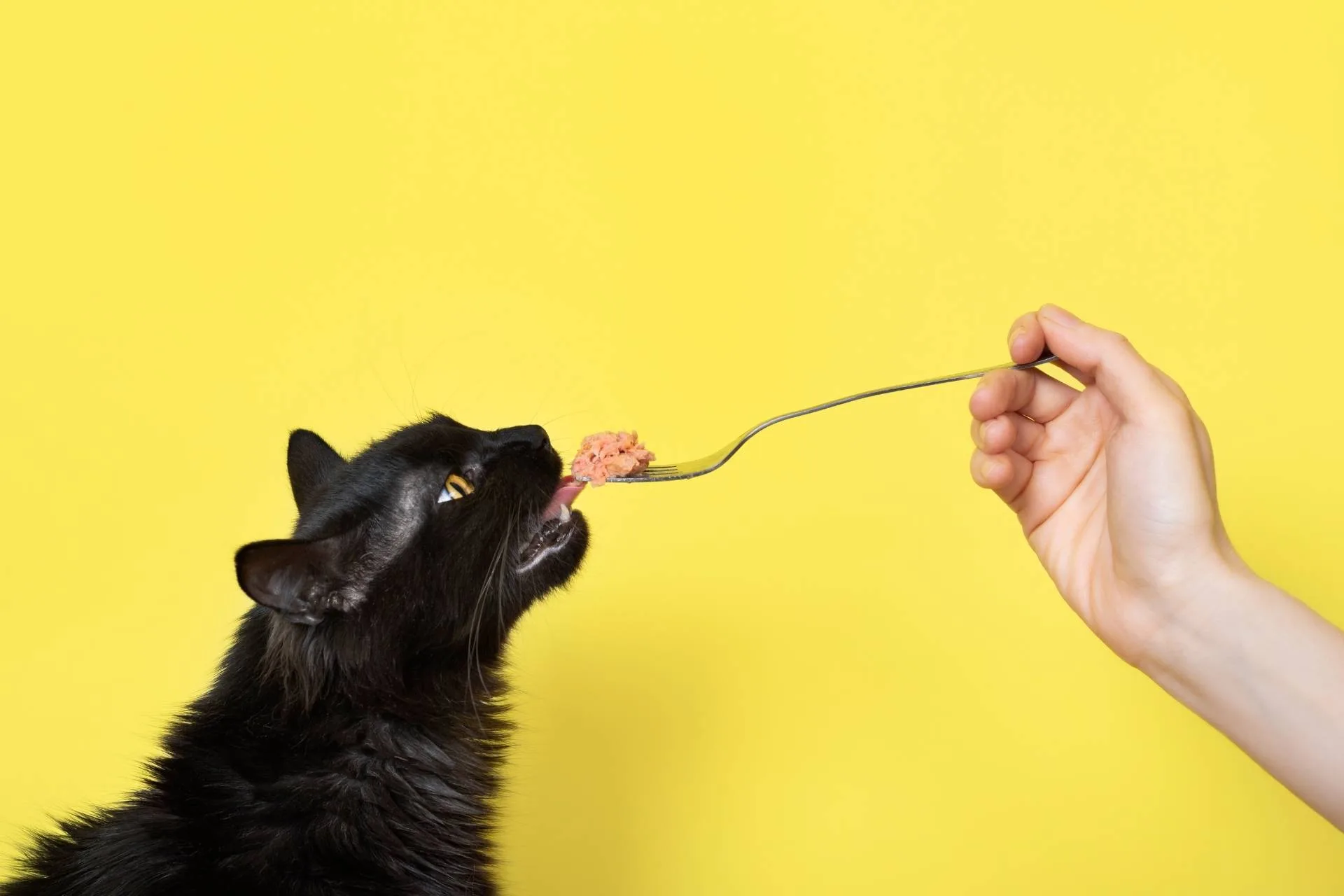
While you arrange a vet visit, or for a mildly fussy cat who is otherwise well, a few things can help rekindle interest in food. Warm wet food slightly so its aroma is stronger, since smell drives a cat's appetite. Offer a strong-smelling option such as a little plain tuna or the water from a tuna can. Feed in a calm, quiet place away from other pets, litter trays, and noise, and try hand-feeding or offering food on a wide, flat plate that does not touch a cat's whiskers.
Keep this in perspective, though. These are short-term tactics, not a cure. If your cat still will not eat within about a day, or shows any other symptom, the vet visit comes first. The cat food portions guide can help you judge whether your cat is truly eating less or simply being fed differently, and the guide to human foods cats can eat lists safe options if you want to tempt with a tiny piece of plain cooked meat.
Appetite loss while you are away: what a cat sitter should watch for
A cat quietly not eating is one of the easiest problems to miss, especially if food is simply topped up rather than watched. That makes a reliable sitter genuinely valuable. Tell your sitter what and how much your cat normally eats, ask them to confirm the food is actually being eaten rather than just refilled, and leave your vet's number along with the time limits that matter for a cat.
On Petme, drop-in visits mean someone lays eyes on your cat and its food bowl on a schedule, which is how appetite loss gets caught in time. You can attach care notes to the booking, and if a serious problem develops during a booked stay, the Petme Protection Plan may contribute to eligible vet costs up to $22,000.
FAQs: cat not eating questions answered
1. How long can a cat safely go without eating?
Not long. A cat that eats nothing for more than about 24 to 48 hours is at real risk of hepatic lipidosis, a serious liver condition, and overweight cats are the most vulnerable. This is different from dogs, who tolerate a short fast. If your cat has not eaten for a day, treat it as a reason to call your vet rather than waiting to see if the appetite returns.
2. Why has my cat suddenly stopped eating?
Common reasons include nausea or illness, dental or mouth pain, stress from a change at home, a new food or bowl, and conditions like kidney disease or an overactive thyroid. A blocked-up nose from a respiratory infection can also stop a cat eating, because cats rely on smell to want food. Because the causes range from minor to serious, appetite loss that lasts a day warrants a vet check.
3. When should I take my cat to the vet for not eating?
Call your vet if your cat has eaten nothing for 24 hours, or sooner if the cat is a kitten, a senior, known to be unwell, or showing other signs like vomiting, hiding, or lethargy. Eating far less than usual for several days also deserves a check. Because of the fatty liver risk, appetite loss in cats is more time-sensitive than in most other pets.
4. How can I get my cat to eat again?
Warm wet food slightly to release its smell, offer a strong-smelling food like a little plain tuna or the water from it, and feed in a quiet, calm spot away from other pets. Hand-feeding or offering food on a flat plate can help. These are short-term tactics, though, not a substitute for a vet if your cat still will not eat within about a day.
5. Can stress make a cat stop eating?
Yes. A house move, a new pet or person, building work, or even a rearranged room can put a cat off its food. Reducing the stressor and offering food somewhere quiet often helps. The catch is that you cannot always tell stress from illness, and the fatty liver clock runs either way, so if a stressed cat has not eaten for a day, still involve your vet.
6. What should I tell my cat sitter about my cat's eating?
Tell your sitter exactly what and how much your cat normally eats, so they can spot a drop early, and leave your vet's number and the time limits that matter. Ask them to check that food is actually being eaten rather than just topped up, since a cat quietly not eating is easy to miss. On drop-in visits, that one observation can catch a problem in time. 🐱
With cats, a lost appetite is a clock, not just a mood. Most cats who go off their food do so for a manageable reason, but the safe approach is to notice early, try a few gentle ways to tempt them, and call the vet if a full day passes without eating. Treating appetite loss as the time-sensitive sign it is can make the difference between an easy fix and a serious illness.