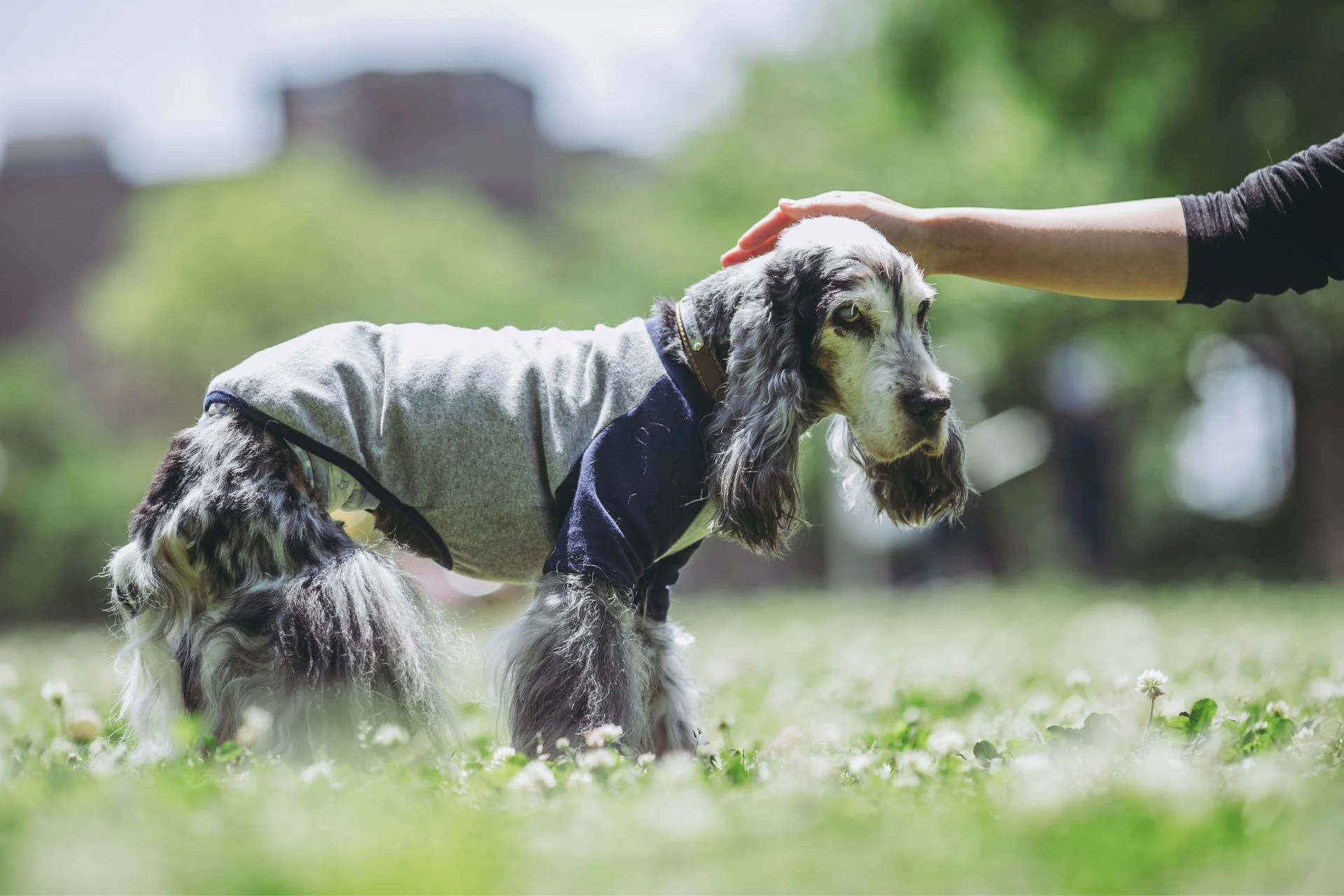
A dog enters their senior years in the last quarter of their expected lifespan — roughly seven to eight years for larger breeds, ten to eleven for smaller ones. You can check where your dog falls using the dog years to human years converter. The transition isn't sudden, but if you pay attention, you'll notice changes: slower to get up, less interested in long walks, sleeping more, sometimes more vocal or more confused. These aren't just signs of age — they're signals that care needs to shift.
This guide covers the practical adjustments caring for a senior dog requires, and what those adjustments mean when someone else — a dog sitter, dog walker, or dog boarding provider — needs to step in for you.
What to expect as your dog ages
Senior dogs commonly develop arthritis, which affects movement and comfort more than most owners initially realize. They may also experience gradual hearing and vision loss, cognitive dysfunction (the canine equivalent of dementia), reduced kidney and liver function, and dental disease that has compounded over years of incomplete care. None of these conditions is inevitable, but most senior dogs will encounter at least some of them.
The most important shift in mindset for owners of senior dogs is moving from reactive to proactive care. Waiting until something is visibly wrong costs time that older dogs don't have the resilience to recover from as easily. The equivalent of catching a problem in year nine is very different from catching it in year three.
Veterinary care for senior dogs
The standard recommendation for senior dogs is twice-yearly vet check-ups rather than annual. At these visits, routine bloodwork screens for organ function changes, dental examinations catch disease before it becomes painful and systemic, and physical assessments pick up joint or weight changes that the owner may not have noticed at home because they're happening gradually.
Ask your vet specifically about pain assessment at each visit. Arthritis in dogs is often undertreated because dogs mask discomfort well — they continue moving and behaving normally until the pain becomes significant. A vet who knows your dog's baseline can identify changes that aren't obvious to the owner. If your dog is on any ongoing medication — thyroid treatment, joint supplements, pain management — ensure that any dog sitter or dog boarding provider has the full list, correct dosage instructions, and knows what to do if a dose is missed or a reaction occurs.
Nutrition for older dogs
Senior dogs have different nutritional requirements than adult dogs. Their metabolism slows, which means maintaining a healthy weight requires either reduced calories or increased activity — and since increased activity is often limited by mobility, food management becomes more important. Obesity in a senior dog accelerates joint deterioration and puts additional strain on organs that are already working harder than they were at peak health.
Senior-formulated dog food typically has lower calorie density and adjusted protein and fat ratios. Some dogs benefit from joint-supporting supplements like omega-3 fatty acids and glucosamine; your vet can advise based on your dog's specific conditions. Avoid switching food abruptly — senior digestive systems tolerate change less well than younger dogs, and a sudden diet shift can cause days of discomfort. If you're transitioning to a new food, do it over two weeks by gradually replacing a larger proportion of the old food each day.
For a dog sitter covering a longer stay, the feeding routine for a senior dog needs to be followed precisely — not approximated. Meal times, portion sizes, any medication mixed into food, and what the dog absolutely cannot have all belong in written instructions, not verbal briefings that get half-remembered.
Exercise and mobility
Senior dogs still need daily exercise — it keeps muscles that support arthritic joints strong, prevents obesity, and supports mental health. What changes is the nature of that exercise. A dog who used to run five kilometers off-leash may now be better served by two or three shorter, slower walks on forgiving surfaces. Concrete and asphalt are harder on aging joints than grass or soil; if there's a choice, opt for softer ground.
Watch for signs that a walk has been too long or too strenuous: lagging behind, reluctance to walk further, stiffness when they stop, or difficulty settling when they get home. These are signals to shorten the next outing, not push through. A good dog walker for a senior dog adjusts pace and distance based on what the dog is showing that day rather than completing a fixed route regardless. If you're using a dog walking service, be explicit with the dog walker about your dog's exercise limits, which surfaces they do best on, and the signs that mean it's time to turn back.
Mobility aids — ramps instead of stairs, non-slip rugs on smooth floors, an orthopaedic bed at floor level — make a meaningful difference to daily comfort for a dog with arthritis. A dog sitter staying in your home needs to know these are in place for a reason and shouldn't be moved or bypassed.
Cognitive health and mental stimulation
Canine cognitive dysfunction (CCD) affects a significant proportion of dogs over eleven years old. Symptoms include disorientation in familiar spaces, changes in sleep-wake cycles (often sleeping more during the day and restless at night), reduced interaction, apparent confusion, and sometimes forgetting basic training. It's not reversible, but its progression can be slowed through mental engagement and, in some cases, medication.
Mental stimulation for senior dogs doesn't need to be intense — gentle puzzle feeders, short training sessions reinforcing known commands, and calm social interaction all count. The goal is engagement, not challenge. A dog walker or pet sitter who engages a senior dog with a few minutes of easy training during a visit does more for their cognitive health than one who simply feeds them and leaves.
If your senior dog has CCD, this needs to be communicated clearly to any dog sitter. Behaviours that look like stubbornness or anxiety — circling, staring at walls, getting stuck in corners — are symptoms of a cognitive condition, not behavioral problems. A dog sitter who doesn't know this may inadvertently create more anxiety by trying to redirect or correct behaviour that can't be corrected.
Dental care and home comfort
Dental disease compounds with age and, by the time a dog is genuinely senior, most untreated dental issues have progressed to chronic low-level pain that affects eating, mood, and overall quality of life. Regular brushing — daily is ideal, several times a week is realistic — combined with annual dental cleanings at the vet keeps the worst of this manageable. Dental chews provide some benefit but are not a substitute for mechanical cleaning.
Beyond dental care, review the home environment for your dog's comfort as they age: is their bed easy to get in and out of, or are they struggling to climb in? Are there slippery floors between where they sleep and where they eat? Does the house get cold overnight in ways that aggravate joint stiffness? These are small adjustments that cumulatively make a senior dog's day more comfortable, and they're worth briefing any pet sitter on so the environment is maintained correctly during your absence.
Dog sitting, dog boarding, and dog walking for senior dogs
Caring for a senior dog when someone else is doing it requires more preparation than for a younger dog. The stakes for getting the details wrong are higher — a missed medication, an overly long walk, a boarding environment with cold floors and too much noise — and the recovery from a setback is slower.
Dog boarding in a kennel is generally a poor choice for senior dogs. The unfamiliar environment, variable temperatures, background noise, and disrupted sleep all cause stress that younger dogs absorb more easily. For senior dogs who are already managing health conditions or cognitive changes, that stress can visibly worsen symptoms for days after they return home. In-home dog sitting or house sitting — where a pet sitter stays in your home and maintains the dog's established routine — is almost always the better arrangement for an older dog. Familiar surroundings, their own bed, the same feeding schedule, and consistent noise levels make a measurable difference to how well they manage your absence.
When finding a dog sitter for a senior dog, ask explicitly whether they have experience with older dogs — not just dogs in general. A sitter who has looked after a dog with arthritis knows how to read movement discomfort, how to pace walks appropriately, and how to handle the slower tempo that senior dog sitting requires. A sitter who hasn't may unknowingly push the dog too hard or miss early signs of a problem.
Your written instructions for the dog sitter matter more for a senior dog than for almost any other. Include: all medications with exact doses and timings, feeding portions and any dietary restrictions, exercise limits and what to watch for during walks, the dog's known health conditions and what symptoms to act on immediately, vet contact details, and a note on any cognitive or behavioral changes that need context rather than correction.
On Petme, you can browse sitter profiles and their social feeds to see how they actually interact with dogs in their daily care — including whether they have experience with senior or lower-energy animals, not just young and high-energy ones. For an older dog, that distinction is worth looking for specifically before reaching out.
Frequently asked questions
1. How to help a senior dog live longer?
Twice-yearly vet check-ups, weight management, appropriate daily exercise, dental care, and mental stimulation are the most evidence-supported factors. Pain management for arthritis is often underutilized — dogs mask discomfort effectively, so an owner who assumes their dog "seems fine" may be missing ongoing pain that reduces quality and length of life. Regular bloodwork allows early intervention on organ function changes before they become serious.
2. What not to do with a senior dog?
Don't skip vet visits on the assumption that everything seems fine. Don't maintain a puppy or adult-dog exercise regime without adapting it to current mobility — overexertion on arthritic joints causes real damage. Don't switch food abruptly; senior digestive systems need gradual transitions. And don't dismiss behavioral changes like confusion, disrupted sleep, or reduced interaction as "just getting old" without raising them with a vet — they are often symptoms of treatable or manageable conditions.
3. What is the 7-7-7 rule for dogs?
The 7-7-7 rule is a rough adjustment guide used primarily in dog adoption and rehoming contexts: seven days to stop being scared, seven weeks to learn the household routine, seven months to feel fully settled. For senior dogs specifically, this timeline often runs longer — older dogs are more set in their routines and take more time to adapt to environmental or caregiver changes. It's a useful reminder when transitioning a senior dog to a new dog sitter or a new dog boarding arrangement that patience and consistency matter more than trying to accelerate the adjustment.
4. What should I look for in a dog sitter for a senior dog?
Experience with older dogs specifically, not just dogs in general. The ability to follow detailed written instructions without improvising on medication, diet, or exercise. Comfort with a slower pace — senior dog sitting is less active and more observational than sitting for young dogs, and a sitter who is used to high-energy dogs may inadvertently push a senior dog too hard. Ask directly what experience they have with older or lower-mobility dogs before committing.
5. Is dog boarding safe for senior dogs?
Standard kennel boarding is generally not the best choice for senior dogs. The environmental stressors — unfamiliar space, disrupted routine, variable temperatures, background noise — cause stress that younger dogs absorb more easily. For a dog who is already managing arthritis, cognitive changes, or organ conditions, that stress can cause visible setbacks. In-home dog sitting or house sitting, where care happens in the dog's familiar environment, is usually the safer and kinder option for older animals.
6. How do I prepare a senior dog for a pet sitter?
Write out everything: medications with exact doses and times, feeding amounts and any restrictions, walk duration and pace limits, the dog's known health conditions, what behavioral signs mean something needs attention, and vet contact details. Schedule a meet-and-greet so your dog has time to register the sitter as a known person before you leave. A senior dog who has met their sitter before is noticeably calmer than one encountering a stranger on the first day of the owner's absence. Consider a trial run — one short visit while you're home — to see how the dog responds. 🐕
Caring for a senior dog asks more of you than earlier life stages did — more attention, more adjustment, more willingness to slow down alongside them. It also asks more of anyone else who looks after them. Getting the right dog sitter, briefing them properly, and choosing the right dog sitting arrangement for an older animal is one of the more important decisions you'll make in your senior dog's later years. The effort is worth it.