Guinea pigs are strict herbivores with a digestive system built around continuous fiber intake from hay and leafy vegetables. Fruit has a place in their diet because it provides vitamin C, which guinea pigs cannot produce on their own, but the high sugar content means it works as an occasional treat rather than a daily staple. Getting the balance right keeps a guinea pig healthy and avoids the digestive upset that comes with too much sugar.
What counts as a fruit treat
One to two times a week is the right frequency for fruit. A single serving is small: a slice of apple, two or three strawberries, or a few cubes of melon. Remove seeds, pits, and inedible skin before serving. Wash fruit before giving it to your guinea pig and remove any uneaten pieces from the cage after a couple of hours to prevent spoilage and bacterial growth. Fruit should not replace the vegetables that form a guinea pig's daily fresh food intake. Bell peppers, leafy greens, cucumber, and parsley are better vitamin C sources for everyday feeding because they are lower in sugar. Fruit sits alongside daily vegetables, not instead of them.Safe fruits and how often to serve them
The table below summarises common fruit options, their typical serving frequency, and the preparation needed. Individual guinea pigs vary - some handle certain fruits well while others react with loose stools. Introduce any new fruit in a small amount first and watch for changes in digestion over the following day.| Fruit | Frequency | Notes |
| Apples | 1-2 times per week | Remove seeds and core |
| Strawberries | 1-2 times per week | 2-3 berries per serving |
| Blueberries | 1-2 times per week | 4-5 berries per serving |
| Melon (watermelon, honeydew, cantaloupe) | 1-2 times per week | Remove seeds and rind |
| Mango | 1-2 times per week | Remove skin and pit |
| Papaya | 1-2 times per week | Remove seeds and skin |
| Pears | Occasionally | Remove seeds and core |
| Kiwi | Occasionally | Remove skin; high in vitamin C |
| Grapes | Occasionally | 1-2 grapes; never raisins |
| Cherries | Occasionally | Remove pit, stem, and leaves |
| Oranges | Rarely | Very small piece; acidity can cause mouth sores |
| Pineapple | Rarely | Very small piece; high acidity |
Apples
Apples are one of the most reliably well-tolerated fruits for guinea pigs. They provide vitamin C and fiber, and most guinea pigs enjoy the taste. Always remove the seeds and core before serving - apple seeds contain trace amounts of cyanogenic compounds. A slice, once or twice a week, is the right portion. Both red and green varieties are fine.Strawberries
Strawberries are high in vitamin C, which makes them a useful occasional addition to a diet that already includes bell peppers and leafy greens. Two to three small strawberries per serving is appropriate. They are soft and easy to eat, which suits guinea pigs of any age. The leaves are also safe to leave on.Blueberries
Blueberries are low in sugar compared to many other fruits and contain antioxidants. Four to five blueberries once or twice a week is a sensible portion. They require no preparation - just wash and serve.Melon
Watermelon, honeydew, and cantaloupe are all safe. Remove seeds and the hard rind, then offer a small cube or two. Melons are high in water content, so large amounts can cause loose stools. A couple of pieces once or twice a week works well.Mango and papaya
Both are safe in small amounts. Remove the skin and pit from mango and the seeds and skin from papaya before serving. Both are higher in sugar than berries, so keep portions small - a tablespoon-sized piece is enough.Pears
Pears are safe occasionally. Remove seeds and the core. Like apples, they are a gentle fruit that most guinea pigs accept without digestive reaction. Offer occasionally rather than on a fixed weekly schedule.Kiwi
Kiwi has one of the highest vitamin C concentrations of any fruit, which makes it a useful choice. The flesh is safe; the skin is edible but tough - remove it before serving. A small slice once a week or so is appropriate. The high acidity means some guinea pigs react with mouth soreness if given too much.Fruits that need extra care
Grapes
Grapes are safe for guinea pigs in small amounts. Unlike dogs, for whom grapes are genuinely toxic, guinea pigs can eat grape flesh without the same risk. One or two grapes occasionally is appropriate. The concern is sugar content rather than direct toxicity. Raisins are a different matter - their concentrated sugar makes them unsuitable. Never offer raisins.Cherries
Cherry flesh is safe. The problem is the pit, stem, and leaves, which contain cyanogenic compounds and must always be removed. A single cherry with the pit and stem fully removed is an appropriate occasional treat. Because preparation is more involved, it is worth factoring this in when leaving fruit instructions for a pet sitter or house sitter.Citrus fruits
Oranges, tangerines, and other citrus fruits are not directly toxic to guinea pigs but their acidity can cause mouth sores in sensitive animals. A very small piece of orange flesh very rarely is tolerated by most guinea pigs, but citrus is not a first choice for treats. There are better vitamin C sources that carry less acidity risk. If your guinea pig shows any sign of drooling or reluctance to eat after citrus, discontinue.Pineapple
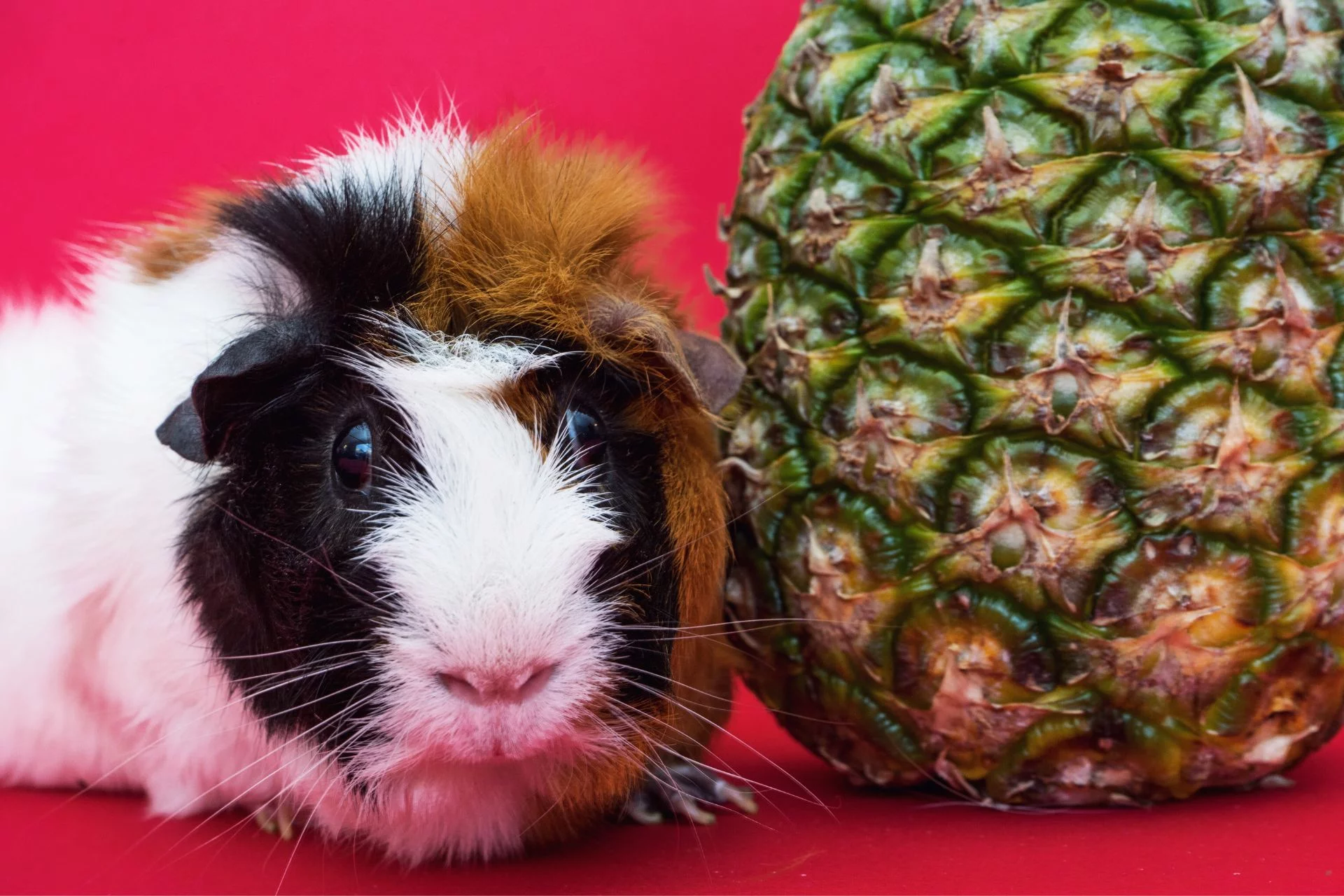
Pineapple is high in natural sugars and acid. A very small piece rarely is safe, but it is not a fruit to offer regularly. High amounts can cause digestive upset and mouth irritation.Fruits guinea pigs must not eat
Rhubarb
Rhubarb is toxic to guinea pigs. Both the leaves and the stalks contain oxalic acid at levels that cause serious kidney damage. There is no safe amount. Rhubarb should never be given in any form.Avocado
Avocado contains persin, a compound that is toxic to most small animals. It affects the heart and respiratory system. The flesh, skin, and pit are all harmful. Even small amounts should be avoided entirely.Dried fruit and processed fruit products
Dried fruit concentrates the sugar from fresh fruit into a much smaller volume. Raisins, dried cranberries, and fruit-based snack bars marketed for small animals are not appropriate. Many commercial guinea pig treat mixes contain dried fruit as an ingredient - check labels before buying.What to tell a pet sitter about fruit
A pet sitter or house sitter covering drop-in visits while you are away needs specific guidance on fruit. Without clear instructions, a well-meaning carer might offer fruit too often, give too large a portion, or choose something from the kitchen without checking whether it is safe. Before any trip, leave written fruit instructions that cover:- Which fruits are available and where they are stored
- The correct portion size for each one (a slice of apple, two strawberries, a few blueberries)
- That fruit is occasional, not daily - once or twice a week at most
- Which fruits require preparation (cherries need pit removed; apples need seeds and core removed)
- That grapes are safe for guinea pigs in small amounts, even if the sitter knows dogs cannot eat them
- That rhubarb and avocado are toxic and must never be offered
Frequently asked questions
1. Can guinea pigs eat grapes?
Yes, in small amounts. Grapes are safe for guinea pigs, unlike for dogs. One or two grapes occasionally is appropriate. The main concern is sugar content rather than toxicity, so keep the quantity small. Never offer raisins, which concentrate the sugar into a much smaller volume and can cause digestive problems. Always remove seeds before serving.
2. How often should I give fruit to my guinea pig?
Once or twice a week is the recommended maximum for most fruits. Daily fruit feeding shifts the dietary balance away from hay and vegetables, which should dominate every day. Treat fruit as a genuine occasional addition, not a daily expectation. Some higher-acid or higher-sugar fruits like citrus and pineapple are better given even less frequently - a small piece once every two weeks is plenty.
3. Can guinea pigs eat bananas?
Yes, in small amounts. Bananas are high in sugar and should be treated as an occasional treat rather than a regular weekly fruit. A slice or two once a week is appropriate. Overfeeding bananas can contribute to weight gain and digestive upset. Remove any uneaten pieces from the cage after a couple of hours to prevent them from fermenting in the enclosure.
4. Are dried fruits safe for guinea pigs?
No. Dried fruit concentrates the natural sugar from fresh fruit into a much smaller portion, making it unsuitable for guinea pigs. Raisins, dried mango, and similar products are too high in sugar. Many commercial treat mixes marketed for guinea pigs contain dried fruit - check the ingredient list carefully before buying any packaged treat product, as the front-of-pack label is often misleading.
5. Which fruits are highest in vitamin C for guinea pigs?
Kiwi has the highest vitamin C concentration of commonly offered fruits, followed by strawberries, papaya, and citrus. Bell peppers are a more practical daily vitamin C source because they are lower in sugar and can be offered every day. Fruit provides a useful vitamin C boost but should not be relied on as the primary source - daily vegetables are more reliable and less likely to cause digestive issues when fed consistently.
6. What does a pet sitter need to know about feeding fruit to guinea pigs? 🐾
Three things matter most: how much to give, how often, and which fruits need preparation. Leave a written note with the correct serving size for each fruit in your home (a slice of apple, two strawberries, a few blueberries), state that fruit is once or twice a week at most, and note any fruits that require seeds or pits removed before serving. If you have grapes, clarify they are safe for guinea pigs even if the sitter knows they are toxic for dogs. Include the toxic foods list so the sitter knows what not to offer from their own kitchen.
Guinea pig fruit feeding comes down to variety in small amounts. Choose fruits that are easy to prepare, keep portions modest, and let hay and vegetables do the nutritional heavy lifting every day.