The emotional relationship between humans and their pets is not sentimental exaggeration. It has measurable physiological correlates: changes in hormone levels, heart rate, and brain chemistry that researchers can observe in controlled conditions. The same mutual gaze that a parent and infant share, which triggers oxytocin release and reinforces attachment, has been observed between dog owners and their dogs. The bond is real in a biochemical sense, not just an experiential one.
Understanding what makes that bond so powerful helps explain not just why people love their pets, but why they worry so much when they can't be there with them.
The science behind the human-animal bond
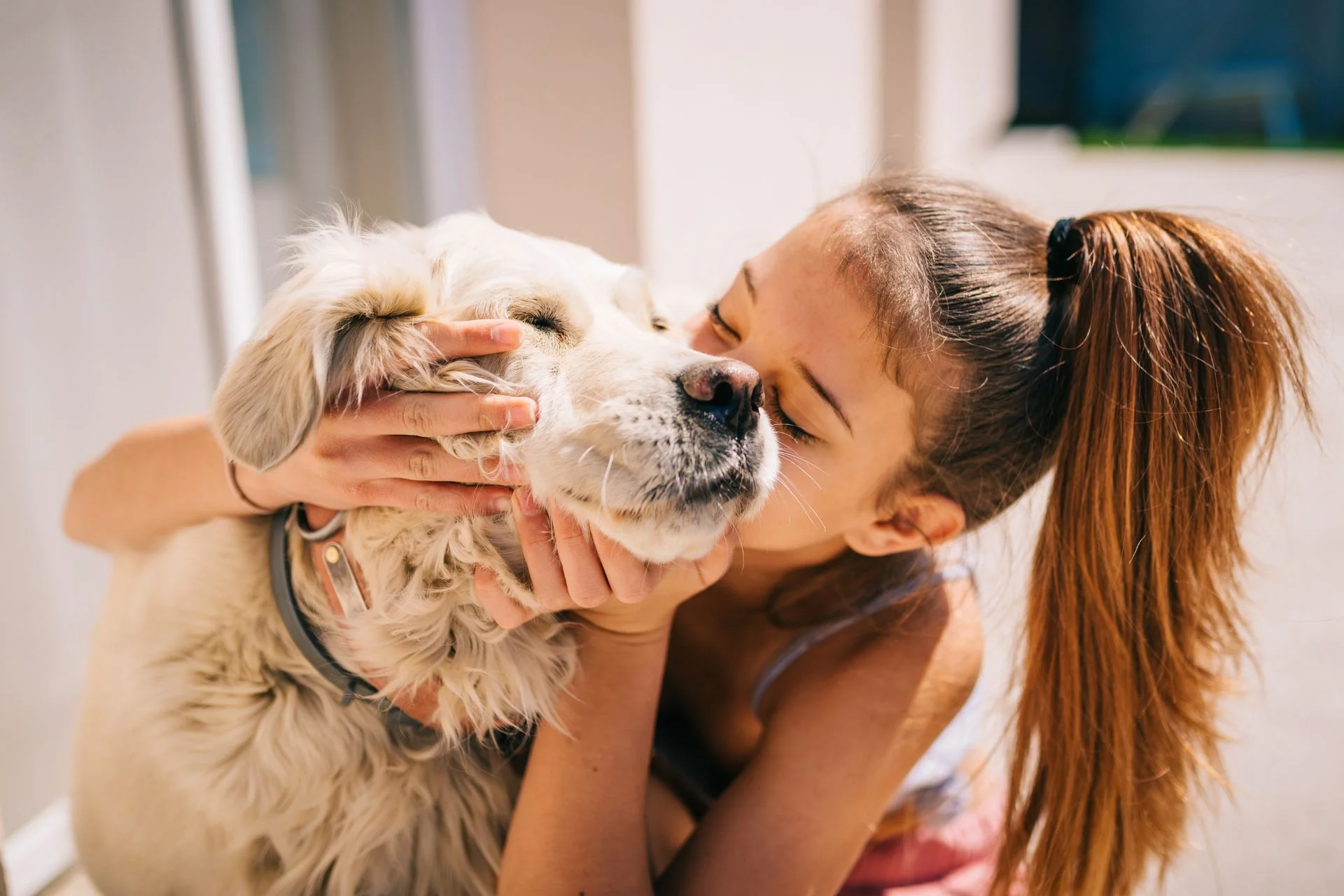
When humans and dogs engage in mutual eye contact, both species show elevated oxytocin levels, sometimes called the "love hormone", because of its role in parental bonding, trust formation, and social affiliation. A 2015 study published in Science found that this effect is amplified by length of gaze, paralleling the mechanism by which eye contact deepens human-to-human attachment. This is not a projection of human feelings onto animals; it is a bidirectional neurochemical response measurable in both species.
Beyond oxytocin, petting a cat or dog has been shown to reduce cortisol (the primary stress hormone) while increasing serotonin and dopamine: neurotransmitters associated with mood regulation and reward. These effects are measurable within minutes of interaction and persist beyond the interaction itself. The physiological pathway from pet contact to improved emotional state is not theoretical; it is documented at the neurochemical level.
Research in this area is still developing (the National Institutes of Health has an active program studying human-animal interaction), and not every study produces uniform results. Individual variation in attachment style, type of pet, and living situation all affect outcomes. But the overall pattern across the literature is consistent: pet ownership is associated with better emotional health outcomes across a range of measures.
Stress and anxiety reduction
The cortisol-lowering effect of pet interaction is one of the most replicated findings in human-animal interaction research. Even brief contact (petting a dog for ten minutes, sitting near a cat that has sought out your company) produces measurable reductions in physiological stress markers. This effect has been studied in high-stress populations including university students during exam periods, adults in cardiac rehabilitation, and hospital patients, with consistent results.
The mechanism appears to involve both the physical sensation of touch and the psychological effect of the animal's response: a pet that seeks closeness and responds positively to contact provides what researchers describe as a non-judgemental, unconditional presence. This quality is particularly valuable for people who experience social anxiety, where human interaction itself can be a source of stress rather than relief.
Combating loneliness and isolation
Loneliness is a specific health risk, not just an unpleasant feeling. Chronic loneliness has been associated with elevated inflammation markers, impaired sleep, and increased mortality risk comparable to smoking. Pets address loneliness through a consistent, reliable presence: an animal that is there when you come home, that maintains a relationship with you regardless of how the rest of your day went.
This is particularly significant for populations at elevated loneliness risk: older adults living alone, people who have recently moved to a new city, individuals recovering from bereavement or relationship breakdown. Studies examining older adult populations show that pet owners report lower loneliness scores and higher overall life satisfaction than non-owners in otherwise similar circumstances.
The social dimension of pet ownership extends this effect outward. Dogs in particular are social catalysts: walks generate encounters with other owners, conversations that would not otherwise happen, and repeated interactions that can develop into genuine friendships over time. The pet is often the stated topic of conversation but functions as a mechanism for human-to-human connection.
Sense of purpose and daily structure
A pet depends on you for food, exercise, health care, and companionship. This dependence creates daily structure (a feeding time and a walking schedule) that has significant psychological value. Structure reduces the psychological cost of unscheduled time, which for people managing depression or anxiety can be considerable. Having a reason to get up and move at a specific time each day, and an entity that visibly depends on you to do so, is a genuine mechanism through which pets support mental health.
The sense of being needed is related but distinct from structure. Animals make their needs clear and respond visibly when those needs are met. The feedback loop (your pet is hungry, you feed them, they are satisfied) is immediate and concrete in a way that many adult responsibilities are not. This immediacy has value for people who struggle with motivation or who benefit from clear, achievable tasks.
Social connection through dog walking and pet ownership
Dog ownership in particular creates incidental social infrastructure that most city dwellers otherwise lack. Regular walkers in the same neighborhood develop recognition relationships with other dog owners: shared greetings, conversations about the animals, awareness of each other's routines. These thin-tie social connections matter for community belonging and day-to-day emotional texture in ways that are documented in social science research, even if they rarely develop into close friendships.
Pet ownership also provides entry points into communities (dog parks, breed-specific groups, online communities, training classes) that can develop into richer social connections. For people who find it difficult to initiate social contact, a pet provides a socially acceptable reason to engage that removes some of the awkwardness of cold interaction.
Pets and children's emotional development
Growing up with pets is associated with higher empathy, better social competence, and increased self-esteem in children. The caretaking relationship (learning to read an animal's signals, responding to its needs, and managing the responsibility of feeding and care) develops capacities for attention, patience, and responsiveness that transfer to human relationships.
Children who grow up with pets also have greater exposure to illness, death, and loss, which are significant developmental experiences. The death of a beloved pet is often a child's first encounter with bereavement, and research suggests that having been through that experience with parental support produces more resilient emotional responses to loss in adulthood.
The emotional cost of pet ownership, and the anxiety of leaving a pet behind
The same depth of bond that produces these benefits also produces costs that are worth naming honestly. The anxiety that many pet owners feel when they have to travel, and particularly when they have to leave their pet in someone else's care, is the direct expression of the attachment that makes pet ownership emotionally valuable. A person who didn't care deeply about their animal wouldn't worry about leaving it. The worry is a feature of the relationship, not a problem with the person.
This anxiety is real enough that it affects travel decisions for a significant proportion of pet owners. Research on pet-related travel behavior consistently finds that confidence in care arrangements is the primary variable that determines whether owners travel with comfort or whether the trip is shadowed by anxiety about the animal at home.
This is the practical problem that trust-based pet sitting addresses. The emotional benefit of pet ownership is best sustained when the owner can be away with genuine confidence rather than suppressed worry. Finding a pet sitter whose approach and environment are visible before the first booking (not just rated stars by strangers) is how that confidence is built. On Petme, sitter profiles include an ongoing social feed that shows how a sitter actually lives and cares for animals in their daily life. For the pet owner whose emotional investment in their animal is significant, that visibility makes a concrete difference to the quality of their time away.
Frequently asked questions
1. How do pets improve mental health?
Pet interaction lowers cortisol (the stress hormone) and increases serotonin, dopamine, and oxytocin: neurotransmitters and hormones associated with mood, reward, and social bonding. Beyond the neurochemistry, pets provide a consistent, non-judgemental presence, daily structure through caretaking routines, a sense of purpose, and for dog owners in particular, increased social interaction. The combination of physiological and psychological effects is documented across multiple research contexts and populations.
2. Can pets help with depression and anxiety?
The evidence supports a beneficial effect, though it varies by individual and context. Pet interaction reliably reduces physiological stress markers in controlled conditions. For people managing depression, the structure and sense of purpose that come from caretaking are particularly relevant. For anxiety, the non-judgemental quality of pet companionship matters. Emotional support animals (ESAs) are a formal recognition of this role and require documentation from a mental health professional, but the underlying benefits do not depend on official status.
3. What is the oxytocin effect in pet ownership?
Mutual gazing between owners and dogs (and to a lesser extent cats) triggers oxytocin release in both the human and the animal. Oxytocin is the neurochemical associated with parent-infant bonding, social trust, and attachment. The same system that deepens human relationships also functions in the human-animal bond. This is why the attachment to a pet can feel as deep as an attachment to a close family member: it is mediated by the same biochemical pathway.
4. Do pets help with loneliness?
Yes, consistently in the research literature. Pets provide a present, responsive companionship that addresses the immediate experience of loneliness: they are there, they respond to you, they make your presence in a space feel less empty. They also increase social interaction through walks, parks, and pet-owner communities, which addresses the social dimension of loneliness. The effects are most pronounced in older adults living alone and in people who have recently experienced social disruption: bereavement, relocation, relationship breakdown.
5. Are the emotional benefits of pet ownership the same for all pets?
Dogs and cats are the most studied, and their benefits are the most documented. The cortisol-lowering effect has been shown for interaction with rabbits and even fish tanks in some studies. The social connection mechanism is primarily associated with dogs, who are taken into public spaces. The daily structure effect applies to any animal that requires regular care. The depth of emotional bond varies by species and individual animal, but some degree of benefit has been documented across a range of pet types.
6. What happens emotionally when you have to leave your pet?
Separation anxiety from a deeply loved pet is documented in the research literature and is the direct expression of the attachment bond. Owners worry about whether their animal is safe, whether their needs are being met, and whether their absence is causing distress to the animal. This anxiety has measurable effects on travel enjoyment and willingness to travel at all. The solution is not to invest less emotionally in the animal (that would undermine the benefits described in this article) but to find care arrangements that provide genuine confidence through real visibility into who is looking after your pet and how. 🐾
The emotional benefits of pet ownership are not incidental or imagined. They are measurable, consistent across research populations, and significant enough that the human-animal bond has become a serious area of scientific inquiry. The depth of that bond is also why leaving a pet behind creates real emotional cost. Both sides of that coin deserve to be taken seriously, and the solution to the second is the same thing that makes the first possible: a genuine relationship of trust.