Cat toys are one of the more wasteful categories in pet ownership. A plastic ball loses its novelty within days, ends up under the sofa, and eventually in landfill. The materials in most conventional cat toys (non-recyclable plastics, synthetic fibers, chemical dyes) are unnecessary, given that cats are just as engaged by natural alternatives that happen to be more durable and less harmful.
This isn't an argument for depriving your cat of play, the opposite. Cats need regular, varied mental and physical stimulation, and the best enrichment options are often the most sustainable ones. Here's what makes a toy genuinely eco-friendly, what's worth buying, and what's easy and free to make at home.
Why conventional cat toys are a problem
Most conventional cat toys are made from virgin plastic, synthetic polyester fill, and chemical-based dyes. They are produced cheaply, accepted briefly, and discarded. The plastic casing of a cheap crinkle ball that entertained your cat for two days will persist in landfill for centuries. Some toys also present direct safety concerns: loose synthetic fibers can be ingested and accumulate in the gut, and low-quality plastic can contain plasticisers or dyes that shouldn't be near an animal that licks everything.
The market has a real gap between cheap, disposable conventional toys and premium products that are both genuinely engaging and made from responsible materials. The good news is that the DIY options in this category are genuinely competitive with anything you can buy, because what cats respond to most is texture, movement, and smell, not brand names or complexity.
Materials that make a toy eco-friendly
Organic cotton is the most widely used material in quality eco-friendly cat toys. Grown without synthetic pesticides or fertilizers, it is soft, washable, and biodegradable. Hemp is more durable than cotton, naturally resistant to mold, and grows with minimal water and no pesticides. Wool is excellent for toys where texture matters, dense enough to hold up to clawing, biodegradable, and naturally moisture-resistant.
Natural rubber, sourced from rubber trees rather than petroleum, makes for durable chew and batting toys. Untreated wood (particularly birch, pine, and balsa) is safe for cats to chew and scratch and will compost at end of life. Recycled materials, particularly recycled cotton and paper, are a practical option for lower-intensity toys where virgin materials aren't necessary.
What to avoid: synthetic polyester fill (common in stuffed toys: it shreds into microfibers), PVC and soft plastics (contain plasticisers), any toy with undisclosed dyes, and anything with small hard components that detach easily and present an ingestion risk.
Types of eco-friendly cat toys
Interactive wand and feather toys
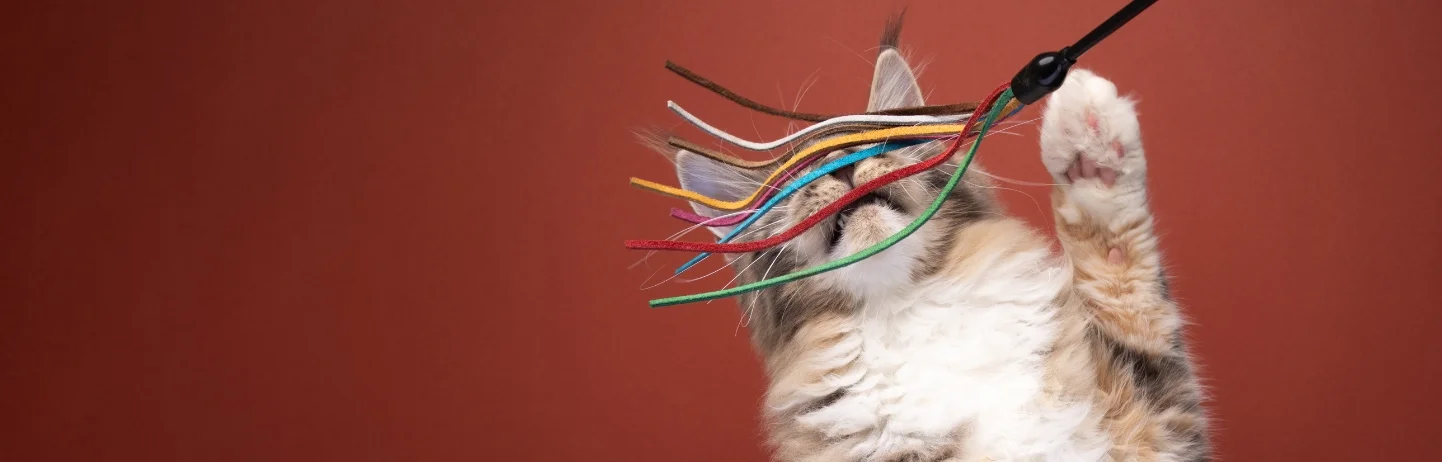
Wand toys are among the most consistently engaging play tools for cats, and the most eco-friendly versions use wooden handles, hemp cord or cotton string, and natural feathers rather than synthetic ones. The movement of a feather or cord on a wand closely mirrors prey movement, which activates the hunting drive in a way that static toys don't. These require active human involvement, which makes them the best tool for bonding through play and the most effective form of exercise for indoor cats.
Catnip toys
Organic catnip in toys made from hemp or organic cotton is one of the most reliably effective enrichment options. Catnip triggers a euphoric response in approximately 50 to 70 percent of cats (the response is genetic and absent in kittens under six months). The effect lasts 5 to 15 minutes and typically requires a rest period of 30 minutes to two hours before the cat will respond again. Grow your own catnip for an essentially zero-waste, unlimited supply: it grows easily in a pot on a windowsill.
Puzzle and foraging toys
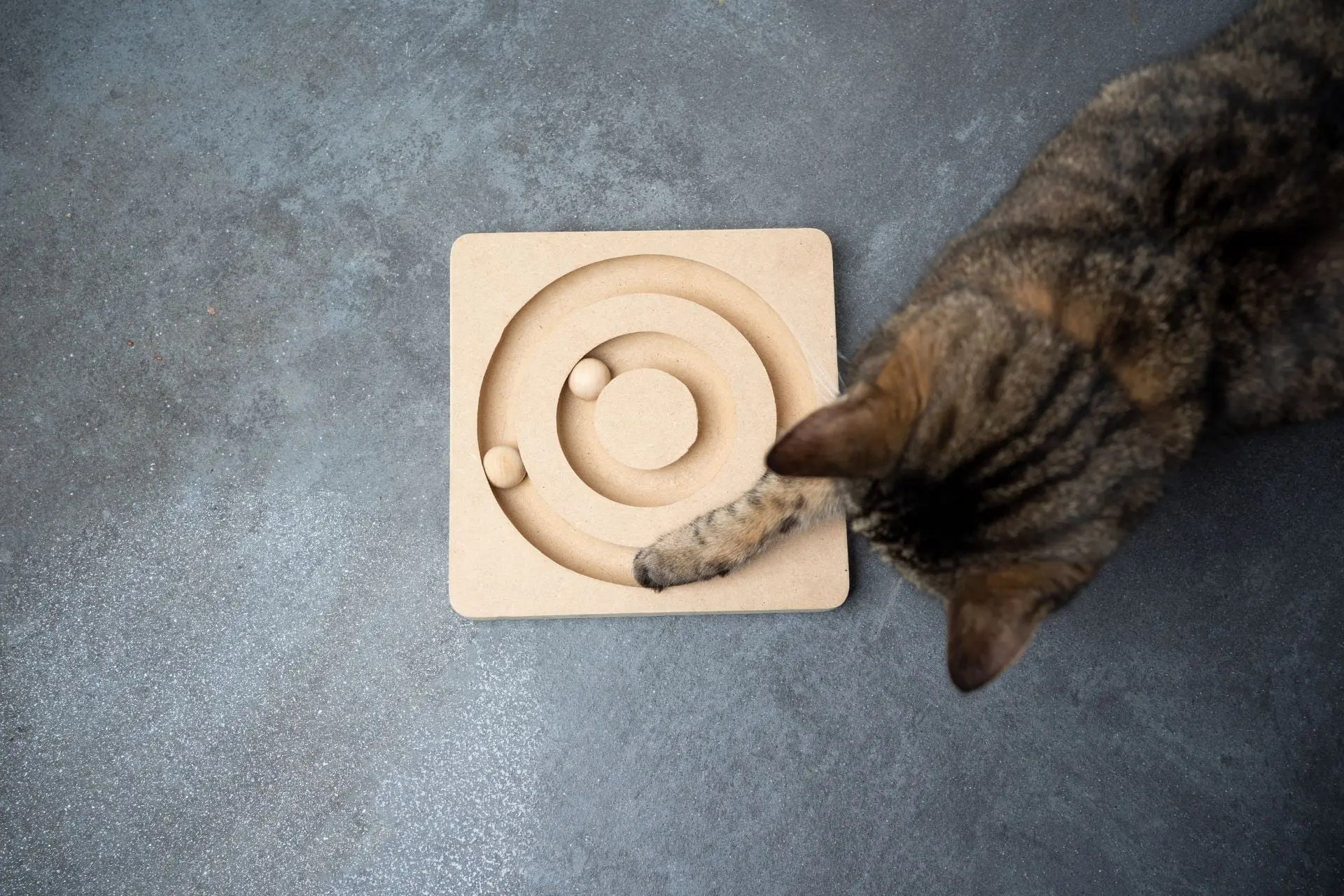
Puzzle feeders and treat-dispensing toys engage a cat's problem-solving instincts and slow down eating for cats who bolt food. Wool or hemp foraging mats (loose-loop fabric surfaces where food is hidden between fibers) can be made at home from a rubber mat and strips of fleece, cost almost nothing, and outlast most store-bought equivalents. Wooden puzzle boxes, particularly from small makers using offcuts, are durable and biodegradable.
Natural plant toys
Cat grass (wheatgrass, oat grass), valerian root, and silvervine are all natural alternatives to or complements for catnip. Silvervine produces a stronger response in some cats who don't react to catnip. Growing cat grass from seed in a small pot provides ongoing enrichment, supports digestion, and costs almost nothing. These are genuinely zero-waste enrichment options.
DIY options
A rolled-up wool sock tied at one end with catnip inside is as effective as most commercial catnip toys. A cardboard box with holes cut in it provides a den, a climbing challenge, and a scratching surface. Crumpled paper, brown paper rather than glossy, makes a batting toy that will be used and discarded without environmental guilt. Cardboard toilet paper tubes with a small treat inside and the ends folded over function as a puzzle feeder at zero cost.
What to look for when buying
Ingredient transparency is the first filter. A quality eco-friendly toy manufacturer will state what materials the toy is made from and confirm they are non-toxic. Certifications to look for include GOTS (Global Organic Textile Standard) for cotton and wool, FSC (Forest Stewardship Council) for wood, and OEKO-TEX for dye safety.
Durability matters for the environmental calculation. A toy that costs three times as much and lasts ten times as long is better for the environment and cheaper over time. Hemp and wool toys outlast cheap plastic; natural rubber lasts longer than synthetic foam. Among established brands, West Paw (recycled and recyclable materials), From the Field (organic catnip, hemp fabric), and Yeowww! (organic catnip, cotton twill) consistently produce well-regarded, genuinely natural toys.
Eco-friendly toys and cat sitting
Enrichment during a cat sitting stay makes a meaningful difference to how well a cat manages their owner's absence. A cat sitter who knows how to use a wand toy effectively, set up a foraging mat, or offer catnip as a stress relief tool is providing active care rather than just maintenance.
If you use a cat sitter or drop-in visit arrangement when you travel, it is worth including your cat's preferred toys in your written instructions, which toys they engage with, how to use the wand toy (cats respond to movement that mimics prey, not just waving the wand), and whether they react to catnip. Leave a selection of toys accessible for the sitter rather than assuming they will improvise. For a sitter covering a cat who needs stimulation and engagement to manage owner absence well (an Abyssinian, an Oriental Shorthair, a Bengal), the enrichment setup matters as much as feeding and litter. On Petme, cat sitter profiles show how they actually interact with cats in their care, which can help you identify a sitter who is genuinely engaged with the animals rather than one who covers the basics.
Frequently asked questions
1. How do I keep my cat entertained for hours?
Variety and rotation are more effective than a single "best" toy. Cats habituate quickly: a toy they ignore today may become interesting again in two weeks if it has been out of rotation. A forage mat at feeding time, a window perch with a bird feeder view, a cardboard tunnel or box, and a ten-minute wand toy session twice a day covers most of what indoor cats need. Catnip offers a reliable engagement spike for cats who respond to it. Growing cat grass adds sensory variety and foraging opportunity with minimal ongoing effort.
2. Are natural cat toys safer than synthetic ones?
Generally, yes. The main risks of conventional synthetic toys are ingested microfibers from polyester fill, chemical dyes, and plasticisers in soft PVC, all of which are absent from well-made natural alternatives. Natural materials are not automatically risk-free (wool can be ingested if the toy disintegrates; natural rubber should be monitored for wear), but the risk profile is lower and more manageable. Supervision during play is recommended for any toy, regardless of material.
3. Can I make eco-friendly cat toys at home?
Yes, and many of the best options are DIY. A wool sock with catnip is as effective as most commercial catnip toys. A cardboard box with cut-out holes provides a den, play surface, and scratching opportunity. A foraging mat from a rubber mat and fleece strips takes 30 minutes to make and costs under $5. Crumpled paper, cardboard tubes, and bags from natural materials (paper, cotton) are all immediately usable. Growing catnip or cat grass costs a few dollars in seeds and provides ongoing enrichment.
4. How long do eco-friendly cat toys last?
Hemp and wool toys last longer than cheap plastic alternatives. Hemp in particular is a durable natural fiber that handles repeated clawing and biting better than cotton or synthetic equivalents. Natural rubber toys last well under normal use but should be replaced when they show significant wear or tearing. Cardboard and paper DIY toys are intentionally short-use: treat them as consumables rather than durables and budget accordingly.
5. What makes a cat toy eco-friendly versus just "natural"?
A natural toy is made from non-synthetic materials. An eco-friendly toy additionally considers the production process, whether the materials were grown or sourced sustainably, whether dyes are non-toxic, whether the manufacturing process minimizes waste and environmental impact. The two terms overlap but aren't identical. A toy made from conventionally grown cotton (heavy pesticide use) is "natural" but not particularly eco-friendly. Look for organic certification on cotton and wool, and FSC certification on wood, to confirm sustainable sourcing beyond the material itself.
6. Are eco-friendly cat toys more expensive?
Some are, particularly certified organic and small-batch products. But the comparison should account for durability: a hemp toy that lasts a year is cheaper over time than three rounds of cheap plastic replacements. DIY options cost almost nothing and are often the most engaging anyway. If budget is the constraint, making your own catnip toys, foraging mats, and cardboard enrichment structures covers most of a cat's play needs at minimal cost with essentially zero environmental footprint. 🐈
The most environmentally responsible cat toy is the one that keeps your cat genuinely engaged without being discarded quickly. That description fits handmade and natural options better than cheap conventional alternatives, which is the unusual case where the sustainable choice is also the more practical one.