Getting the feeding schedule right is one of the most practical things you can do for a guinea pig's long-term health. Guinea pigs have sensitive digestive systems that need consistent input - they are grazers by nature and their gut is not designed to go long periods without food. Once you understand what goes in and how often, maintaining a routine is straightforward.
What guinea pigs need to eat
Guinea pigs are strict herbivores. Their diet has four main components: hay, vegetables, pellets, and a small amount of fruit. Each plays a different role, and the proportions matter.Hay
Hay is the foundation. It should make up at least 70% of a guinea pig's daily intake and be available at all times. Timothy hay is the standard choice for adults. It provides the fiber that keeps the digestive tract moving and wears down continuously growing teeth. Removing hay from the enclosure, or letting the supply run low, is one of the most common mistakes new owners make.Vegetables
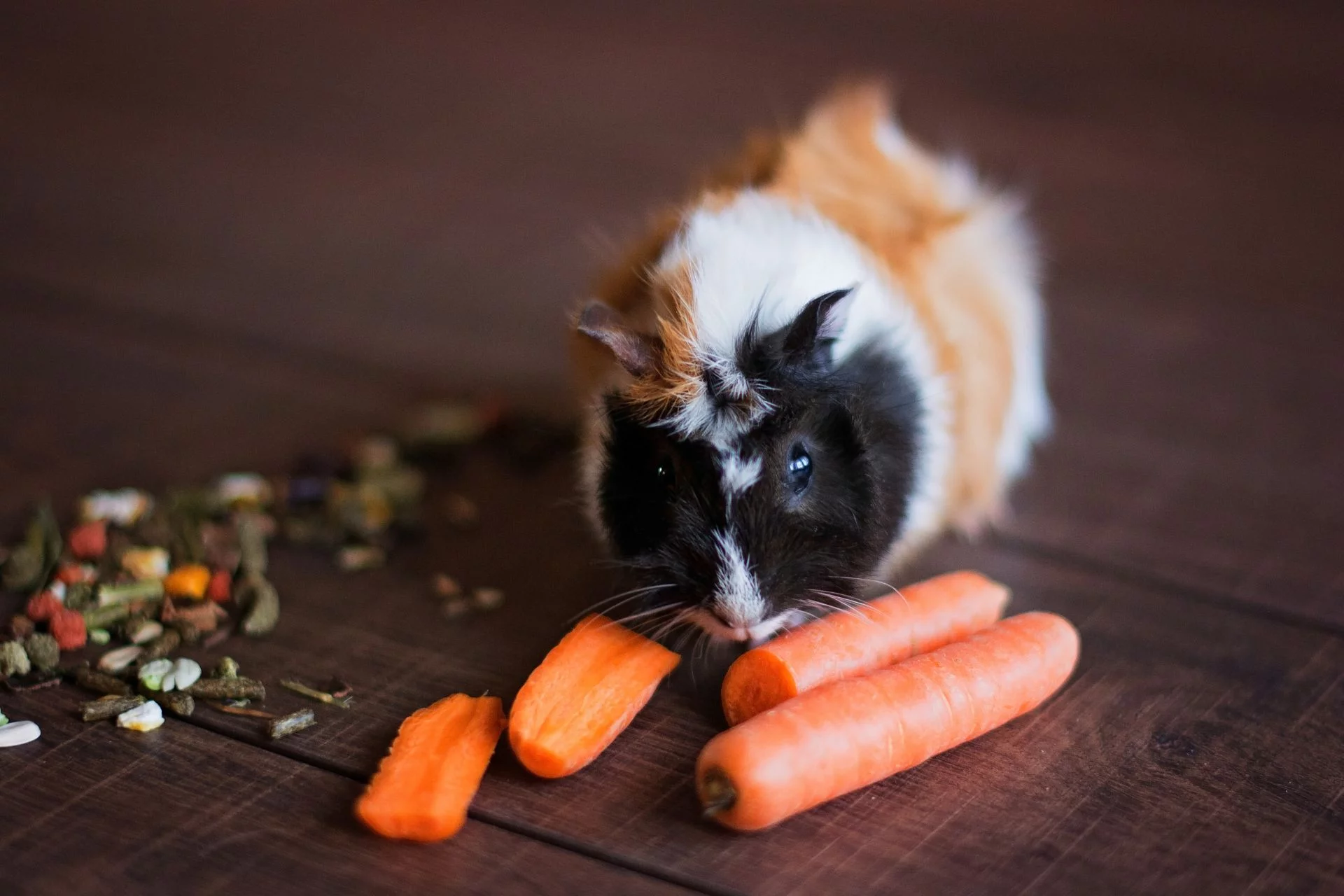
Fresh vegetables should make up roughly 15% to 20% of the daily diet. A handful of mixed greens per guinea pig, served once or twice a day, is the right scale. Bell peppers are particularly useful because they are high in vitamin C - a nutrient guinea pigs cannot produce on their own. Kale, romaine lettuce, cucumber, parsley, and carrots are all good options. Introduce any new vegetable slowly to avoid digestive upset.Pellets
Pellets provide a concentrated source of vitamins and minerals. The right portion is 1/8 to 1/4 cup per guinea pig per day. Look for pellets with at least 18% fiber, no added sugar, and a low calcium level. Avoid mixed pellet and seed blends - the seed components are high in fat and guinea pigs tend to pick out the tasty bits and leave the rest.Fruit
Fruit should be a small treat, not a daily staple. The high sugar content makes it suitable only one to two times per week, in small amounts. A slice of apple, two or three strawberries, or a few blueberries is an appropriate serving. Remove seeds and pits before serving. For a detailed breakdown of which fruits are safe, our guide on what fruits guinea pigs can eat covers each option.Water
Fresh water should be available at all times. A sipper bottle attached to the cage is preferable to a bowl, which can be knocked over or contaminated with bedding. Rinse and refill the bottle daily.Daily feeding schedule for adult guinea pigs
The standard twice-daily routine for one adult guinea pig:Morning:
- Check and top up the hay supply
- Add a portion of fresh vegetables (roughly half the daily amount)
- Refill the water bottle
- Remove any uneaten fresh food from the previous evening
Evening:
- Add another portion of fresh vegetables
- Add the daily pellet portion (1/8 to 1/4 cup)
- Check hay and top up if needed
Feeding schedule for young guinea pigs
Guinea pigs under six months old are still growing and have higher nutritional requirements. They can be fed three to four times a day. Alfalfa hay, which is higher in protein and calcium than Timothy, is appropriate during this growth stage. Switch to Timothy hay and adult pellets once they reach six months. Young guinea pigs can have vegetables from early on, but introduce them one at a time and watch for loose stools, which can indicate that a particular vegetable is not agreeing with them.Signs the diet needs adjusting
Watch for weight loss, reluctance to eat, diarrhea or unusually wet droppings, visible dental problems (drooling, difficulty chewing), or lethargy. Any of these alongside a recent diet change is worth a vet visit. Guinea pigs are good at hiding illness, so changes in eating behavior are often the earliest signal that something is wrong.Sharing the feeding schedule with a pet sitter
If you are away for even one night, your guinea pig's feeding routine matters. A pet sitter or house sitter covering drop-in visits needs to know exactly what to do - guinea pigs cannot safely skip meals the way some other pets can. Before any trip, leave written instructions that include:- Morning and evening routines listed step by step
- Where each food is kept and how much pellet to measure out
- Which vegetables are in the fridge and which ones to use first
- That hay must always be available - it is not portioned or removed overnight
- How to remove uneaten fresh food before it spoils in the cage
- A vet contact number in case anything looks wrong
Frequently asked questions
1. How often should guinea pigs be fed?
Adult guinea pigs should be fed fresh vegetables twice a day and pellets once a day, usually in the evening. Hay and water should be available at all times - they are not part of a timed feeding schedule. Baby guinea pigs under six months can be fed more frequently, three to four times a day, to support their growth. Skipping a day of hay access is more harmful than skipping a day of pellets.
2. How much food does a guinea pig need per day?
The standard daily intake for one adult guinea pig is: unlimited hay, 1/8 to 1/4 cup of pellets, a handful of mixed vegetables (roughly one cup total across two feeds), and fruit no more than twice a week in small amounts. Water should always be fresh and accessible. Adjust pellet quantity if your guinea pig is gaining or losing weight.
3. What vegetables can guinea pigs eat every day?
Bell peppers (particularly red and yellow, which are high in vitamin C), romaine lettuce, cucumber, and leafy greens like kale and parsley are all suitable for daily feeding. Avoid iceberg lettuce (low nutritional value) and go easy on spinach (high in oxalates). Introduce any new vegetable in small amounts first to check for digestive reactions.
4. Can guinea pigs eat lettuce?
Yes, with one exception. Romaine, green leaf, and butterhead varieties are all fine and can be given daily as part of a mixed vegetable portion. Iceberg lettuce has very low nutritional value and its high water content can cause loose stools in larger amounts. When feeding lettuce, romaine is the better choice for everyday use.
5. How much fruit should I feed my guinea pig?
A small amount, no more than one to two times a week. A slice of apple (no seeds), two or three strawberries, or a few blueberries is an appropriate portion. Fruit is high in sugar, and daily feeding can contribute to obesity and digestive problems. Remove seeds and pits from any fruit before serving and remove uneaten pieces from the enclosure after a couple of hours.
6. What should I leave for a pet sitter looking after my guinea pig? 🐾
Leave the morning and evening routine written down step by step. Include the pellet amount, which vegetables to use and how much, confirmation that hay is always available (not rationed), and the location of all food. Also note anything the guinea pig dislikes or reacts badly to, and leave a vet contact in case anything looks wrong. A pet sitter looking after a guinea pig for the first time will rely on those written instructions more than you might expect - clear guidance is the single most useful thing you can provide.
Guinea pigs are creatures of routine. Consistent feeding times, a reliable hay supply, and a steady mix of vegetables give them the structure their digestive systems depend on.