TL;DR: Homemade dog food gives you full control over ingredients and lets you tailor meals to your dog's age, size, and health needs. Aim for a ratio of 40% protein, 50% vegetables, and 10% grain. Always consult a vet before switching, add supplements to fill nutritional gaps, and cook rather than serve raw to reduce bacterial risk. Cooked meals last up to five days refrigerated or three months frozen.
Making your dog's food from scratch sounds like an upgrade, and in many ways it is. You choose the ingredients, skip the fillers, and know exactly what is going in the bowl. But homemade food done poorly can leave your dog with nutritional deficiencies that take months to show up. Done right, it is one of the most useful things you can do for a dog with allergies, digestive issues, or a particularly picky appetite.
Why homemade dog food?
Tailoring nutrition to your dog's specific needs
Commercial dog food is designed for the average dog. If your dog is not average - older, overweight, managing a health condition, or sensitive to certain ingredients - a tailored homemade diet can fill the gap. You can adjust protein levels for a working breed, reduce fat for a dog prone to pancreatitis, or eliminate a specific allergen that commercial food manufacturers often can't guarantee is absent from their products.
For dogs with food allergies, homemade meals let you run a proper elimination diet: one protein, one carbohydrate, nothing else. That level of control is not possible with kibble.
Avoiding fillers and artificial additives
Many commercial foods use fillers like corn or soy and add artificial preservatives to extend shelf life. With homemade food, you choose whole ingredients. The trade-off is time and planning, but the result is a bowl with identifiable contents rather than a list of by-products.
What vets say
Vets generally support homemade diets when they are nutritionally balanced and vet-supervised. The two most common concerns are imbalance (too much of one nutrient, not enough of another) and missing supplements. Dogs eating only home-cooked food often lack enough calcium, vitamin D, and omega-3s unless these are added deliberately. A vet or board-certified animal nutritionist can help you build a recipe that is complete.
Raw food diets generate strong opinions. Many vets recommend cooking, primarily because raw meat can carry bacteria like Salmonella that risk the health of both the dog and the household. Cooking eliminates that risk without significantly reducing nutritional value.
What to include in homemade dog food
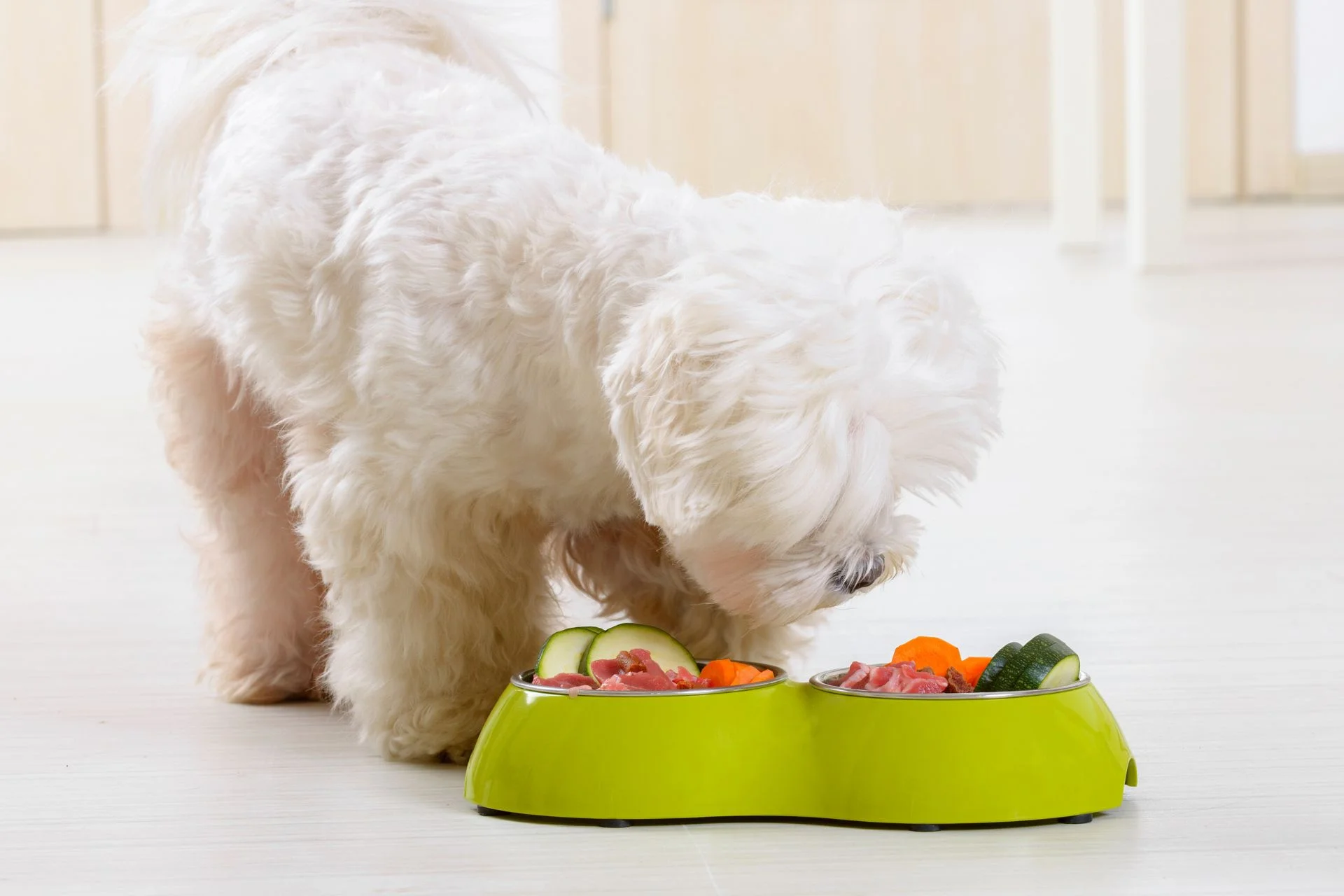
The general ratio for a complete homemade diet is approximately 40% protein, 50% vegetables, and 10% grains. This varies based on your dog's life stage and health, so treat it as a starting point rather than a fixed rule.
Protein options: lean chicken, turkey, beef, lamb, or fish. These should be cooked without seasoning. Remove all bones before serving.
Vegetables: leafy greens (spinach, kale in small amounts), carrots, sweet potatoes, pumpkin, and green beans are all good options. For a full list of what dogs can and cannot eat, see our guide to vegetables to avoid for dogs and our guide to fruits for dogs.
Grains: brown rice, oats, and quinoa provide fiber and sustained energy. Dogs on a raw or grain-free diet sometimes skip this component, but for most dogs a moderate amount of whole grain supports healthy digestion.
Foods to avoid in any homemade dog food: onions, garlic, chocolate, grapes, raisins, macadamia nuts, xylitol, and raw yeast dough. These are toxic regardless of how they are prepared.
How to prepare homemade dog food
Cook proteins thoroughly, without oil, salt, or spices. Steam or boil vegetables to soften them and improve digestibility. Mix ingredients together, let them cool fully before storing, and portion into daily servings. Our free dog food calculator tells you the daily calories and grams to split into each serving.
Homemade food keeps in the refrigerator for up to five days. For longer storage, freeze individual portions in airtight containers and label them with the date. Frozen meals keep well for up to three months.
For three specific recipes - chicken and rice, beef and sweet potato, and fish with oatmeal - see our complete homemade dog food recipes guide.
Portion sizes and feeding amounts
The general guideline is 2-3% of the dog's body weight per day, split into two meals. A 25kg (55lb) dog would eat roughly 500-750g of food daily. Adjust based on your dog's energy level and whether their weight is stable, increasing, or decreasing. If switching from kibble, transition slowly over 7-10 days by mixing increasing amounts of the new food with decreasing amounts of the old.
For dogs that have recently been on the BARF diet, the transition to cooked homemade meals is usually smooth since they are already eating fresh food.
Leaving homemade food for a pet sitter
If you are going away and leaving your dog with a pet sitter, house sitter, or dog sitter, homemade food requires a clear handover. Pre-portion each meal into labeled containers showing the day and serving. Write out exact amounts, how to reheat (gentle warming in a pan or microwave with no added ingredients), and confirm the sitter knows which foods are off-limits if they want to offer any extras.
If your dog is on a therapeutic or allergy-management diet, make this explicit. A pet sitter who does not realize that garlic is toxic, or who thinks giving the dog "a little taste" of their own dinner is harmless, can unknowingly undo weeks of dietary management. A written list of banned foods left somewhere visible is worth the extra two minutes it takes.
For dogs going into dog boarding, ask whether the facility will serve your prepared food or requires its own. Many boarding kennels accommodate home-cooked meals with advance notice and clear portion labeling.
FAQs
1. How do I know if my dog's homemade food is balanced?
The clearest way is to have a vet or board-certified veterinary nutritionist review the recipe before you commit to it long-term. Many vets can run a nutrient analysis or point you to a tool like BalanceIT, which calculates gaps and recommends supplements. Signs of an unbalanced diet develop slowly and include changes in coat quality, energy, and weight - which is why a vet check every few months is worthwhile for dogs eating only homemade food.
2. Can homemade dog food cause allergies?
Homemade food can actually help manage allergies rather than cause them, since you control every ingredient. However, any new food can trigger a reaction in a sensitive dog. Introduce new proteins and vegetables one at a time and watch for itching, digestive changes, or behavioral shifts after each addition. If your dog develops a new reaction, remove the most recently added ingredient and wait before reintroducing it.
3. Do dogs prefer homemade food over commercial food?
Most dogs find fresh, lightly cooked food more appealing than dry kibble because the moisture content and smell are more similar to what their instincts recognize as food. However, individual preference varies. Some dogs raised exclusively on kibble need a transition period before accepting different textures and smells. Mixing a small amount of homemade food with kibble is often the most effective way to introduce it gradually.
4. How do I transition my dog from kibble to homemade food?
Transition over 7-10 days. Start with 25% homemade and 75% kibble for the first two days, then 50/50 for the next two days, then 75% homemade, then full homemade by day nine or ten. A slower transition reduces the likelihood of digestive upset. Watch for loose stools or vomiting, which are signs the transition is happening too quickly. Puppies and dogs with sensitive stomachs may need a longer transition window.
5. Can I use homemade food as a topper for kibble?
Yes, and this is a popular compromise for owners who want to improve diet quality without switching entirely. A few tablespoons of cooked chicken, sweet potato, or plain vegetables added to a bowl of quality kibble increases moisture, palatability, and nutrient variety. Just account for the calories in the topper by reducing the kibble portion slightly, particularly for dogs prone to weight gain.
6. Is homemade dog food cheaper than commercial food?
It depends heavily on the ingredients you use and where you shop. High-quality commercial food can cost as much as well-sourced homemade meals. Cooking in bulk and freezing portions brings the cost down significantly. The potential long-term benefit is fewer diet-related vet visits, particularly for dogs with chronic digestive issues or allergies who are currently cycling through prescription commercial foods at premium prices.