TL;DR: Some vegetables are safe and nutritious for dogs - carrots, green beans, peas, and cucumber are good choices. Others are toxic and must never be offered: onions, garlic, mushrooms, and rhubarb can all cause serious harm or death. A third group - broccoli, cabbage, kale, and sweet potato - is fine occasionally but causes digestive problems in larger amounts. Vegetables should make up no more than 10% of a dog's daily diet, always served plain and prepared correctly.
Dogs are primarily carnivores, but most can safely eat certain vegetables as a small part of their diet. The challenge is that the line between safe and dangerous is not always obvious. A vegetable harmless to humans can cause organ failure in a dog, and some of the most toxic ones are common kitchen staples that appear in stocks, seasonings, and cooked meals.
How to feed dogs vegetables safely
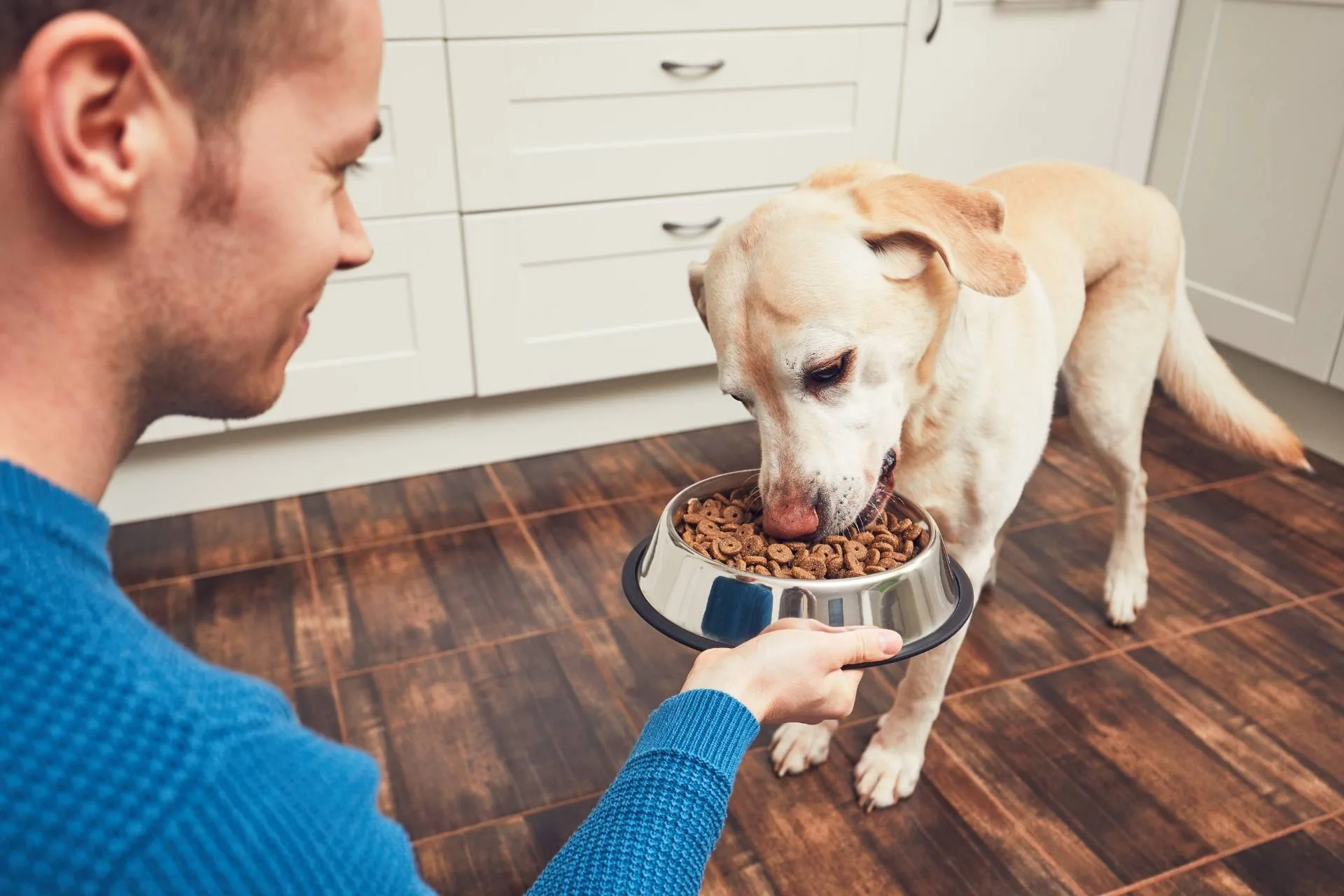
Dogs do not need vegetables as part of a balanced diet - their primary nutritional needs come from protein and fat. Vegetables work best as occasional supplements or low-calorie treats, making up 10% or less of daily calorie intake.
A few basic rules apply regardless of which vegetable you are serving:
- Wash all vegetables thoroughly before serving. This removes pesticide residue and surface bacteria.
- Cut vegetables into small pieces or thin slices. Whole carrots or large cucumber chunks can be a choking hazard, especially for smaller dogs.
- Cook vegetables before serving where possible. Raw is fine for some (carrots, cucumber), but cooking softens tough fibers and improves digestibility. Never add salt, butter, sugar, oils, or seasonings.
- Introduce new vegetables one at a time and in small amounts. Watch for vomiting, diarrhea, gas, or changes in bowel habits over the following 24 to 48 hours.
If your dog has any existing health conditions - kidney disease, diabetes, or thyroid problems - check with your vet before adding vegetables to their diet. More detail on building a balanced homemade diet is in the homemade dog food guide.
Safe vegetables for dogs
The following vegetables are well-tolerated by most dogs and offer genuine nutritional value when served appropriately.
Carrots
Carrots are one of the best vegetable options for dogs. They are high in vitamin A, which supports vision, skin, and immune function, and also provide vitamin K, potassium, and manganese. Their fiber content supports regular bowel movements. Raw carrots have a mild teeth-cleaning effect as well. Serve fresh, cooked, or frozen - cut into pieces appropriate for your dog's size. Dog walkers often use small carrot pieces as training rewards because they are low-calorie and most dogs enjoy them.
Green beans
Green beans are low in calories and nutrient-dense. They provide vitamin C, vitamin K, magnesium, iron, and calcium. Their fiber content helps dogs feel full without adding significant calories, which makes them useful for dogs on a weight management diet. Serve fresh, cooked, or frozen. If using canned green beans, check the label - only use varieties with no added salt.
Peas
Peas offer a reasonable amount of plant-based protein alongside vitamins A, C, K, and B complex. They are high in antioxidants and fiber. Fresh or frozen peas are fine; avoid canned peas, which often contain added salt or preservatives. Peas are also a common ingredient in commercial dog foods, so most dogs tolerate them well.
Cucumber
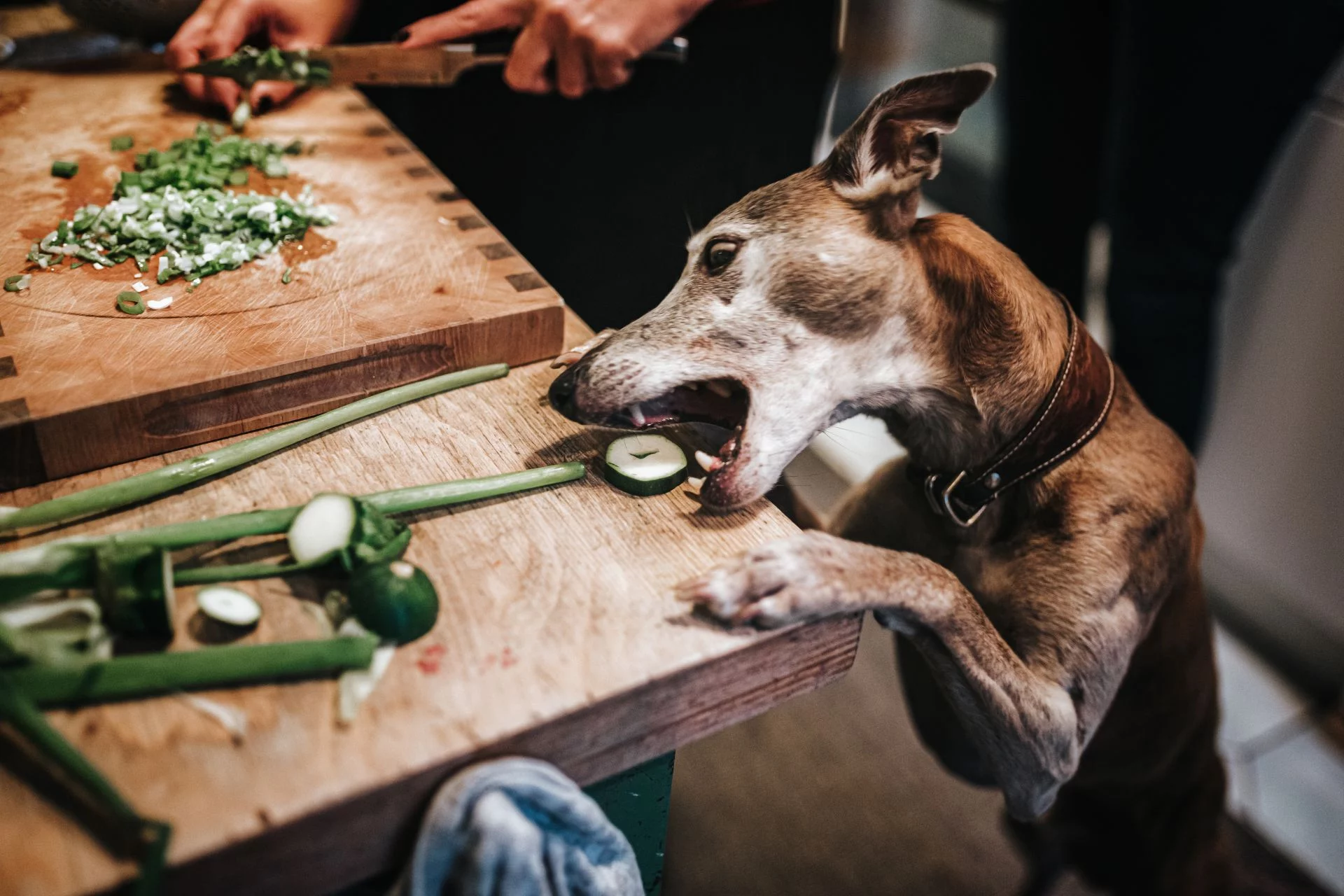
Cucumber is mostly water, which makes it a low-calorie, hydrating option - useful on warm days or for dogs that do not drink as much as they should. It provides small amounts of vitamin C, vitamin K, potassium, and magnesium. Serve it raw, cut into slices or chunks appropriate for your dog's size.
Vegetables that are toxic for dogs
The following vegetables must never be fed to a dog under any circumstances.
Onions
Onions contain thiosulfate, a compound that damages red blood cells and causes hemolytic anemia - a condition in which the body destroys its own red blood cells. Symptoms include weakness, lethargy, pale gums, rapid breathing, vomiting, diarrhea, and in serious cases, collapse. Onions are toxic in all forms: raw, cooked, dried, and powdered. Even small amounts fed regularly can cause cumulative harm. Contact a vet immediately if your dog has eaten any amount of onion.
Garlic
Garlic belongs to the same allium family as onions and contains thiosulfate in a higher concentration, making it more potent per gram. The effects are the same - hemolytic anemia - and the same caution applies: no raw, cooked, dried, or powdered garlic in any quantity. Garlic powder and dried garlic are particularly dangerous because they are more concentrated than fresh. If your dog has eaten garlic, contact your vet immediately.
Mushrooms
Store-bought mushrooms sold for human consumption are not the main concern - the problem is that wild mushrooms are difficult to distinguish from toxic varieties, and some species cause severe organ damage. The safest approach is to avoid all mushrooms entirely. Wild mushroom poisoning can cause vomiting, diarrhea, abdominal pain, drooling, tremors, seizures, liver failure, kidney failure, and death. If your dog has eaten any mushroom you did not buy yourself, treat it as an emergency.
Rhubarb
Rhubarb contains oxalic acid, which causes kidney damage and interferes with calcium absorption. The leaves are especially concentrated and highly toxic, but the stems are also dangerous for dogs. Symptoms include vomiting, diarrhea, drooling, tremors, bloody urine, and kidney failure. Contact a vet immediately if your dog has eaten any part of a rhubarb plant.
Vegetables to feed sparingly
These vegetables are not toxic, but can cause digestive problems in larger amounts or should be limited for other reasons.
Broccoli
Broccoli is nutritious - high in fiber and vitamins A, C, E, and K - but it contains isothiocyanate, a compound found in all cruciferous vegetables that can cause stomach pain, gas, and diarrhea, particularly in larger quantities. In significant amounts it may also affect thyroid function. Serve it cooked, in small pieces, as an occasional treat.
Cabbage
Cabbage contains the same isothiocyanate compound as broccoli and tends to cause flatulence as well. Cook it thoroughly and serve plain, without any seasoning. Limit quantities and watch for digestive discomfort. Cabbage offers vitamin C, vitamin K, and some phytonutrients, but it is not a necessary part of a dog's diet.
Kale
Kale contains both isothiocyanate and oxalic acid. The oxalic acid can interfere with calcium absorption and in large amounts may stress the kidneys. For a dog with no underlying health issues, small occasional amounts of cooked kale are unlikely to cause problems, but it is not a food worth offering regularly given the potential downsides.
Sweet potato
Sweet potato is nutritious and most dogs enjoy it. It is high in vitamin A, vitamin C, fiber, and antioxidants. The limitation is its sugar and calorie content, which can contribute to weight gain if given frequently. Serve it cooked and plain, without added sugar or seasoning, and treat it as an occasional supplement.
What to tell your dog sitter about vegetables
When leaving your dog with a dog sitter, dog walker, or dog boarding facility, being specific about food matters. Many well-meaning sitters offer table scraps or leftover vegetables without realizing certain ones are toxic to dogs.
A brief written note covers the essentials: which vegetables your dog tolerates well, which ones should never be offered (particularly anything in the allium family - onions, garlic, leeks, chives, and shallots in any form), and whether your dog has any history of digestive sensitivity that makes introducing new foods risky during the stay.
If your sitter or boarding facility provides cooked food or supplemental meals, ask them to confirm the ingredients. Onion powder and garlic powder are common in stocks, gravies, and seasoning blends that can easily appear in a home-cooked dish. The dried and powdered forms are more concentrated than fresh, making them particularly dangerous in amounts that seem small.
Leave a written food instruction list with your vet's contact number and the nearest emergency vet clinic, so the sitter can act quickly if accidental ingestion happens.
FAQs
1. Can dogs eat onions?
No. Onions are toxic to dogs in all forms - raw, cooked, dried, and powdered. They contain thiosulfate, which damages red blood cells and causes hemolytic anemia. Symptoms include weakness, pale gums, rapid breathing, vomiting, and diarrhea. Even small amounts consumed regularly can cause cumulative harm. If your dog eats any amount of onion, contact your vet immediately rather than waiting to see if symptoms develop.
2. Can dogs eat cucumber?
Yes. Cucumber is one of the safest vegetables for dogs. It is low in calories, hydrating, and provides small amounts of vitamin C, vitamin K, and potassium. Serve it raw, cut into appropriately sized pieces. It works well as a summer treat or a low-calorie reward during training sessions with a dog walker or pet sitter.
3. Can dogs eat sweet potato?
Yes, in moderation. Sweet potato is nutritious - high in vitamin A, vitamin C, fiber, and antioxidants - and most dogs enjoy it. The limitation is its sugar and calorie content, which makes it unsuitable as a daily food. Serve it cooked and plain, without added sugar, salt, or seasoning. A few pieces as an occasional treat is appropriate; large regular servings are not.
4. Can dogs eat celery?
Yes. Celery is safe for dogs and provides vitamin A, vitamin K, potassium, and fiber. It has a mild teeth-cleaning effect similar to carrots. Celery is also a natural diuretic, so very large amounts may increase urination frequency. Chop it into small pieces before serving - the stringy texture can be a choking hazard for smaller dogs.
5. Can dogs eat quinoa?
Yes, in small amounts. Quinoa is not a vegetable - it is a seed - but it comes up frequently in this context. It is gluten-free and provides protein, fiber, and iron. Rinse it thoroughly before cooking to remove saponins, natural compounds that can irritate the digestive system. Serve it plain and cooked, and treat it as an occasional supplement rather than a regular meal component.
6. What should a dog sitter know about vegetables and toxic foods?
At minimum, a dog sitter should know that onions and garlic in any form - fresh, cooked, dried, or powdered - are toxic and must never be offered to a dog. The same applies to mushrooms and rhubarb. Beyond the immediate toxic list, the sitter should know which vegetables your dog has eaten before and tolerates, and which the dog has never tried. Introducing new foods during a sitting stay is unnecessary and risks digestive upset at an inconvenient time. Leave a written food instruction list that includes your vet's contact details and an emergency vet number so the sitter can act quickly if accidental ingestion occurs.