Making treats at home gives you complete control over what goes into them. Most commercial guinea pig treats contain hidden sugars, preservatives, or dried fruit in quantities that are not good for a small herbivore. A few simple homemade options are healthier, cheaper, and genuinely appreciated by guinea pigs.
What guinea pigs can safely eat as treats
Before you start, it helps to know which ingredients are safe. Guinea pigs are herbivores with sensitive digestive systems, and not everything that is nutritious for humans works for them.Safe fruits for treats
Apples (without seeds), strawberries, and blueberries are reliable choices. They are high in vitamin C, which guinea pigs cannot produce on their own, and most guinea pigs enjoy the taste. Keep portions small - a slice of apple or two berries is enough per serving. Fruit is high in sugar and should be a genuine treat, not a daily addition. For a full breakdown of what is and is not safe, our guide on what fruits guinea pigs can eat covers each option.Safe vegetables for treats
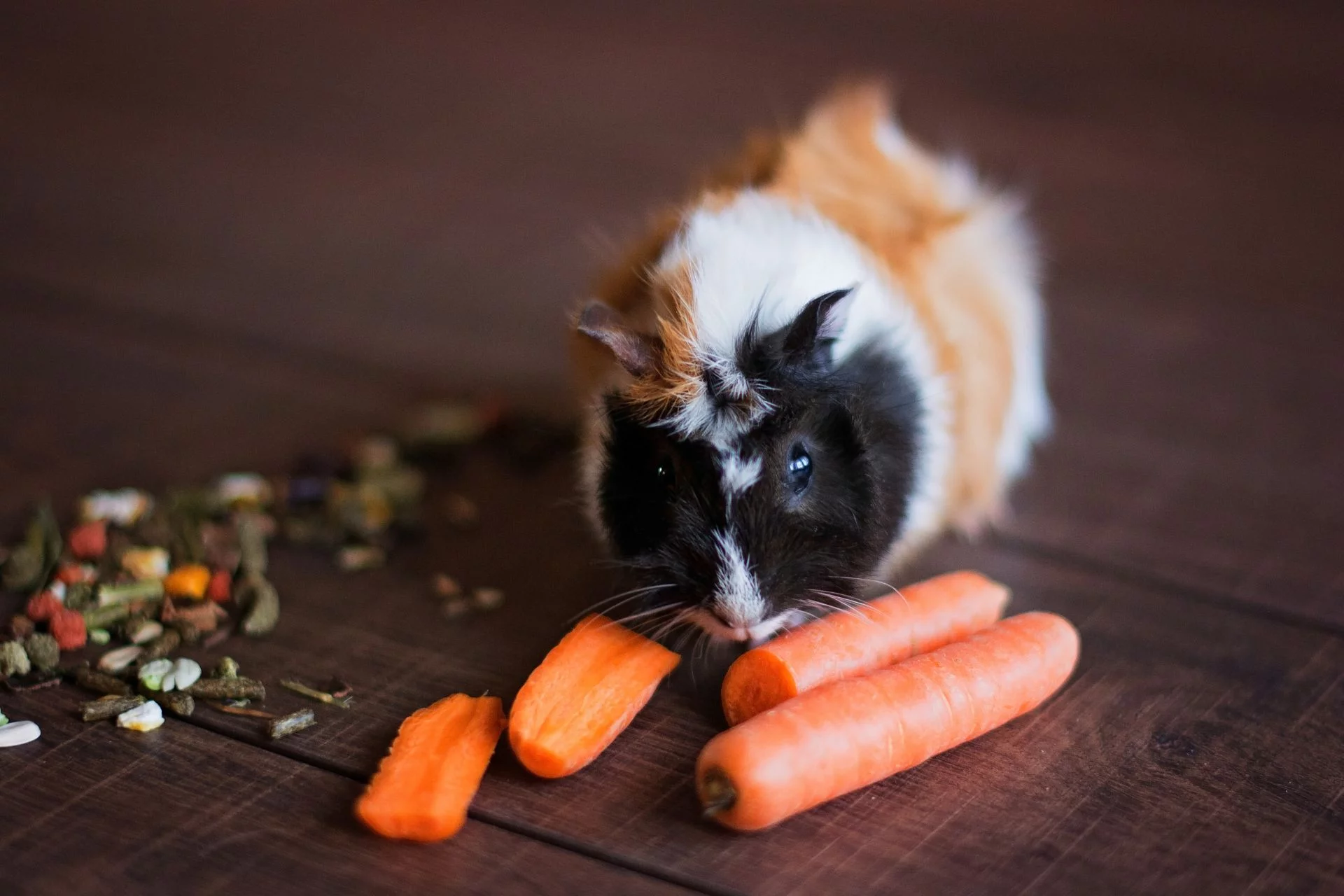
Carrots, bell peppers, cucumber, and romaine lettuce are all suitable. Because they are lower in sugar than fruit, these can be offered more frequently - daily if you wish, as part of the regular diet rather than as special treats. A complete list of safe options is in our guide to the best vegetables for guinea pigs.Hay-based treats
Hay should always be the foundation of a guinea pig's diet, so hay-based treats are the safest category to work with. Compressed hay cookies satisfy their instinct to chew and double as enrichment. Our article on the best hay for guinea pig food explains which types to choose.Foods to avoid in treats
No bread, dairy, sugar, processed cereals, or anything salty. These ingredients are hard for guinea pigs to digest and can cause serious health problems. Onions, garlic, and avocado are toxic. Any ingredient that would not appear naturally in a plant-based diet should stay out of homemade treats.Three easy homemade guinea pig treat recipes
Hay cookies
Simple, safe, and popular with most guinea pigs. The compressed texture encourages chewing, which supports dental health. Ingredients:- 2 cups of Timothy hay
- 1/2 cup of water
- 1 tablespoon of fruit puree (apple or carrot works well)
- Preheat your oven to 150°F (65°C).
- Mix the hay, water, and fruit puree in a bowl until combined.
- Shape into small cookie-sized portions and place on a parchment-lined baking sheet.
- Bake for about 30 minutes or until firm. Let cool completely before serving.
Veggie crisps
A crunchy treat that uses ingredients already in most kitchens. Ingredients:- 1 medium carrot
- 1 small sweet potato
- Thinly slice the carrot and sweet potato.
- Lay the slices flat on a baking sheet.
- Bake at 200°F (90°C) for about 2 hours or until crispy.
- Let cool before serving. Store leftovers in an airtight container for up to three days.
Oat and carrot bites
A simple option for a special occasion or a change from the usual treats. Ingredients:- 1/2 cup of plain oats (no added sugar or flavoring)
- 1/4 cup of finely grated carrot
- A small handful of unsweetened dried cranberries
- Mix the oats, carrot, and cranberries together in a bowl.
- Shape into small balls or flatten into discs.
- Bake at 150°F (65°C) for 20 to 25 minutes or until firm.
- Let cool before serving. Give one piece at a time.
Portion and frequency guidelines
Treats are not a substitute for a balanced diet - they sit alongside it in small amounts. Guinea pigs should be getting unlimited hay, a daily serving of mixed vegetables, and measured pellets. Treats on top of that should be given two to three times a week at most, and in small portions. A full schedule for balancing treats within the overall diet is in our guinea pig feeding schedule. For a complete overview of safe and unsafe foods, the guide to guinea pig food covers the full picture.Leaving treats for a pet sitter
If you have a pet sitter or house sitter covering your guinea pig while you travel, homemade treats can be a useful handover item. Bake a small batch before you leave and portion them into labeled containers, noting how often to offer one and on which days it is appropriate. This removes guesswork for the pet sitter and means your guinea pig's treat routine stays consistent. Include a note alongside the regular care instructions explaining that treats are supplemental - the sitter should not skip the hay, pellets, and vegetables in favor of offering treats alone. On Petme, you can attach detailed care notes to your booking so your pet sitter has the full picture before the first drop-in visit or house sitting stay.Frequently asked questions
1. Can guinea pigs eat bread or commercial cookies?
No. Bread contains yeast and gluten, both of which are hard for guinea pigs to digest. Commercial cookies typically contain sugar, salt, or artificial additives that can cause digestive problems. Stick to homemade treats made from hay, vegetables, or small amounts of fruit. If a commercial product lists hay and vegetables with no added sugar as the primary ingredients, it may be acceptable, but most products marketed as guinea pig treats do not meet that standard.
2. How often can I give my guinea pig treats?
Two to three times a week is the recommended maximum. Daily treats, even healthy homemade ones, shift the dietary balance away from the hay and vegetables that should dominate every day. Treats should feel like a genuine occasional addition, not a daily expectation. Hay, fresh vegetables, and measured pellets remain the core of every day regardless of whether a treat is offered.
3. What is the easiest treat to make for guinea pigs?
Hay cookies are the simplest option: Timothy hay, water, and a tablespoon of fruit puree, baked at a low temperature until firm. They require no specialist equipment, use ingredients already in a guinea pig owner's home, and can be made in bulk and stored for several days. They also function as enrichment, since the compressed texture encourages chewing and supports dental health.
4. Can guinea pigs have fruit every day?
No. Fruit is high in natural sugars, and daily feeding can cause digestive upset and contribute to weight gain over time. One to two fruit servings per week is the right amount. A small piece - a slice of apple, two strawberries, a few blueberries - is the appropriate serving size. Always remove seeds and pits from any fruit before offering it.
5. What chewable treats are best for guinea pigs?
Timothy hay-based treats are the safest and most beneficial option. The act of chewing compressed hay helps wear down continuously growing teeth, which is a genuine health need. Apple sticks (dried and untreated) are another well-accepted option. Avoid chew toys made from softwoods like pine or cedar, which can release harmful compounds.
6. Can I leave homemade treats for a pet sitter looking after my guinea pig? 🐾
Yes, and it is a good idea. Bake a small batch before you travel and portion them into a labeled container with clear instructions: how many to give, how often, and on which days. Pair the treats with a written feeding schedule so the pet sitter understands the full daily routine rather than relying on treats alone. A pet sitter who has been briefed on both the diet and the occasional treat schedule will maintain your guinea pig's routine far more consistently than one left to guess.
Making treats at home is straightforward. A simple batch of hay cookies or veggie crisps takes under thirty minutes and lasts several days. It is a practical way to add variety to a guinea pig's diet while keeping every ingredient clean and controlled.