Guinea pigs are strict herbivores with digestive systems built around continuous plant fiber intake. Getting the diet right is not complicated, but it does require understanding a few specifics - particularly around which foods are genuinely dangerous and how much of each category to offer. This guide covers everything.
What guinea pigs should eat
Hay
Hay is the most important part of a guinea pig's diet and should be available at all times. It provides the fiber that keeps the digestive tract moving and the tough texture that wears down continuously growing teeth. Without enough hay, teeth overgrow and cause serious pain and eating difficulty. Timothy hay is the standard choice for adult guinea pigs. Orchard grass and meadow hay are suitable alternatives or additions. Alfalfa hay is higher in calcium and protein and is appropriate only for guinea pigs under six months, pregnant females, and nursing mothers. Hay should make up at least 70% of what your guinea pig consumes daily. For more detail on types and quality, our guide to the best hay for guinea pig food covers the options.Fresh vegetables
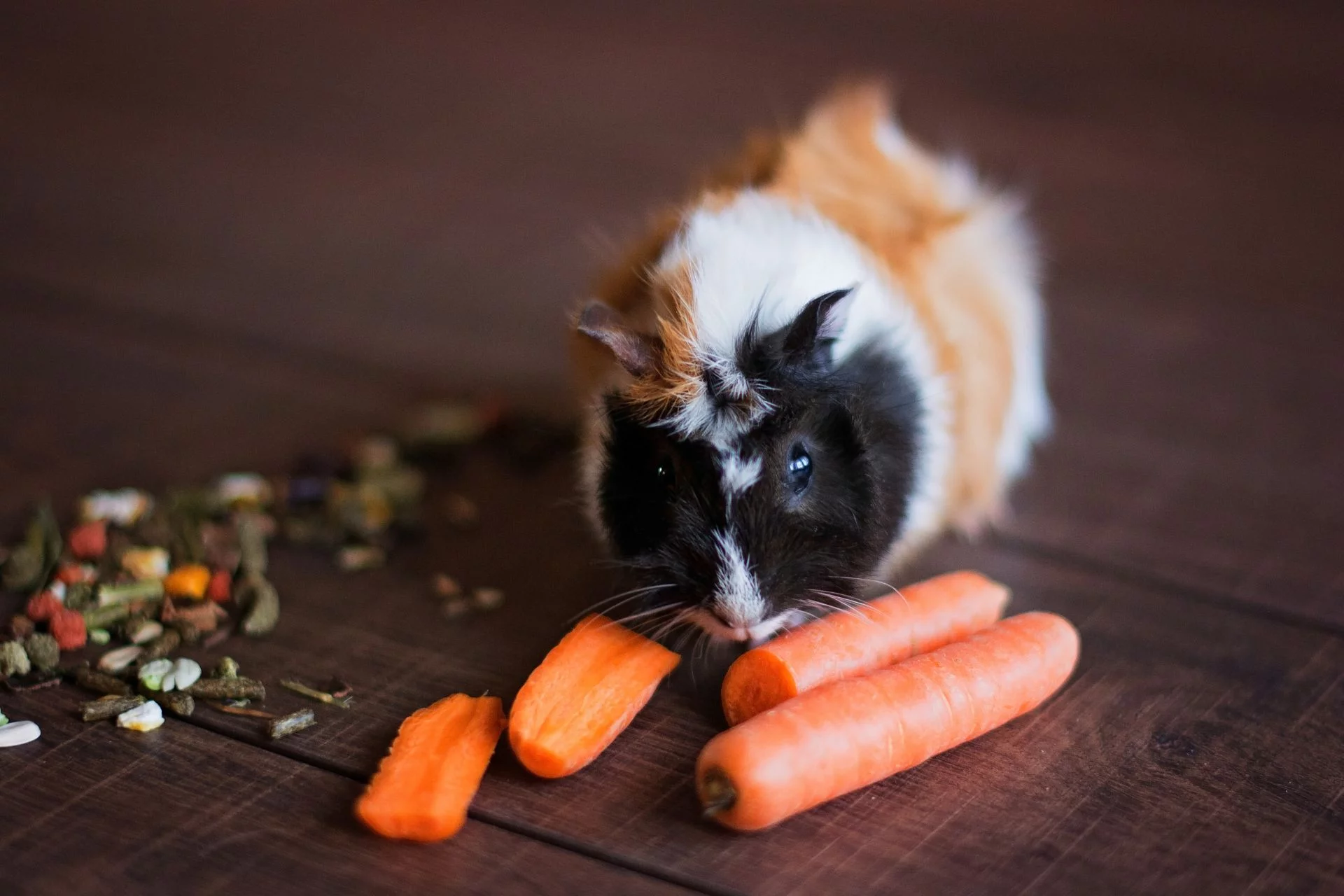
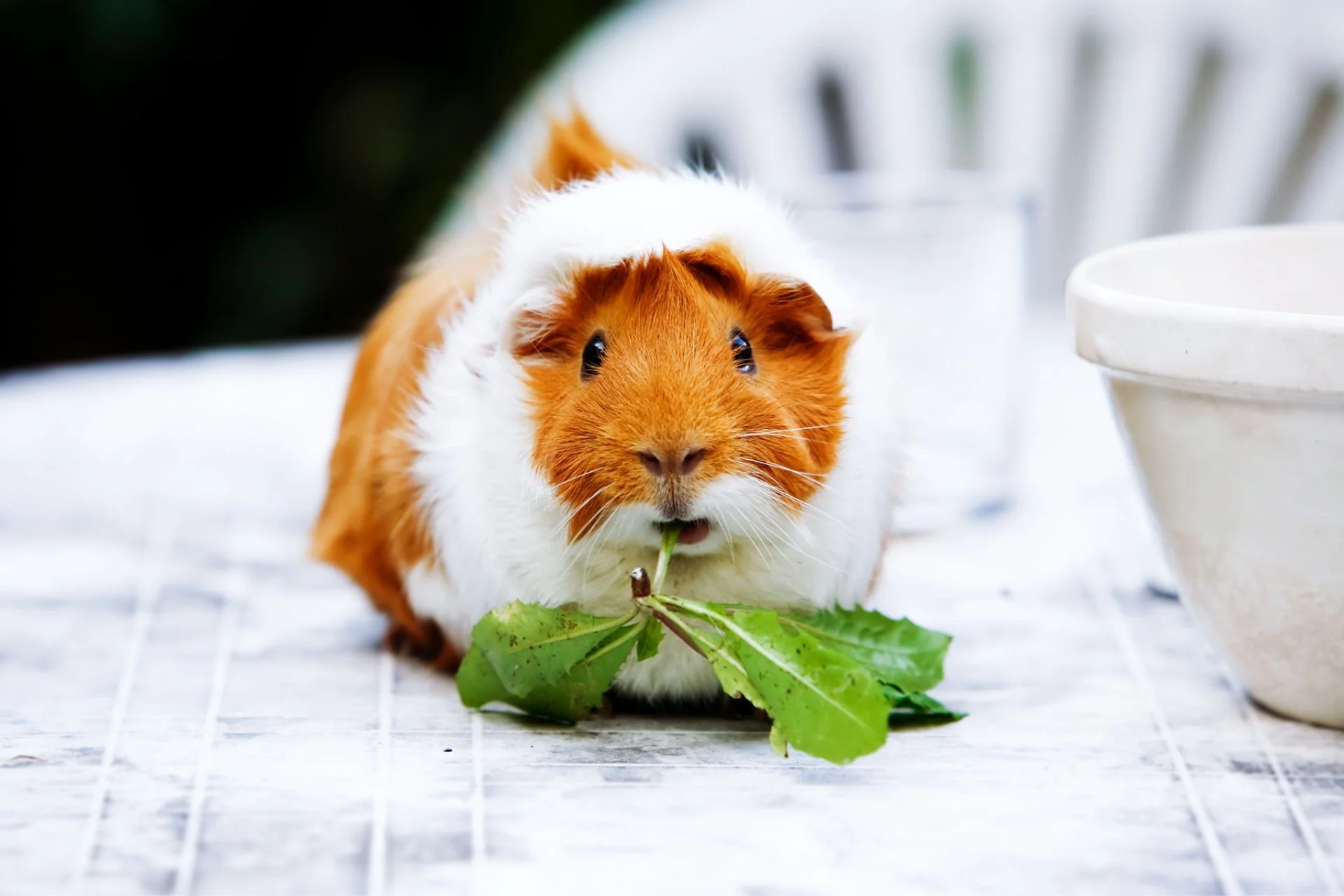
Vegetables should make up around 15% to 20% of the daily diet, fed once or twice a day. Good everyday choices include bell peppers, romaine and green leaf lettuce, cucumber, kale and leafy greens, parsley, and cilantro. Carrots are safe but higher in sugar, so offer them in smaller amounts. Vitamin C deserves special attention. Guinea pigs cannot produce their own and must get it through diet. Deficiency causes scurvy - a preventable condition that causes joint pain, lethargy, and sore gums. Bell peppers and leafy greens are reliable daily sources. A full list of safe vegetables is in our guide to the 18 best vegetables for guinea pigs.Pellets
Plain Timothy-based pellets provide a concentrated source of vitamins and minerals that hay and vegetables alone may not fully cover. The right daily portion is 1/8 to 1/4 cup per adult guinea pig. Choose pellets with at least 18% fiber and no added seeds or dried fruit. Pellets are a supplement, not a substitute for hay and vegetables. For a full breakdown of how much to feed and what to look for in a pellet brand, our article on how much pellets to feed guinea pigs covers the detail.Fruit
Fruit is a treat, not a staple. The high sugar content makes it suitable only one to two times a week in small portions. Safe options include apples (no seeds), strawberries, blueberries, melon, and kiwi. A slice of apple or a couple of berries is the appropriate serving size. Remove seeds and pits before serving. For a complete list with serving frequency, our guide to what fruits guinea pigs can eat covers each option.Water
Fresh, clean water should always be available. A sipper bottle attached to the cage is preferable to a bowl because it stays cleaner and cannot be knocked over. Rinse and refill daily.Foods guinea pigs must not eat
Onions and garlic
Both are toxic to guinea pigs. The sulphur compounds in onions and garlic damage red blood cells and can cause anemia. This includes spring onions, leeks, and chives. Any food that contains onion or garlic - including cooked dishes - is off limits.Avocado
Avocado contains persin, a compound toxic to most small animals including guinea pigs. It affects the heart and respiratory system. Even small amounts should be avoided entirely. The flesh, skin, and pit are all harmful.Rhubarb
The leaves and stalks of rhubarb are both toxic. Rhubarb contains oxalic acid in high concentrations, which is harmful to their kidneys. Never offer rhubarb in any form.Dairy products
Guinea pigs cannot digest lactose. Milk, cheese, yogurt, and any dairy-containing food will cause digestive upset. Guinea pigs are herbivores and do not need or process animal proteins of any kind.Processed foods
Bread, cereals, crackers, chocolate, candy, and any packaged human food are unsuitable. These are high in sugar, salt, fat, or contain preservatives and additives that a guinea pig's digestive system is not equipped to handle.Nuts and seeds
High in fat and not appropriate for guinea pigs. Almonds, walnuts, sunflower seeds, and similar items can cause digestive problems. Many commercial treat mixes marketed for guinea pigs contain seeds - check ingredient lists carefully.Iceberg lettuce
Not toxic but nutritionally empty and high in water content. It provides almost no fiber or vitamins and can cause diarrhea in larger amounts. Use romaine or green leaf lettuce instead.What to leave for a pet sitter
If a pet sitter, house sitter, or drop-in carer is looking after your guinea pig while you travel, a clear food guide makes a significant difference. Guinea pig dietary needs are specific enough that a general instruction to feed vegetables and hay is not sufficient. Leave a written list that covers:- Which hay type to use and that it should always be available
- Which vegetables to feed daily and the approximate amount
- The exact pellet portion (1/8 to 1/4 cup, once per day)
- Which fruits can be given occasionally and how much
- The foods on the avoid list, particularly the toxic ones
Frequently asked questions
1. What should guinea pigs eat every day?
Every day: unlimited hay (always available), one to two servings of mixed fresh vegetables totaling about one cup, and 1/8 to 1/4 cup of plain pellets. Fresh water should always be accessible. Fruit is occasional, not daily. Hay is the most important component and the one most commonly under-provided in captive guinea pigs - the supply should never run out.
2. Can guinea pigs eat bananas?
Yes, in small amounts. Bananas are high in sugar and should be treated as an occasional treat. A slice or two once a week is appropriate. Overfeeding bananas can contribute to weight gain and digestive upset. Remove any uneaten pieces from the cage after a couple of hours to prevent spoilage.
3. Can guinea pigs eat tomatoes?
Yes, but only the flesh. Tomato flesh is safe and provides vitamin C. The leaves, stems, and green parts of the tomato plant contain solanine, which is toxic. Never offer tomato leaves or stems. Limit tomato to a small piece once or twice a week due to the acid content, which can cause mouth sores in some guinea pigs.
4. Can guinea pigs eat grapes?
Yes, in small amounts. Grapes are high in sugar and should be given occasionally - one or two at a time, no more than once a week. Always remove seeds. Unlike dogs, for whom grapes are toxic, guinea pigs can eat grape flesh safely in moderation. Raisins should be avoided due to their concentrated sugar content.
5. Can guinea pigs eat celery?
Yes, but in short pieces. Celery is safe and contains useful vitamins. The long fibrous strings can be a choking risk, so always cut celery into small pieces before offering it. It is also high in water content, so large amounts can cause loose stools. A few small pieces as part of a mixed vegetable serving is the right amount.
6. What foods are toxic to guinea pigs? 🐾
The most dangerous foods are: onions and garlic (damage red blood cells), avocado (contains persin, toxic to the heart and respiratory system), rhubarb (all parts contain toxic levels of oxalic acid), and raw potato or potato skin (contain solanine). Dairy and processed foods are not toxic but cause serious digestive harm. If a pet sitter is looking after your guinea pig, the toxic foods list is the most critical information to share - these are common household items that someone unfamiliar with guinea pig care might offer without realizing the risk.
Guinea pig nutrition comes down to one consistent priority: hay first, vegetables daily, pellets in measured amounts, and everything else kept to a genuine minimum.