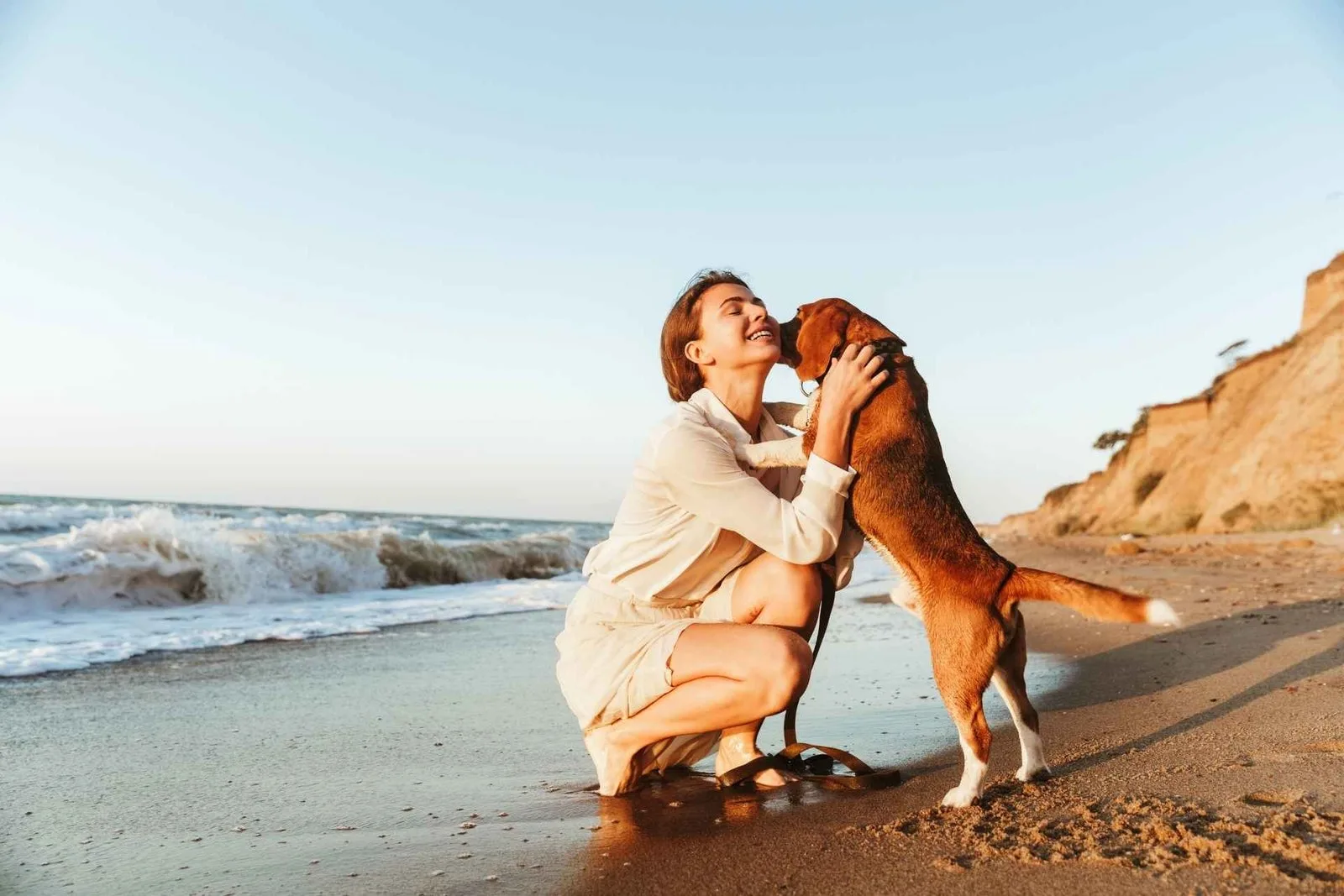
TL;DR: Dogs express affection through body language rather than words. The ten clearest signs are: relaxed tail wags when they see you, sustained gentle eye contact, following you from room to room, bringing you toys, leaning against you, seeking physical contact, licking, sleeping nearby, nudging your hand for attention, and sudden bursts of joyful energy in your presence. These behaviors reflect trust and attachment, not just hunger.
Dogs cannot say "I love you," but they say it constantly through behavior. The trick is knowing what to look for. Once you understand the signals, you will realize your dog has been communicating affection all along - in ways far more specific and reliable than many people realize.
10 signs your dog loves you
1. Tail wags when they see you
Not all tail wags mean the same thing. A slow, wide sweep when your dog spots you coming through the door is a greeting that carries genuine warmth. A rapid, stiff wag is more likely excitement or alertness. The relaxed, full-body wag - where the whole back end moves - is the one that corresponds most clearly to social bonding. Research on dog behavior suggests that rightward tail bias during wagging is associated with positive emotional states, though this is too subtle to observe without slow-motion footage.
2. Eye contact
A dog that holds soft, steady eye contact with you is extending a significant gesture. In the dog world, direct eye contact from a stranger or a dominant animal is a challenge; from a trusted companion, it is connection. Studies have shown that mutual gazing between dogs and their owners releases oxytocin in both parties - the same neurochemical involved in human bonding. If your dog holds your gaze softly and blinks slowly, they are comfortable and trusting.
3. Following you around
A dog that trails you from room to room - including, yes, the bathroom - is not just being nosy. Dogs are social animals whose natural state is to stay close to their group. You are the group. Following you around is a form of proximity-seeking that reflects attachment, not anxiety in most cases. The distinction matters: a dog that follows from genuine affection is relaxed; a dog following from separation anxiety will show distress (panting, whining, destructive behavior) when the following becomes impossible.
4. Bringing you toys
When your dog drops a toy at your feet or brings it to you as a greeting, they are sharing something valuable. Dogs guard resources instinctively; offering a prized object to someone is an act of trust. It often doubles as an invitation to play, which is itself a sign of comfort and positive association.
5. Leaning against you
A dog that settles its weight against your leg or your side is seeking contact and expressing comfort. This is different from a dog pressing against you out of fear during fireworks or thunder - that contact is about seeking safety from something scary. Calm leaning, in a relaxed setting, is simply your dog choosing to be close.
6. Licking
Licking has multiple functions - grooming, investigation, and communication. A dog that licks a person's hand or face in a calm, gentle way is typically expressing social bonding. Mother dogs lick their puppies; dogs in a group lick each other as social interaction. If your dog licks you quietly when you are sitting still, they are engaging with you in a way that maps closely to what they do with other dogs they trust.
7. Sleeping near you or on you
Sleep involves vulnerability. Dogs that choose to sleep beside you, on your feet, or on the same piece of furniture are expressing that they feel safe in your presence. A dog that sleeps touching you has decided you are part of their resting space, which in pack terms is a significant statement.
8. Nudging your hand
The nose-nudge to an idle hand is a clear request for attention. Your dog wants you to notice them, engage with them, or simply make contact. It is one of the more direct ways dogs initiate interaction, and it typically comes from dogs who feel confident enough with a person to make requests rather than wait and hope.
9. Zoomies in your company
Sudden bursts of running, spinning, and generally chaotic movement - sometimes called zoomies - happen when a dog is in a state of high positive arousal. Many dogs get them when their owner comes home, when a walk is announced, or during play. If your dog's zoomies happen primarily around you, that is a reasonable sign that your presence is one of their reliable triggers for joy.
10. Checking in on walks
A dog that periodically looks back at you during a walk, or returns to your side after going ahead, is maintaining their connection with you even while exploring. This check-in behavior indicates that you remain a point of reference for the dog even in an interesting environment - which is a good sign for both the relationship and for recall reliability.
How to show your dog you love them back
The most effective ways to reciprocate in a language your dog actually understands.
Spend unstructured time together. Play, walks, and simply sitting in the same room all register as positive social time. Dogs do not distinguish between "quality time" and ordinary togetherness the way humans do - being present is enough.
Learn what your dog enjoys. Some dogs love belly rubs; others find them overstimulating and merely tolerate them. Some dogs want to play fetch indefinitely; others prefer sniffing walks or tug. Matching your interaction to what your dog actually enjoys rather than what you assume they enjoy is a meaningful gesture.
Be consistent and predictable. Dogs form stronger attachments to people who behave reliably. Consistent feeding times, consistent boundaries, and consistent affection reduce ambient anxiety and build trust over time.
What this means when you travel
These signs of attachment matter when you are away from your dog. A dog that shows strong bonding behaviors may struggle more with your absence, particularly at first. When leaving your dog with a pet sitter, a dog sitter, or in dog boarding, the transition goes more smoothly when the sitter has been introduced to the dog before you leave.
Dogs that exhibit the attachment behaviors above - following closely, seeking eye contact, leaning - often transfer some of this to a pet sitter they have met positively a few times. A dog that trusts the sitter settles faster and experiences less stress during your absence. If your dog is going into dog boarding for the first time, ask whether the facility offers a meet-and-greet visit, or whether you can bring the dog for a day visit before the full stay.
If your dog seems to bond intensely with a particular pet sitter over several visits - greeting them the way they greet you, leaning against them, seeking eye contact - that is a good sign you have found someone worth booking again.
FAQs
1. Do dogs understand when you say "I love you"?
Dogs do not understand the literal meaning of the phrase, but they read tone, facial expression, and body language in context. A soft voice, relaxed posture, and positive emotion communicated through your manner are things your dog reads and responds to. Over time, specific phrases become associated with the tone and context in which they are used, which means "I love you" said consistently in a warm, calm way will carry positive associations for your dog even without word-level comprehension.
2. How do I strengthen my bond with my dog?
Spend regular time in positive interaction: walks, play sessions, training, and calm shared time. Training particularly builds the bond because it creates a communication channel where both parties are engaged and the dog is consistently rewarded for paying attention to you. Avoid interactions that your dog finds aversive - forced handling, shouting, or punishment erode trust over time. Consistency and positive association are the two main drivers of a strong bond.
3. Why does my dog follow me everywhere?
Following is proximity-seeking behavior rooted in social bonding. Dogs evolved as group animals whose safety and resources depended on staying close to their pack. You are the pack. Following you is a natural expression of attachment. If the following is relaxed and the dog is content when you leave the room, it is a sign of affection. If the dog is distressed when you leave, shows anxiety symptoms, or cannot settle when alone, that indicates separation anxiety and is worth addressing with a trainer or behaviorist.
4. Can my dog bond with a pet sitter while I am away?
Yes. Dogs can form genuine positive attachments to multiple people. A dog left with a pet sitter regularly will often begin to show greeting behaviors with that sitter similar to what they show their owner - tail wags, following, leaning, bringing toys. This does not replace or reduce the dog's bond with you; dogs are capable of maintaining multiple meaningful relationships. It does mean that a familiar, trusted sitter provides real emotional comfort to your dog during your absence.
5. How often should I show affection to my dog?
There is no maximum. Dogs do not experience "too much" affection in the way the phrase might imply - what matters is that affection is genuine, appropriate to the dog's preferences, and not used as a substitute for exercise, mental stimulation, or clear behavioral expectations. A dog that gets lots of physical affection but no exercise or structure will show behavioral problems regardless of how much it is cuddled. Affection works best as one component of a full relationship.
6. How do I know if my dog has bonded with their pet sitter?
Look for the same behaviors your dog shows with you: greeting the sitter at the door with genuine enthusiasm (not just excitement at a visitor), seeking the sitter out for contact, settling comfortably in their presence, and accepting handling calmly. A dog that relaxes in the sitter's presence, eats normally during the stay, and does not spend extended periods searching or crying is showing good adjustment. If your sitter sends you a photo of your dog leaning against them on the sofa, that is a fairly clear signal the relationship is working.