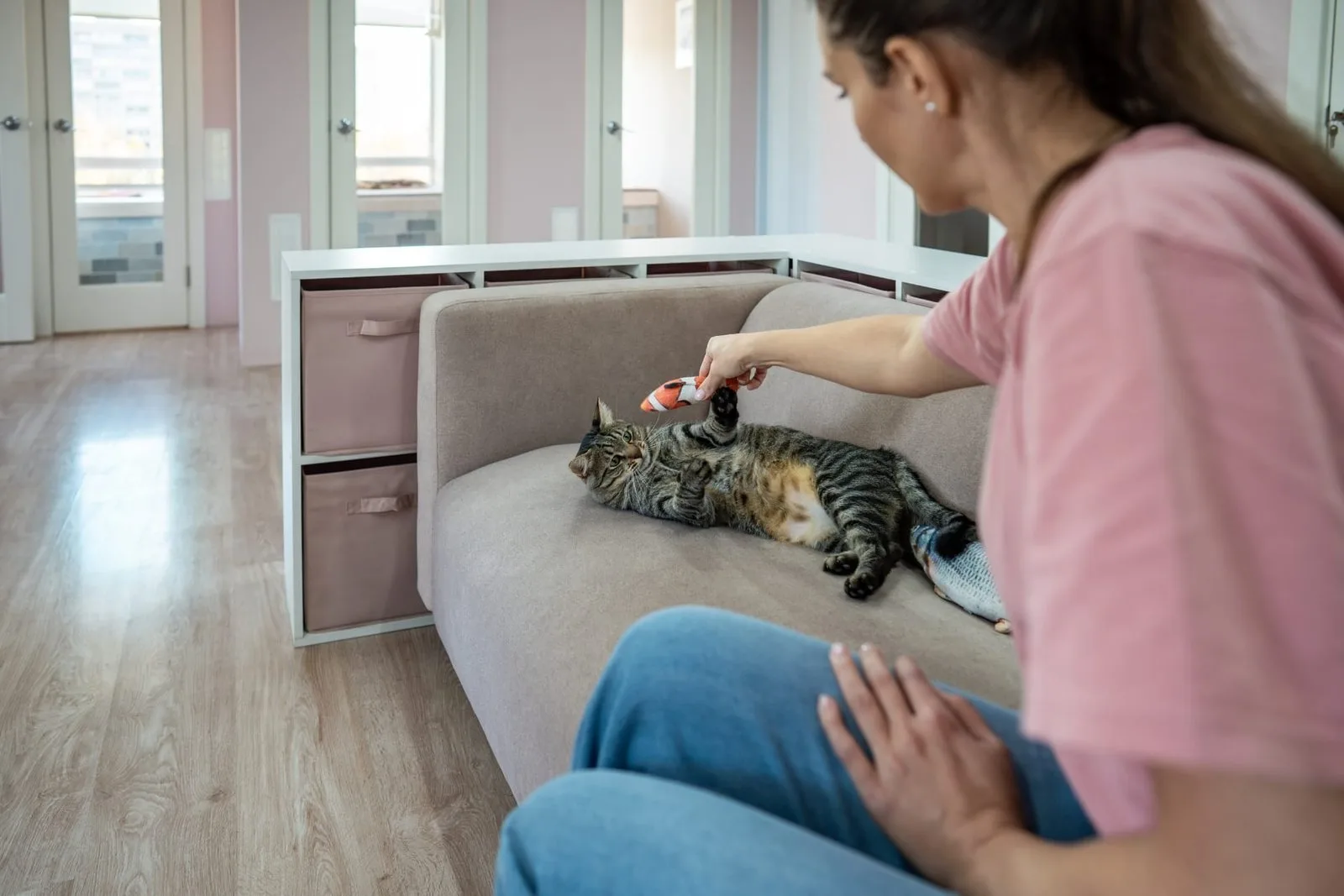
Cats are territorial and routine-dependent. Puppies are high-energy, unpredictable, and have no idea that the cat's space is not an invitation to play. Without a structured introduction process, the combination often produces a stressed cat, a chaotic puppy, and a household that takes months to settle down. Getting the introduction right from the start takes a few weeks of patience - getting it wrong takes much longer to repair.
Why introductions need to be done carefully
A cat that is cornered, chased, or overwhelmed by a puppy in the first days can develop lasting anxiety that makes coexistence difficult long after the puppy has calmed down. Early stress responses in cats - hiding, refusing to eat, overgrooming - signal that the introduction moved too fast. A puppy that learns early on that the cat is something to chase is also harder to manage later. The habits formed in the first weeks tend to persist. A structured approach takes the pressure off both animals and gives you control over the pace.Step 1: prepare your home before the puppy arrives
Before bringing a puppy into a home with a cat, create a permanent safe zone for your cat that the puppy cannot access. This should include:- A room or area with a baby gate or cat flap the puppy cannot pass through
- Your cat's litter box, food, and water, kept entirely separate from the puppy's space
- High surfaces such as shelves or a cat tree where your cat can observe without being reached
- Their usual sleeping spots, unchanged and accessible at all times
Step 2: scent introduction
Before the animals meet, introduce them to each other's scent. Rub a cloth over your puppy and place it near your cat's sleeping area, not directly on their bed. Do the same in reverse - a cloth with your cat's scent near the puppy's resting spot. Keep this up for several days, refreshing the cloths regularly. You are looking for a neutral or curious response from both animals, not alarm. A cat that sniffs the cloth calmly and moves on is ready to progress. A cat that hisses or avoids the area needs more time at this stage.Step 3: barrier meetings
Once both animals are comfortable with each other's scent, allow them to see and smell each other through a barrier - a baby gate, a slightly opened door, or a glass door are all suitable. Keep the puppy on a lead during these sessions. Keep sessions short, around five to ten minutes at first. Reward both animals for calm behavior. End the session before either animal shows signs of stress. Repeat once or twice daily, gradually allowing longer sessions as both animals relax. Signs that a barrier meeting is going well: the cat approaches the barrier curiously, the puppy focuses on you for treats rather than fixating on the cat, neither animal shows sustained stress signals. Signs to take things slower: the cat is crouching, hissing, or retreating; the puppy is barking, lunging, or fixated to the point of ignoring redirects.Step 4: supervised face-to-face meetings
Once barrier meetings are consistently calm for both animals, move to supervised face-to-face time. Keep the puppy on a lead or in a crate during initial meetings and let the cat move freely. Your cat will choose the distance they are comfortable with. Keep sessions short. Have treats for both animals. If the puppy lunges toward the cat, redirect with a command and a treat. End the session and try again the next day if either animal becomes stressed. Do not allow chasing under any circumstances. A single chase that ends badly can set the relationship back significantly.Step 5: off-lead interactions
After several weeks of consistently calm supervised sessions, you can begin testing off-lead interaction. Keep the lead trailing so you can intervene quickly. Ensure your cat has clear escape routes to high surfaces or their safe zone. Reward the puppy for calm, settled behavior near the cat. Over time, many dogs and cats reach a stable coexistence where they can share the same room without incident. Some become genuinely comfortable with each other. Others maintain a polite distance, which is also a success.Using calming tools
Pheromone diffusers designed for cats (such as Feliway) can reduce stress during the introduction period. Plug one in near your cat's main living area. These are not a substitute for proper introduction stages, but they can lower baseline anxiety and make each stage easier to navigate.Training your puppy during the introduction
A puppy that knows basic commands - sit, stay, leave it - is significantly easier to manage during introductions. Teaching "leave it" specifically is useful for redirecting attention away from the cat. The more reliable your puppy's response to commands, the more control you have during supervised sessions.What a pet sitter needs to know about managing both animals
If you leave a pet sitter or house sitter in charge of both your cat and puppy, you need to brief them on the current stage of the introduction process. A sitter who does not know where things stand may accidentally allow interactions that set back weeks of progress. Before a sit, explain:- The current stage of the introduction (barrier only, supervised only, or off-lead with supervision)
- Where the cat's safe zone is and that the puppy must not access it
- Whether the animals should be separated overnight or when unsupervised
- Signs that an interaction is going wrong and how to intervene calmly
- Which areas the puppy has access to and which are cat-only
Frequently asked questions
1. How long does it take for a cat to accept a puppy?
Most cats take several weeks to months to fully accept a puppy in the home. Some cats become relaxed and comfortable within a few weeks if introductions are handled well. Others maintain a cautious distance for months before settling. The timeline depends on your cat's temperament, the puppy's behavior, and how consistently the introduction stages are followed. Rushing the process reliably makes things take longer overall.
2. How do I know if my cat is stressed by the puppy?
Signs of stress include hiding more than usual, refusing to eat or eating less, excessive grooming, avoiding rooms they previously used freely, hissing or spitting when the puppy is nearby, and flat or rotated-back ears. If your cat is showing multiple signs of sustained stress rather than brief wariness, slow the introduction back to the previous stage and give them more time before progressing.
3. Can I leave my cat and puppy alone together?
Not until they have demonstrated consistently calm behavior together over a sustained period - typically several weeks of supervised off-lead interactions without incident. Until that point, separate them whenever you cannot actively supervise. A single bad interaction when you are not present can undo weeks of careful progress, and a cat that scratches a puppy's eye or a puppy that seriously frightens a cat creates a lasting problem.
4. What if my puppy keeps trying to chase the cat?
Redirect immediately using a command ("leave it" or "sit") and a treat. If your puppy cannot be redirected from fixating on the cat, the introduction has moved too fast. Step back to lead-controlled sessions or barrier meetings until your puppy can be easily redirected. Practice "leave it" as a separate training exercise away from the cat so the command is reliable before relying on it in a high-distraction situation.
5. Should I separate my cat and puppy at night?
Yes, until the relationship is well established. Keep them in separate areas overnight and whenever you cannot supervise. Use a baby gate or closed door to give your cat undisturbed access to their safe zone. Most adult cats need this separation for at least the first few weeks, and often longer. There is no benefit to forcing overnight coexistence before the daytime relationship is stable.
6. What should I tell a pet sitter about managing my cat and puppy? 🐾
Tell them exactly where the introduction process currently stands: what level of contact is appropriate, which spaces belong to the cat and must remain puppy-free, and how to separate the animals if an interaction goes wrong. Show them the baby gates or barriers during the meet and greet. Leave written instructions covering the daily routine for both animals and any signs of stress to watch for. A sitter who does not know your current introduction stage may accidentally allow more contact than is safe, setting back progress you have worked for weeks to build.
A good introduction between a puppy and a cat is measured in weeks, not days. The work put in at each stage protects both animals and produces a household that is genuinely calmer in the long run.