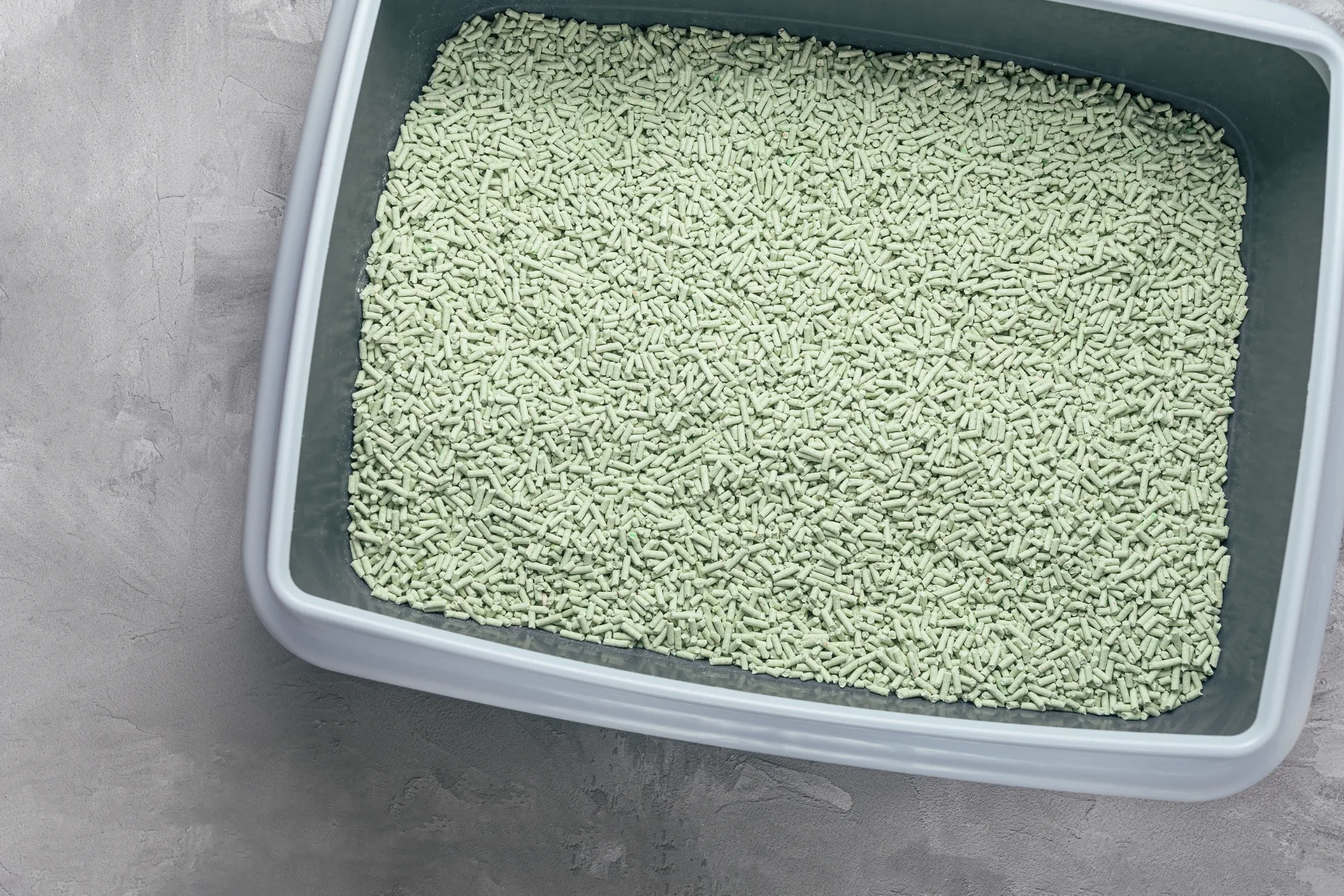
Litter safety is a more serious question than it might first appear. Cats spend a significant amount of time in and around their box - inhaling particles, touching the litter with bare paws, and occasionally tasting it. Anyone scooping the box gets regular exposure to whatever is in there. The type of litter you choose affects both.
Is tofu cat litter safe for cats?
Tofu litter is made from okara, the fibrous soybean pulp left over from making soy milk. No synthetic chemicals, no mined minerals, no silica. The base material is food-grade and non-toxic, which is the foundation of its safety profile.Safe to ingest in small amounts
Cats sometimes eat small amounts of litter, particularly kittens who are still figuring out the litter box. With clay litter, this is a genuine concern - bentonite clay swells when it absorbs moisture, and a cat that eats a meaningful amount can develop internal clumping. With tofu litter, the soybean material does not behave that way. It passes through the digestive system in small quantities without causing blockages. That does not mean litter-eating should be encouraged. Eating litter regularly can signal boredom, a nutritional deficiency, or a behavioral issue worth discussing with a vet. But an occasional nibble is not an emergency.Low dust and respiratory safety
Clay litter produces significant airborne dust when poured or disturbed during digging. For cats with asthma, herpesvirus-related respiratory conditions, or chronic upper respiratory issues, that dust load matters. Tofu litter produces far less airborne particulate. Most owners with cats on respiratory medication or with diagnosed respiratory conditions report a noticeable improvement after switching.Gentle on paws
The compressed soy pellets are soft underfoot. Silica crystals can feel sharp on sensitive paws, and some clay granules have a gritty texture that cats with sore or declawed paws find uncomfortable. Tofu's texture is rounded and smooth - unremarkable underfoot for most cats.Is tofu cat litter safe for humans?
Lower dust exposure when scooping
Scooping a clay litter box stirs up a cloud that you inhale. For anyone with asthma, dust allergy, or sensitivity to airborne particles, that happens every single day. Tofu litter's low-dust formula reduces that exposure substantially. The difference from clay is significant enough to be clinically relevant for sensitive individuals.Hypoallergenic and fragrance-free options
Clay litters frequently contain synthetic fragrances to mask odor, which can trigger reactions in fragrance-sensitive people. Most tofu litters are either fragrance-free or use natural additives like green tea extract. The soybean base material itself is not a common contact allergen, though anyone with a significant soy allergy should check with their doctor before prolonged handling.Easy to handle
The lighter weight and smooth texture make tofu litter less physically demanding to handle than clay. A 6-liter bag weighs around 2.5 to 3 kg, compared to the equivalent clay, which can be twice that. For people with joint issues or mobility limitations, that difference is practical.What the safety comparison with clay looks like
Clay litter is dusty and heavier, and it is not safe if eaten in quantity. Silica gel litter has concerns around fine crystalline dust with prolonged exposure. Tofu litter addresses both of those specific risks: it produces minimal dust and is non-toxic if ingested in small amounts. For a full breakdown of the comparison on every practical factor, our tofu vs clay article covers safety, odor control, cost, and environmental impact. For a broader look at eco-friendly alternatives, the eco-friendly cat litter guide compares tofu, wood, paper, and corn litters.How to use tofu litter safely and well
Choose an unscented variety if anyone is sensitive
If your cat has respiratory issues or anyone in the household is fragrance-sensitive, choose an unscented tofu litter or one that uses only natural additives like green tea. Artificial fragrances added to cheap litters - clay or tofu - are unnecessary and worth avoiding.Watch how your cat adapts during the transition
Most cats adapt to tofu litter without issues, but monitor the first few weeks of any new litter. Frequent litter-eating beyond the occasional taste, persistent sneezing at the box, or avoidance of the box are all worth investigating. The litter itself is unlikely to be the cause, but ruling it out is straightforward.Handle and dispose consistently
Even with a safe litter, standard hygiene applies: wash hands after scooping, wear gloves if you prefer, and keep a consistent disposal routine. For guidance on the safest disposal options, our guide to flushing tofu litter and the disposal section of the disadvantages article cover the options.What cat sitters should know about tofu litter safety
If you have a cat sitter coming for drop-in visits or a house sitting stay, it is worth reassuring them about the litter if they are unfamiliar with tofu. A cat sitter who has only ever worked with clay may not know that tofu litter is safe to handle without concern about silica dust, or that a cat nibbling at the box is not cause for immediate alarm. Tell your cat sitter: the litter is plant-based and non-toxic, standard hygiene applies (wash hands after scooping), and the clumps are softer than clay so a gentle scooping technique works better. Leave their preferred disposal instructions alongside and note where the spare litter is stored. On Petme, you can include pet care notes with your booking so your cat sitter has everything in one place before the first visit. Our full tofu cat litter overview covers pros, cons, and transition tips if your sitter wants to read further.Frequently asked questions
1. Is it okay if my cat eats tofu cat litter?
A small amount passing through is not dangerous. Tofu litter is made from food-grade soybean material and does not clump inside the digestive system the way clay does. If your cat is eating litter regularly rather than just tasting it occasionally, that warrants a vet check - it can signal nutritional gaps or a compulsive behavior. A single nibble or two is not an emergency.
2. Is tofu cat litter safe for kittens?
Yes. The soft texture is appropriate for small paws, and the non-toxic ingredients mean the occasional taste while a kitten is learning the litter box does not require intervention. Kittens are more likely than adult cats to mouth and taste litter out of curiosity. Tofu litter is a better choice than clay for this reason during early kittenhood.
3. Does tofu cat litter cause allergies in cats or humans?
Tofu litter is hypoallergenic and low-dust, which makes it less likely to trigger respiratory or skin reactions than clay or scented silica. Most unscented tofu litters contain no common allergens. People with significant soy allergies should check with a doctor before extended handling, though skin contact with processed soybean pulp is very different from dietary soy exposure.
4. Is tofu cat litter safe to breathe around?
It produces significantly less airborne dust than clay litter, which makes it a better choice for people with asthma, dust sensitivity, or chronic respiratory conditions. Pouring or scooping clay litter creates a visible dust cloud; tofu litter does not. For cats with diagnosed respiratory conditions such as asthma, the lower dust load is a meaningful health consideration worth discussing with a vet.
5. Can a cat sitter safely handle tofu cat litter without special precautions?
Yes. Standard litter hygiene applies: wash hands after scooping and dispose of waste as instructed. No special protective equipment is needed. Tofu litter is lighter and less dusty than clay, which makes it easier to handle in practical terms. Letting your cat sitter know the litter is plant-based and non-toxic removes any uncertainty they might have when encountering an unfamiliar product for the first time.
6. Is tofu litter safer than silica gel litter? 🐾
For ingestion safety, yes clearly: tofu is food-grade and non-toxic; silica gel should not be ingested. For dust, both are lower than clay, though silica gel can produce fine crystalline particles with prolonged high-concentration exposure. For disposal, tofu is compostable and biodegradable, while silica is neither. Most safety-focused owners prefer tofu to silica on balance, though silica has superior odor control between box changes.
Tofu cat litter earns its safety reputation. For most households - cats with respiratory issues, kittens, owners with dust sensitivity - switching from clay is a genuine health improvement rather than just an eco gesture.