TL;DR: Positive reinforcement - rewarding the behaviors you want rather than punishing the ones you do not - is the most effective training method for most dogs. Start with the basics: sit, stay, come, leash walking, and potty training. Keep sessions short (10-15 minutes), consistent, and immediately rewarding. A well-trained dog is calmer, safer in public, easier for vets and groomers to handle, and much easier to leave with a pet sitter.
Dog training is less about obedience and more about communication. When your dog understands what you are asking and knows that following through leads to something good, cooperation becomes natural rather than forced. The goal is not a dog that does what it is told out of fear, but one that engages willingly because the interaction is rewarding.
Why training matters
The practical case
An untrained dog is harder to live with in everyday situations: pulling on the leash, jumping on guests, bolting out of doors, and ignoring recall commands in situations where it matters. These are not personality flaws - they are gaps in communication. Training fills those gaps with a shared language that makes every interaction clearer.
A trained dog is also easier for everyone else who interacts with them. Groomers, vets, and pet sitters all have an easier time with dogs that respond to basic commands and are comfortable with handling. If you ever need to leave your dog with a dog sitter or in dog boarding, a dog that responds to "sit," "stay," and "come" is significantly less stressful for the sitter to manage - and your dog will settle faster in an unfamiliar environment.
Training vs. educating
Training refers to specific commands and behaviors: sit, down, stay, come. Education is the broader picture - how the dog behaves in the house, with guests, with other dogs, and in public. Both matter. A dog can know "sit" perfectly and still jump on every visitor if the broader behavioral education has not happened. The two develop together through consistent daily interaction, not just formal sessions.
How it strengthens your bond
Training sessions are one of the most reliable ways to build trust and connection with your dog. You are communicating, the dog is learning, and the rewards create a positive association with working with you. Dogs that train regularly tend to be more attentive and engaged because they have learned that paying attention to you pays off.
Getting started
When to begin
Start as early as possible - puppies from 8 weeks can begin learning simple behaviors. But adult dogs learn too, and rescue dogs with no training history make significant progress with consistent work. The idea that older dogs cannot be trained is not supported by evidence. The difference is that puppies may pick things up slightly faster initially; adult dogs often have better attention spans.
Consistency above everything
Inconsistency is the most common reason training stalls. If "off the sofa" means something on some days and nothing on others, the dog has no reliable information to work with. Every person in the household needs to use the same commands, the same rules, and the same rewards. This extends to pet sitters and dog walkers: before leaving your dog with anyone, share your command list and explain how you use each one.
Positive reinforcement in practice
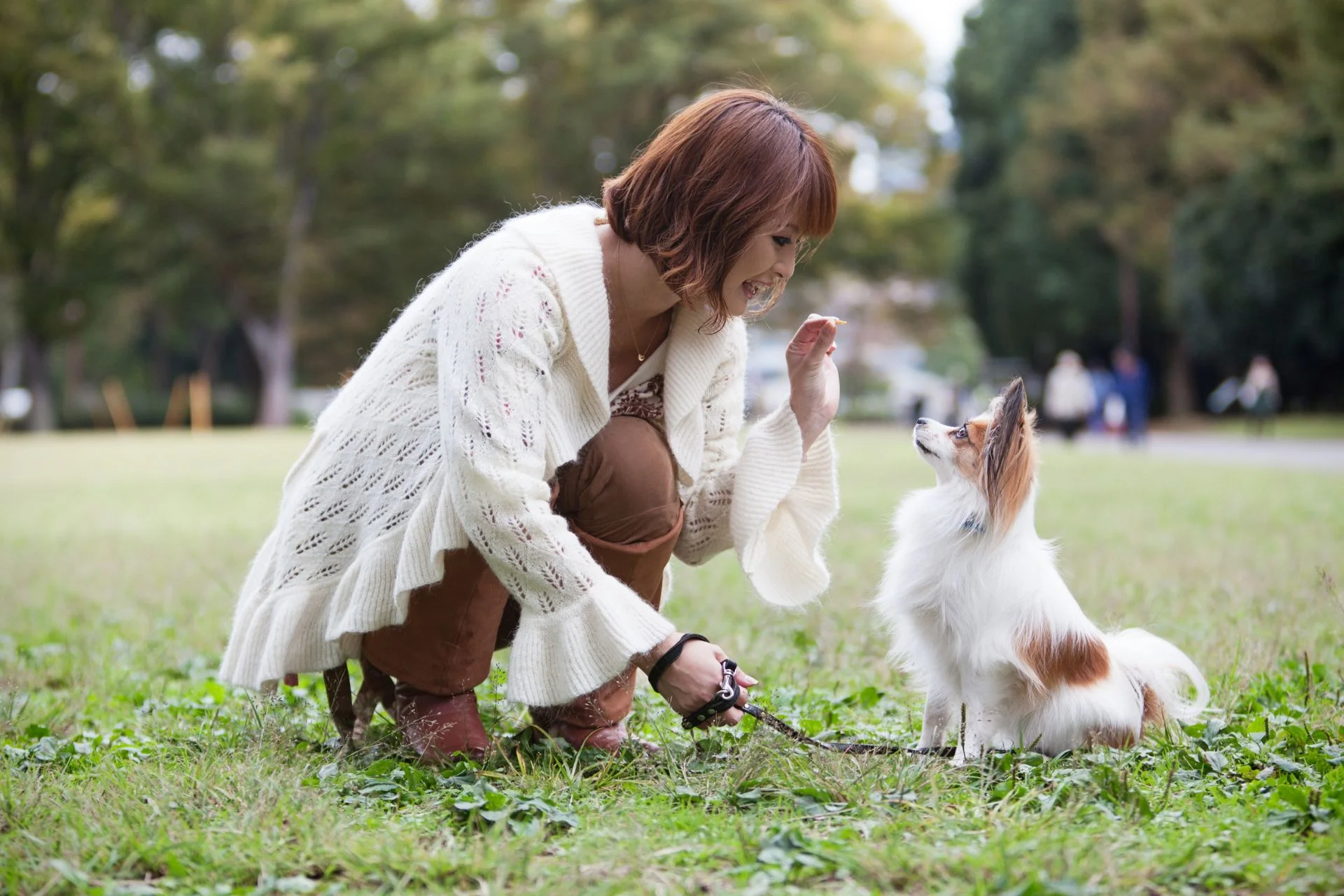
Positive reinforcement means adding something the dog finds rewarding immediately after a desired behavior. Food works well for most dogs - small, high-value treats (chicken, cheese, commercial training treats) are more motivating than kibble during a training session. But praise, play, and access to something the dog wants (a toy, a walk) also work and can replace food rewards once a behavior is well established.
The timing of the reward is critical. The reward must come within 1-2 seconds of the behavior you are marking, or the dog cannot reliably connect the two. Many trainers use a clicker or a marker word ("yes!") to bridge the gap between the behavior and the moment the treat arrives.
For a detailed breakdown of how positive reinforcement works in practice, see this full guide on positive reinforcement dog training.
Basic commands to teach at home
Sit and stay
For "sit," hold a treat close to your dog's nose and move it slowly back over their head. Most dogs will lower their hindquarters naturally as they follow the treat. The moment they sit, mark it with "yes" or a click and reward. Once the behavior is reliable, add the verbal cue "sit" just before the movement.
"Stay" builds from sit: ask for a sit, say "stay," take one step back, return to the dog, and reward before they move. Gradually increase distance and duration. Do not add the verbal cue "come" or release word until you have returned to the dog - you want "stay" to mean "hold this position until I come back to you," not "hold this position until you decide to come find me."
Come when called
Recall is the most important safety command. Start in a small, enclosed space with minimal distractions. Crouch down, use an enthusiastic tone, say your dog's name and "come," and reward generously when they arrive. Never call your dog to you for something they dislike (a bath, nail trimming) - you will undermine the association. Always reward arrival, even if it took longer than you wanted.
Walking on a leash without pulling
When the leash tightens, stop walking. Not a correction, just a pause. No forward movement happens while the leash is taut. When your dog releases pressure and looks back at you, reward and continue. This takes patience over many sessions but produces a dog that understands that pulling does not result in getting where they want to go.
More commands for puppies and young dogs are covered in this guide to basic commands for puppies.
Potty training
Take your dog outside at consistent times: first thing in the morning, after each meal, after naps, and before bed. The moment they go outdoors, reward immediately with enthusiastic praise and a small treat. Accidents indoors should be cleaned quietly without drama - a delayed correction does nothing except confuse the dog. The more consistent you are with scheduled outdoor trips, the faster the pattern establishes. For more detail, see these potty training tips.
Addressing common behavioral problems
Excessive barking
Barking is communication. Work out what the dog is communicating before trying to suppress it. Boredom barking responds to more exercise and mental stimulation. Alert barking at sounds or movement outside can be reduced by managing the dog's access to windows or by teaching a "quiet" cue. Anxiety-based barking needs a different approach entirely.
Biting and chewing
Redirect biting onto appropriate items rather than punishing it. A dog that bites during play needs to learn that biting stops play: go still, remove your hands, end the interaction for 30 seconds. Consistent application of this response teaches bite inhibition over weeks. For chewing, the solution is a combination of appropriate chew toys, management (not leaving tempting items accessible), and rewarding the dog for using their toys rather than your belongings. More detail in this guide on stopping puppy biting.
Separation anxiety
Dogs with separation anxiety show distress when left alone - barking, destructive behavior, house soiling, and occasionally self-harm. Management starts with very short separations and gradual extension, teaching the dog that being alone is predictable and safe. Puzzle toys and food dispensers can occupy the dog during short absences. Severe separation anxiety often needs professional input, since DIY approaches without a structured desensitization protocol can inadvertently make things worse.
A dog with separation anxiety that is left with a pet sitter for the first time needs careful introduction. If possible, arrange a meet-and-greet before you leave so the dog has met the sitter with you present. Brief the sitter on what to expect and what to do if the dog becomes distressed.
When to work with a professional trainer
If your dog shows aggressive behavior toward people or other dogs, resource guarding, or extreme fear responses, professional help is the right call. Find a trainer who uses positive reinforcement methods and can provide references or credentials. Avoid trainers who rely primarily on punishment, correction collars, or physical coercion - these methods have documented downsides for dog welfare and the training relationship.
Sharing your training work with your dog's sitter or regular dog walker is worthwhile regardless of where your training is at. A pet sitter who uses your commands correctly, rewards the same behaviors, and maintains your boundaries is a meaningful extension of your training - not a reset. A written list of commands, rewards used, and current training goals is a practical tool for any handover.
FAQs
1. When should I start training my dog?
Start as early as eight weeks for puppies. Simple behaviors like sit, name recognition, and crate introduction can begin within days of bringing a puppy home. Adult dogs can be trained at any age - the main difference is that puppies have a developmental window where social learning is particularly efficient, but adult dogs respond well to consistent positive reinforcement. There is no age at which training becomes impossible.
2. Is punishment effective in dog training?
Punishment-based methods suppress behavior but do not teach the dog what to do instead. They also carry a risk of increasing anxiety and fear, which can lead to other behavioral problems including aggression. Positive reinforcement - rewarding the behavior you want rather than punishing the behavior you do not want - produces more reliable results with fewer side effects. The scientific literature on animal learning consistently supports this approach.
3. How do I stop my dog from chewing things they should not?
Remove temptation by managing the environment - put shoes away, use baby gates to limit access to rooms with chewable items, and ensure your dog has enough appropriate chew toys to occupy them. When you catch the dog in the act, calmly redirect to a toy rather than punishing. For dogs that chew specifically when left alone, ensure they are getting enough exercise before alone time and leave a puzzle feeder or Kong to occupy them. More detail in our article on stopping puppy biting and chewing.
4. How long should training sessions be?
10-15 minutes per session is enough for most dogs. Shorter sessions of 5 minutes, done multiple times throughout the day, are often more effective than one long session - particularly for puppies whose attention span is limited. End every session before the dog loses interest, on a successful repetition of something they know well. Leaving on a positive note keeps the dog motivated for the next session.
5. How do I maintain training consistency when a pet sitter is caring for my dog?
Write out your current command list, the words you use for each command, how you use rewards, and any specific rules your dog is expected to follow (not on the furniture, no jumping on people, etc.). Go over this with the sitter before you leave and ask them to confirm they are comfortable maintaining the routine. A brief walkthrough session with the dog present - where the sitter practices a few commands with you there to coach - is the most reliable way to transfer training consistency to a new person.
6. What is the most important command to teach any dog?
Recall - coming reliably when called - is the single most safety-critical command a dog can know. It prevents dogs from running into traffic, approaching aggressive animals, and getting lost. A strong recall is also the reason dogs can be trusted off-leash in appropriate environments, which is a meaningful quality-of-life improvement. Build it from the beginning with high-value rewards, protect it by never calling your dog for something unpleasant, and practice it frequently in different environments with increasing levels of distraction.