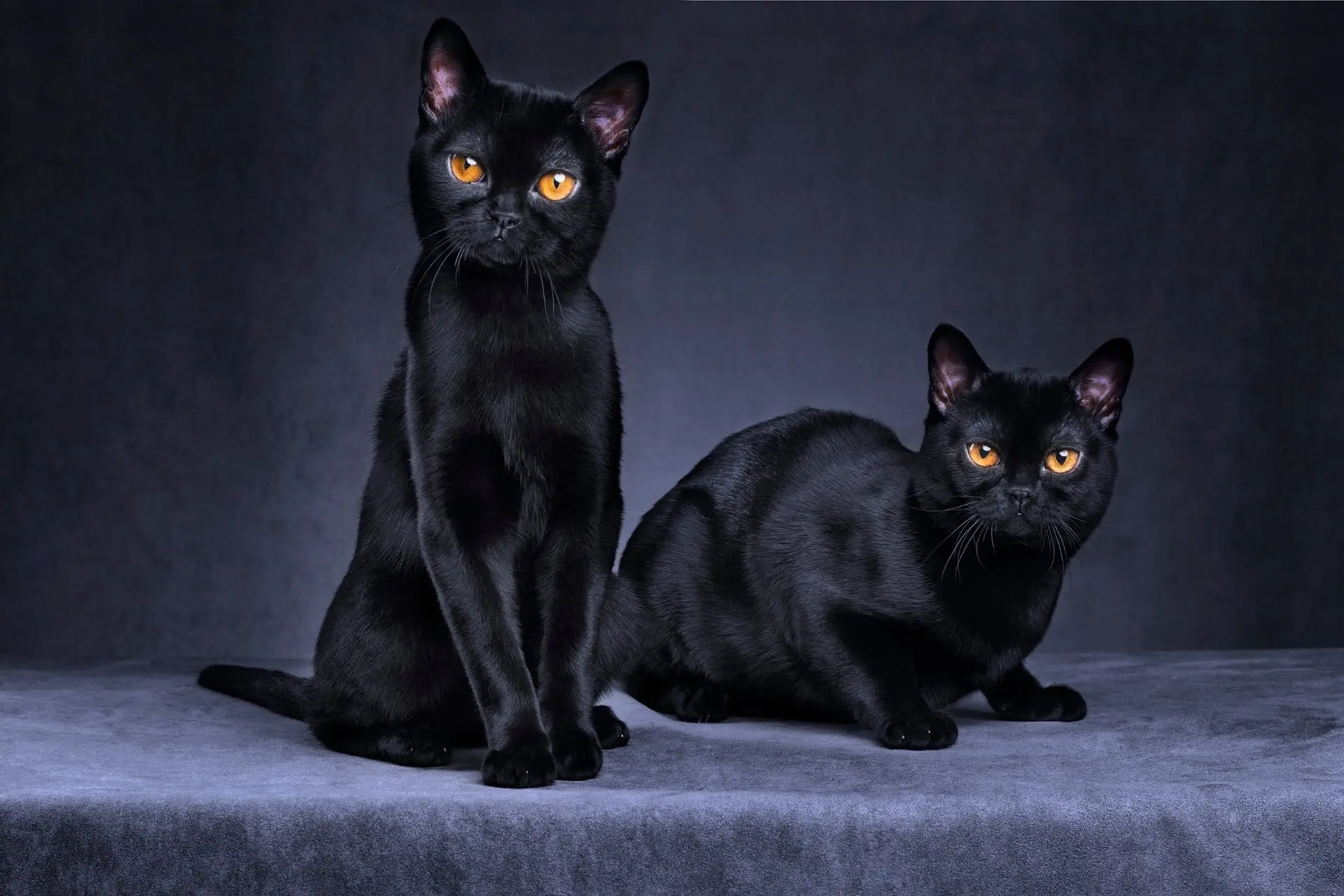
Black is not a breed: it's a coat color that appears across a wide range of cat breeds, each with distinct body types, personalities, and care requirements. A black Bombay and a black Maine Coon share their color and very little else. This guide covers 17 breeds that commonly or exclusively carry black coats, what makes each one different, and what their temperament means for cat sitting and care arrangements when you're away.
What makes a cat black
A black coat comes from a high concentration of eumelanin, the pigment responsible for dark coloration in skin and fur. This is controlled by the dominant "B" gene: when expressed fully, it produces the deep, even black seen in breeds like the Bombay. One practical note for black cat owners: prolonged sun exposure can oxidize the melanin in the coat, causing black fur to take on a rusty brown tinge over time. It's harmless but worth knowing if you notice a color shift in an outdoor cat. For more on black cat coat variations, the sleek black cat breeds guide covers the visual differences in detail.
Popular black cat breeds
Bombay
The Bombay is the breed most associated with an all-black coat, developed in the 1950s specifically to resemble a miniature black panther, with jet-black fur and copper or gold eyes. They're muscular and compact at 10 to 15 lbs, playful, and notably vocal. Bombays are highly social and do not do well with extended solitude. For cat sitting, they need a pet sitter who provides genuine interaction: drop-in visits twice a day are the minimum; a cat sitter who spends real time with them is better. Their short coat needs only a weekly brush.
Maine Coon
Maine Coons in black carry long, shaggy coats and tufted ears on a frame that can reach 25 lbs. They're loyal, calm, and unusually dog-like in their willingness to follow their owner around. Maine Coons are more independent than most of the breeds on this list, which makes them better candidates for drop-in cat sitting visits rather than requiring constant company. Their thick coat needs brushing two to three times a week to prevent matting, worth noting for any cat sitter covering a longer stay.
British Shorthair
British Shorthairs are calm, sturdy cats (7 to 17 lbs) with dense plush coats that give them a distinctly rounded appearance. They're affectionate on their own terms: they don't demand constant attention but they do want to be near their people. They adapt reasonably well to cat sitters and being left with a pet sitter, provided their routine stays consistent. A weekly brush keeps their dense coat in order; they're not heavy shedders.
American Shorthair
American Shorthairs are adaptable, even-tempered cats that adjust well to most household situations, including a change in carer during their owner's absence. They're 8 to 15 lbs with short, jet-black coats that require minimal grooming: a quick weekly brush covers it. They're good with both children and other pets, which makes them easy to place for cat boarding or with a cat sitter who has other animals in the home.
Oriental Shorthair
Oriental Shorthairs are lean, wedge-headed, and vocal: they make their preferences known and expect interaction in return. They're intelligent and respond well to play and training but become withdrawn or anxious when left without stimulation for long stretches. For cat sitting, they need an engaged pet sitter rather than a basic drop-in arrangement. A cat sitter who actively plays with them and talks to them will get a very different cat than one who just refills the bowl and leaves.
Scottish Fold
Scottish Folds are quiet, easygoing cats with the distinctive folded ears that result from a cartilage mutation. They weigh 6 to 13 lbs and tend to be calm and adaptable: they adjust to new people without much drama, which makes cat sitting relatively straightforward. Short-coated variants need weekly brushing; long-haired variants need more frequent attention. Note that Scottish Folds have known health concerns related to their cartilage mutation: a cat sitter should know the cat's vet details and any mobility limitations.
Norwegian Forest Cat
Norwegian Forest Cats are large, thick-coated, and genuinely independent. They're social but not needy: they appreciate company without requiring it constantly, which makes them among the more straightforward cats for drop-in cat sitting rather than full-time care. Their long, water-resistant coat needs brushing two to three times a week, with more attention during seasonal shedding. At 9 to 20 lbs, they're physically substantial and tend to be confident in new situations.
Sphynx
Sphynx cats aren't truly furless (they have a fine down) but they can carry black skin pigmentation that gives them their dark appearance. They're warm to the touch, deeply affectionate, and highly social. Sphynx cats are among the worst breeds for isolation: they attach strongly to their owners and do not do well with infrequent contact when left with a cat sitter. House sitting, where a pet sitter stays in the home, is strongly preferable to drop-in visits for this breed. They need weekly bathing to manage skin oils rather than brushing. More detail in the Sphynx cat guide.
Nine more black cat breeds worth knowing
Beyond the eight above, several other breeds commonly carry black coats. The American Bobtail (7–16 lbs, short tail, shaggy coat) and the Japanese Bobtail (6–10 lbs, livelier temperament) both adapt well to cat sitting arrangements. The Burmese (6–12 lbs, sable-to-black short coat) is affectionate and social, similar to the Bombay in needing real company from a pet sitter rather than brief check-ins.
The Bengal in black (8–15 lbs, spotted or rosetted) is active and curious: a cat sitter who engages them with play gets much better behavior than one who doesn't. The Cornish Rex and Devon Rex (both 6–10 lbs, with wavy and curly coats respectively) are playful and people-oriented; like Orientals, they don't do well with extended solitude and benefit from a cat sitter who spends time with them rather than just covering basic care.
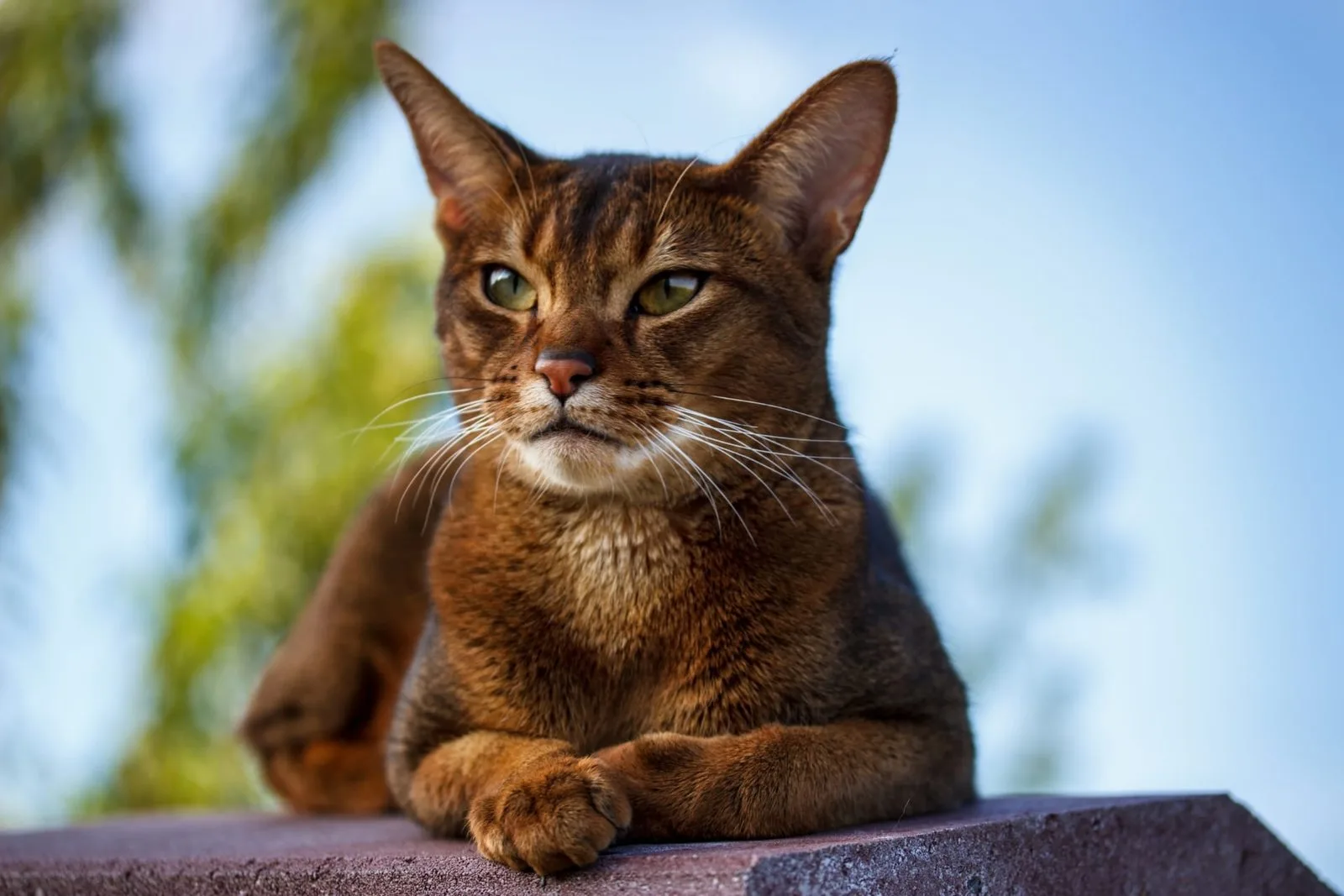
The American Wirehair (6–12 lbs, wiry coat) and Exotic Shorthair (7–14 lbs, plush coat) are more laid-back and adapt well to most cat sitting arrangements. The Havana Brown (6–10 lbs, rich dark coat) is chatty and social, more like the Oriental in its preference for company. The Abyssinian can carry a darker ticked coat, worth reading if you're drawn to more active, independent cats.
Caring for a black cat
Care requirements vary more by breed than by coat color. Short-coated black cats (Bombay, British Shorthair, American Shorthair) need a weekly brush with a rubber mitt or soft bristle brush. Long-coated breeds (Maine Coon, Norwegian Forest Cat) need two to three sessions per week with a slicker brush to prevent matting. The Sphynx needs weekly bathing rather than brushing.
One thing that is specific to black coats: they show dandruff and white pet hair more clearly than lighter coats do. Regular brushing reduces both. Sun-exposed black coats can also develop a brown tinge over time from UV oxidation, not a health issue, but worth noting for indoor-outdoor cats.
Feed a high-quality diet appropriate to your cat's life stage. Wet food supports hydration, which matters particularly for cats prone to urinary issues. For portion guidance, the cat food portions guide covers how to calculate the right amount by weight and age. Annual vet check-ups should cover vaccinations, dental health, and any breed-specific risks, cardiac screening for Maine Coons, for example.
What to know about cat sitting for black cats
Black cats span a wide temperament range, which matters considerably when you're arranging cat sitting or planning to be away. At one end, breeds like the Sphynx, Bombay, and Oriental Shorthair are highly social and need a cat sitter who provides genuine company: house sitting, where the pet sitter stays in your home, is the better option for these cats over drop-in visits. At the other end, Maine Coons, Norwegian Forest Cats, and British Shorthairs are more independent and tolerate drop-in cat sitting visits without distress, provided their routine stays consistent.
For most breeds, the baseline is two cat sitter visits per day minimum: one to cover morning feeding and litter, one in the evening. For the more social breeds, a cat sitter who stays in the home or spends a meaningful part of the day there makes a real difference to how well the cat manages the absence. The guide to cat sitter visits covers what's appropriate by cat type and trip length.
When finding a cat sitter, tell them specifically about your cat's temperament, whether they're confident with strangers or take time to warm up, whether they need play interaction or are content to be near someone quietly, and whether they have any health or grooming needs that require attention during the stay. Leaving detailed notes and preparing your cat in advance makes the handover easier for everyone. The guide to preparing your cat for a sitter covers what to sort before you leave.
On Petme, cat sitter profiles include a real social feed (not just a bio) so you can see how a sitter actually interacts with cats before reaching out. For an owner of a social, people-oriented black cat like a Bombay or Sphynx, finding a cat sitter whose profile shows genuine engagement with animals makes a meaningful difference to how well your cat copes while you're away.
Frequently asked questions
1. What breed are black cats most commonly?
There's no single answer: black is a coat color that appears across many breeds, not a breed in itself. The Bombay is the only breed developed specifically to be all-black, but black coat variants exist in at least 17 breeds including Maine Coon, British Shorthair, Norwegian Forest Cat, and Oriental Shorthair. Mixed-breed cats also commonly carry black coats, since the eumelanin gene producing black fur is dominant and widespread.
2. Are black cats good with cat sitters?
It depends entirely on the breed. Bombays, Sphynx, and Oriental Shorthairs are highly social and need a cat sitter who provides real interaction: drop-in visits twice a day are a minimum, and house sitting is preferable. Maine Coons, Norwegian Forest Cats, and British Shorthairs are more independent and cope well with standard drop-in cat sitting. Knowing your specific breed's temperament is the most useful information you can give a cat sitter before you leave.
3. Do black cats shed more than other cats?
Shedding depends on coat length and breed, not coat color. A black Maine Coon sheds considerably; a black Bombay or Burmese sheds very little. What is specific to black coats is visibility: white surfaces and light-colored furniture show black fur more clearly than other colors would. Regular brushing reduces shedding regardless of breed, and is worth covering in instructions to a cat sitter handling a longer stay.
4. Are black cats more independent than other cats?
Coat color doesn't determine independence: breed does. Black cats range from highly social and people-dependent (Bombay, Sphynx, Oriental Shorthair) to genuinely independent (Norwegian Forest Cat, Maine Coon). The superstition that black cats are aloof or mysterious has no basis in their actual behavior. A black British Shorthair is calm and moderately independent; a black Devon Rex is mischievous and attention-seeking. Breed research is more useful than color assumptions when choosing a cat.
5. What is the most popular black cat breed?
The Bombay is the most recognized, having been specifically bred for its all-black coat and panther-like appearance. Among the broader pet population, mixed-breed black cats are by far the most common: they make up a large proportion of shelter populations and are frequently passed over in favor of lighter-colored cats, despite having no behavioral differences. If you're considering adoption, a mixed-breed black cat from a shelter is as affectionate and trainable as any pedigree.
6. How long can black cats be left alone?
Most adult cats can manage 24 to 48 hours with adequate food, water, and a clean litter tray. For anything longer, a cat sitter visiting at least twice daily is strongly recommended, not just for care, but for the social contact most cats benefit from. Highly social breeds like the Sphynx or Bombay shouldn't be left without daily contact for more than a day. For a full breakdown by breed type and trip length, the guide to how long cats can stay with a sitter covers the specifics. 🐈⬛
Black cats make up a disproportionate share of cats waiting in shelters, partly due to superstition, partly because they photograph less clearly than lighter cats. In practice they're as varied in personality, as trainable, and as affectionate as any other cat. Whether you're drawn to the Bombay's panther look, the Maine Coon's size and loyalty, or the Sphynx's warmth, the most important step is matching the breed's actual temperament to your lifestyle, including who you'll trust with them when you're away.