If you've owned a cat for any length of time, you've almost certainly been on the receiving end of it: the steady, rhythmic alternation of paws pushing into your lap, a blanket, or a soft cushion. Cats knead, and understanding why they do it, and what it means, is one of the small pieces of cat behavior knowledge that changes how you experience your cat's company.
What is cat kneading
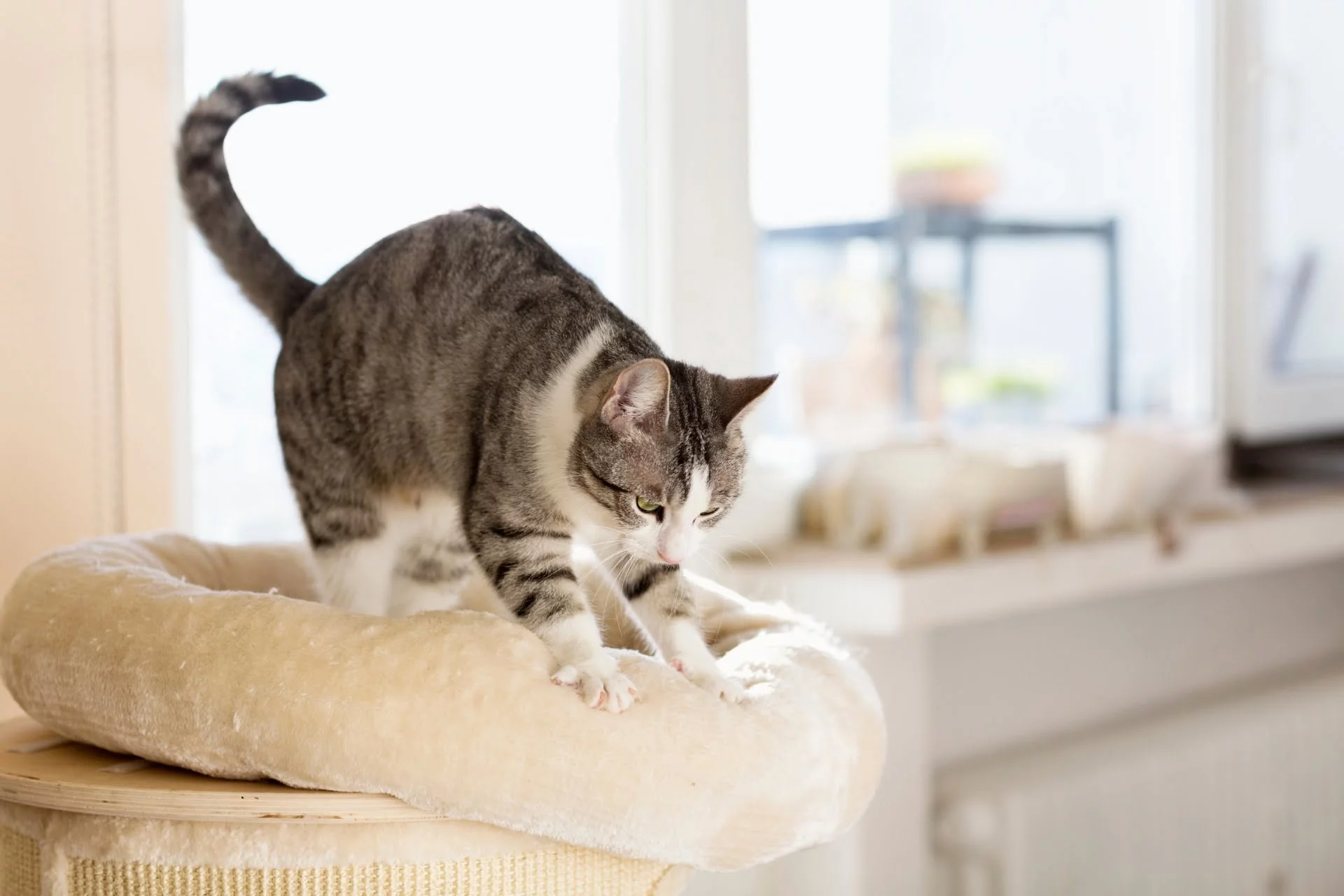
Kneading is a behavior where a cat rhythmically pushes its front paws in and out against a surface, alternating left and right paws. Each push is typically accompanied by a partial extension of the claws, drawing them into the surface as the paw presses down and retracting as it lifts. The motion resembles kneading dough, which is why the informal name "making biscuits" has stuck so well in cat-owning communities.
The behavior can vary in intensity. Some cats knead gently against a blanket with barely extended claws; others push hard with claws fully out against whatever surface, or whoever, is convenient. Both are normal. The variation is individual, not indicative of anything concerning.
Why do cats knead
No single explanation fully accounts for why cats knead, because the behavior serves multiple purposes and its triggers vary by individual cat and situation. The most well-supported explanations:
An instinct carried from kittenhood
Kneading begins at birth. Newborn kittens knead their mother's belly around the nipples to stimulate milk flow during nursing. The pressure, combined with the warmth and physical closeness of their mother, creates one of the earliest positive sensory experiences a cat has.
Adult cats appear to retain this association. When they knead in adulthood (particularly against a warm, soft surface or against a person they trust), they are reproducing the physical movements associated with their earliest experiences of safety and comfort. This is why kneading in adult cats so consistently accompanies relaxation and contentment: the behavior is neurologically linked to states of wellbeing from the very beginning of life.
Relaxation and wellbeing
Kneading appears to be a self-soothing behavior that may stimulate the release of feel-good hormones. Many cats purr while kneading: the two behaviors frequently occur together and are both associated with a cat's settled, contented state. Cats often knead as a precursor to sleep, using the repetitive motion to settle and relax before closing their eyes.
Territory marking through scent glands
Cats have scent glands between their paw pads that secrete pheromones. When a cat kneads a blanket, a cushion, or a person, they deposit their scent on that surface, claiming it, in a sense, as familiar and theirs. This is the same mechanism behind a cat rubbing their face or body against objects in their environment: scent marking through physical contact.
This explains why cats often preferentially knead the same surfaces repeatedly and why the behavior tends to be more common in households where the cat feels secure. Marking through kneading is a cat's way of making their environment smell like home.
Stretching
The pushing motion of kneading extends the tendons and muscles in a cat's legs and shoulders. Many cats knead immediately after waking from sleep (in the same way that a person might stretch their arms above their head when getting up) making it a functional physical movement rather than purely a behavioral or emotional one.
Nesting instinct
Wild cats knead grass and other vegetation to flatten and soften a resting spot before lying down. Domestic cats retain this instinct, which is why they often knead blankets, cushions, or other soft surfaces before settling on them. The connection between kneading and lying down is partly behavioral inheritance from pre-domestic cat ancestors.
When cats knead
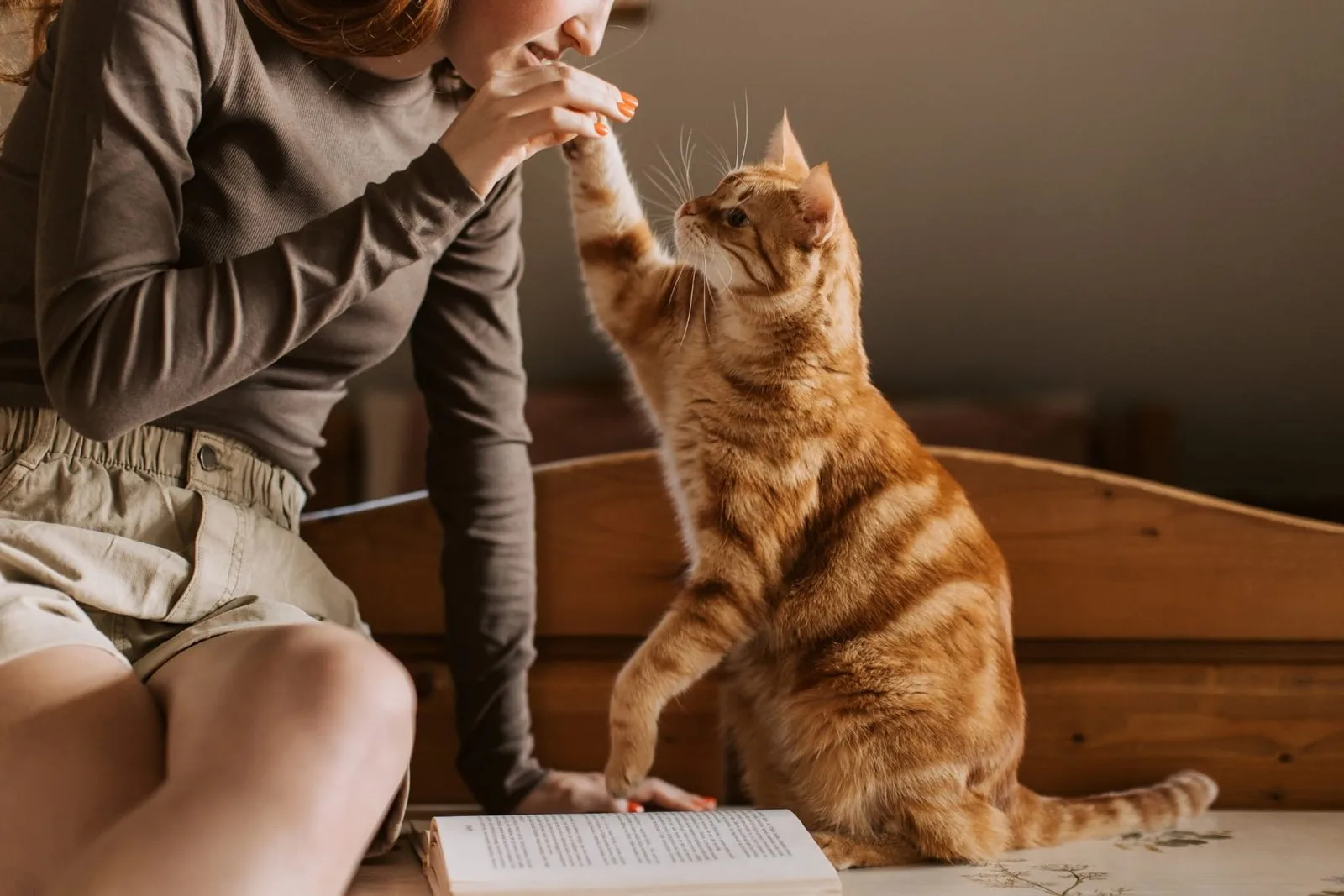
Cats knead most reliably when they are in a settled, trusting state: in the lap of a familiar person, on their preferred sleeping surface, or in the moments before sleep. A cat who kneads on you has made a decision that you represent safety and comfort: it is one of the more direct signals cats give of genuine trust and attachment.
Context matters. A cat who kneads while purring and with relaxed body posture is in a positive state. A cat who kneads with an agitated or hyperactive edge, which is less common, may be overstimulated or anxious, in which case the behavior is more self-soothing than affectionate. Reading the broader body language alongside the kneading gives a clearer picture.
For a cat sitter or pet sitter caring for a cat they don't know well, a cat who begins kneading during visits is actually a positive behavioral signal. It indicates the cat has decided this person is safe: that the basic trust threshold has been crossed. An experienced cat sitter recognizes this as a good sign rather than an odd one.
Managing kneading when it becomes uncomfortable
A cat kneading with partially extended claws on bare skin or on delicate furniture can cause real discomfort or damage. There are a few practical approaches that don't require discouraging the behavior entirely.
Keep nails trimmed regularly. A cat with well-maintained nails causes significantly less damage and discomfort when kneading than one whose nails are allowed to grow. Regular nail trimming is the single most effective management tool. The guide to trimming your cat's nails covers the technique; for cats who resist handling, the guide to trimming nails on a resistant cat covers strategies for difficult cases.
Use a thick blanket as a barrier. If your cat kneads in your lap, keeping a folded blanket or cushion between the cat and your skin removes the discomfort while letting the cat continue the behavior without interruption. This is preferable to moving the cat away repeatedly, which can create a negative association with what is otherwise a positive interaction.
Redirect, don't punish. Scolding a cat for kneading teaches them nothing useful (they are not acting from misbehavior) and can create anxiety around a behavior that is fundamentally a comfort mechanism. If the kneading is happening on furniture you want to protect, gently redirect the cat to a designated soft surface rather than discouraging the behavior entirely.
Frequently asked questions
1. What does it mean when a cat kneads?
In most cases, kneading signals that a cat is comfortable, relaxed, and feels safe in their current environment or with the person they're kneading on. The behavior has roots in the nursing instinct from kittenhood and persists in adult cats as an expression of contentment and trust. It can also function as territory marking through scent glands in the paws, or as a stretching mechanism: these purposes often overlap in a single kneading session.
2. Is a kneading cat a happy cat?
Generally, yes. Kneading is most commonly associated with a relaxed, settled state and often occurs alongside purring and slow blinking: all indicators of a cat who is comfortable in their environment. The behavior can occasionally occur in mildly anxious cats as a self-soothing mechanism, but this is less common and usually accompanied by other anxiety signals. A cat who kneads regularly in familiar surroundings is almost always a contented one.
3. Do cats knead when they love you?
Kneading on a person is a reasonably reliable sign of trust and attachment. Cats are selective about where and on whom they knead: they don't do it indiscriminately. A cat who kneads on you has made a determination that you are safe and associated with comfort. It is one of the more direct behavioral expressions of a cat's positive relationship with a person, alongside slow blinking, head-butting, and voluntary proximity.
4. Should I pet my cat while they are kneading?
Yes, if your cat is in a relaxed state and soliciting contact. Gently petting a cat who is kneading on you reinforces the positive association and deepens the interaction. Watch for overstimulation signals (tail flicking, skin rippling, or a shift from relaxed body posture to a more tense one) and ease off if you see them. Most cats in a genuine kneading-and-purring state are happy to be petted throughout.
5. Why does my cat knead blankets but not people?
Some cats preferentially knead soft objects rather than people, which is equally normal. The surface that triggers kneading most reliably is often the one that most closely approximates the texture and warmth associated with their earliest comfort experiences: a thick fleece blanket, for example, may feel more like their mother's fur to a particular cat than a person's lap does. Cats who knead objects rather than people are not less attached; their expression of comfort simply takes a different form.
6. Why does my cat knead and then bite?
Kneading followed by a light bite, sometimes called a "love bite", is usually overstimulation rather than aggression. A cat who is in an intensely happy, aroused state may move from kneading to gentle biting as the stimulation peaks. If the bite is light and not preceded by clear aggression signals (hissing, flattened ears, growling), it is behavioral rather than hostile. If the kneading-and-biting pattern is consistently uncomfortable or accompanied by tension, a vet or animal behaviorist can help assess whether anxiety is involved. 🐾
Cat kneading is one of those behaviors that, once you understand it, becomes less puzzling and more interesting. It's a window into a cat's emotional state: an externally visible expression of comfort, trust, and contentment that has its roots in the very first experiences of warmth and security. A cat who kneads on you, or who settles into kneading before sleep, is telling you something specific and positive about how they feel.